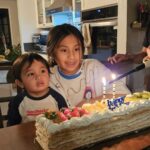
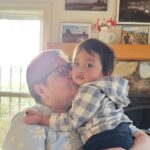
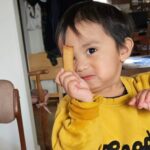
On my 70th birthday, Aug. 11, I want to say a prayer of appreciating my two precious gifts from God. Thank you po Lord, for my C and C, as also, my precocious enjoyable wholesome #princess2015la
Of course, my adventurous husband who took us to more than half of the national parks, and lots of state and county parks. Maraming Salamat po and thanks google for surfacing these precious photos.
And after more than 40 years of grassroots organizing, over 30 years of public service and over 14 years of being a community journalist/features writer, I have met hundreds of beautiful soulful folks.
———-
Snippets of virtual messages I got:
Haluhalu Tita Prosy, happy happy birthday. Wishing you the happiest of birthdays, today and every year, for the rest of your life. Please know that you’ve always been a blessing and inspiration to everyone around you.
“Aloha and “Hau`oli Lā Hānau” to you. Hope that you are still holding up well after the past few years. Take care.”
“Your birthday is going to be so great. I’ll make sure of it by praying to the Lord through the intercession of St. Anthony of Padua, that may this new stage of your life will come full of successes and blessings and may grace be poured out upon you.
Stay safe and well always, Tita Prosy
God bless you always
Best Wishes with love and virtual hugs,
Bro. Luke, rcj
PS
I hope you enjoy your birthday celebration with your family and keep in mind that God’s love is always with you. Happy Birthday!“
The book cover by Ysabel Grace Simon of Even The Rainbow Has A Body drew inspiration from my granddaughter #princess2015la, my muse to whom this book is dedicated.
The idea was “to put all (or most) of the things that Rainbow means”, to me, as the author. “I know you dedicated your book to your granddaughter, so I modeled the child after her, said Ysabel about her source of inspiration.
“As legacies are intended to be passed on to the next generations, there is no better image that reflects the promise of new beginnings and hope than a child’s face. Children reminds us of the choice to believe in the part of humanity’s innate creativity, resilience, goodness and beauty in man in the midst of the constant push and pull between mediocrity and excellence, 9ld and new, and good and vile. One part of our self is what we inherit, the other is what we make of it, thus only half of the child’s face is shown, Ysabel Grace Simon (then 19yo) said of her watercolor painting.
On the 100th birthday of Sanctus Joannes Pavlvs PP II, aka St. #John Paul II’s letter #31: “In this holy place, the Church gives thanks to the Most Holy Trinity for the mystery of woman, and for every woman, for her eternal dignity and for the wonders God has worked in and through her in the history of humanity.” Pope Francis paid tribute to St. John Paul II, illustrating the 3 pillars of his life: prayers, nearness to people and love of justice.
He was a model bishop who prayed a lot. He sought people out, travelled around the world to be near his people.
He wanted social justice to drive out the war, because he was a man of mercy. Mercy and Justice go together, one does not exist without the other, said the Pope.
Vatican reopens to the public today.
At Fordham university’s baccalaureate mass, 5/17 Fr. James Martin received an honorary degree and gave the homily, in “chapels in your own homes.” He traced the journey of dejected disciples in the Road to Emmaus, and in their sadness and confusion, Jesus appears to them. Much like these graduates experiencing confusion, sadness in this pandemic, there’s calm, peace and hope in God’s voice.
To be woman and man for others is to love foreever.
Congratulations to Carina Oriel, who made her mark in Fordham.
Haley Williams, one of the commencement speakers, spoke of doing for the sake of giving, rather than receiving, and being present to the suffering of others, to being bothered by the needs of the world.
Carina did just that and organized well- attended conferences on fintech and attracted Venmo to collaborate with Fordham’s Business School.
# 1 – Vatican City Guide photo
# 2 – Altar
# 3 – Peonies
#4 – Natas plus homegrown strawberry and avocado
#5 – Remembering Zion’s Virgin River
#6 – Carina Oriel with fellow Fordham students, posted by Cora Oriel
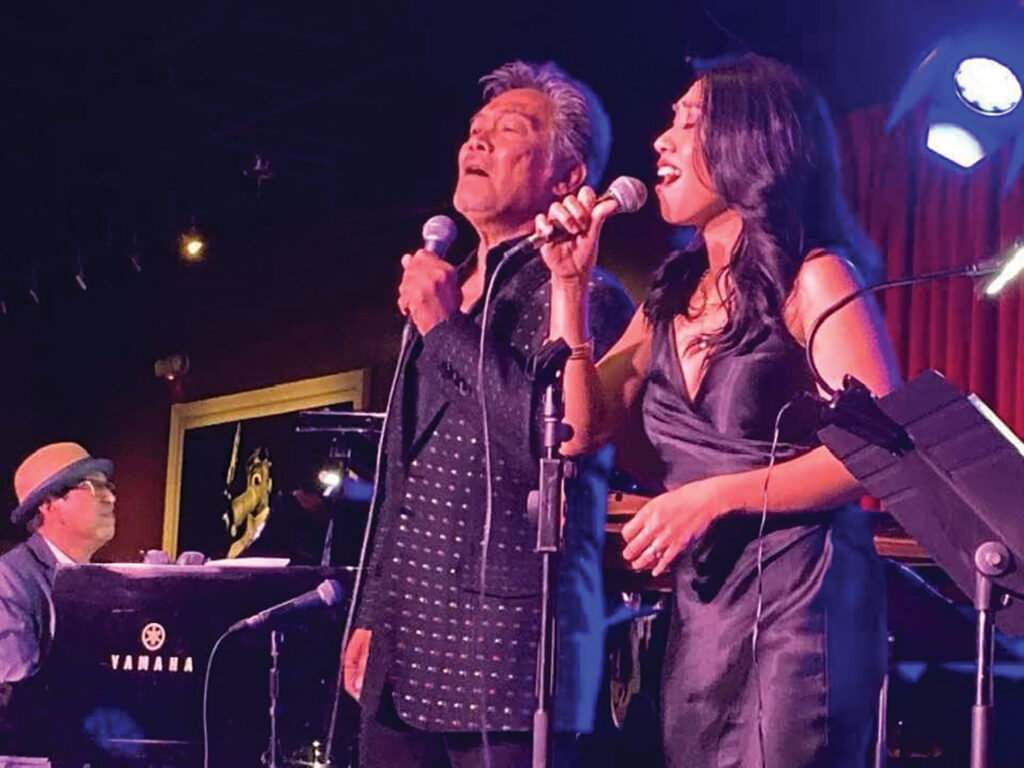
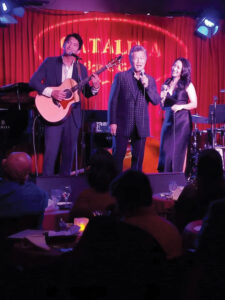
“Mon’s performance at Catalina was the alarm clock [that] my jazz spirit needed to wake from its catatonic dormancy throughout the pandemic! It was a great jolt of jazz as Mon covered standards, new materials, and Tagalog songs (with his children Carlo and Nicole along for the ride!) The great Hoagy Carmichael (who wrote my dad’s favorite “Stardust”) penned another great composition called “Skylark” which Mon sang with such finesse and elegance. One of my personal highlights was Mon’s performance of the Gregory Porter tune “Take Me to the Alley” (I actually heard Gregory Porter sing that when he opened for Diana Krall at the Hollywood Bowl a few years ago). All in all, [it was] such a wonderful night of music by a consummate performer.” – Ted Benito, a jazz impresario/producer.
The tree and me
Accomplished. Consummate. Generous. Kind. Mon David generated results that were more than exquisite, more than a matter of techniques, more than the expressions of his feelings; he entered the realm of spirit.
It felt like a person kneeling in prayer, hitting every note, every emotion, every cadence, on pitch.
Songs about homecoming, family, being in love, planting trees that provide comfort, shade, “rather plant a sapling tree, lay my ashes, throw my body…our seeds will scatter far and wide across God’s fertile countryside, the tree and me,” he sang.
Ted Benito described Mon’s rendition, “which he dedicated to the frontliners [the nurses, the doctors, the first responders] became a call to action. Not for anything physical or political… for just being human…feeling compassion…respecting humanity.“
It makes us recall that in every man’s life, there comes a time, sooner or later when his soul draws the line. One starts to think, as one listens, “Who am I? But, truly who am I? Am I an isolated spark of dust, briefly lit, and destined to fade forever? Or am I a fragment of a greater humanity, waiting to return to my own Home? It is a passionate inquiry, having an urgency born of our encounter with life and proximity to death,” as Zalman Schacter-Shalomi, a Rabbi wrote in “From Ageing to Sageing.”
Why not, when close to two years into the Coronavirus pandemic, we are mourning 770,891 deaths in the US, in a population of 331,000,000. But not just in the United States, the virus has claimed 5,145,045 lives worldwide in over 190 countries. In recent months, Facebook posts from the Philippines were on untimely deaths: musician, filmmaker, civil rights lawyer. Sampaloc in Manila had 80% of its residents, afflicted with Coronavirus.
Mind you, it was not Halloween and we were past Dia de los Muertos or All Souls Day. Yet, it felt somber, still, but also joyful, a bit apprehensive to be indoors.
I had an unusual reaction to the “homecoming” title — was this a prelude to retire perhaps? Yet, he told us his hometown is in Santo Tomas, Pampanga and now, Canoga Park, while singing “No more blues, I am going home, Home is where the heart is, no more tears…no more fears.”
Could he be yearning for another home? Or simply saying: “LA, find a place for me. City of Angels that’s where I wanna be. Been living here 15 years…living in this beautiful City of Angel’s parks, beaches,” a Bill Withers song adapted to Mon’s sentiments for the night.
The band and the origins of the lullaby
When Mon sang “Lullaby for Nanay,” many were moved, some choked, and even a few more wiped away their tears, men included. It must have been perhaps that we were all collectively suffering while mourning hundreds of thousands of deaths, including Mon’s own mother, Ima who passed away in 2020.
“From the moment I heard NY – based harpist, Ms. Riza Printup played it at one of the Fil-Am Jazz festivals at Catalina Jazz Bar and Grill, the ‘Lullaby for Nanay’ melody has been etched in my heart and inspired me to write the words. Lalo pong naging matingkad noong nagpahinga na si Ima during the covid period. (It even became more intense when Ima died during the covid period). It was quite a challenge in front of a live audience, dahil iniiwasan ko ang bumigay habang inaawit ko. (as I tried not to give into my grief, while I sang it). I’m always reminded of her habilin at patnubay (of her last will and guidance) -“Monching, pursue what’s in your heart and surrender everything to God.”
“Kalinga mo, baon ko, pakakaingatan ko – Your nurturing care is my provision, I will take good care of it,” Mon sang with the intensity of his love for his Mom.
We felt his pain. We saw his struggle to maintain composure. “Bawat sandali at bawat galaw laan ko at alay ko sa iyo Nanay.patnubay mo ay baon ko…pagibig mong dalisay.” (Every moment and every move, I dedicate and offer to you, Nanay, your guiding lesson is my provision as your unconditional pure love).
It was as if his soul was imprinted not just by his Ima, but many jazz artists he paid homage to, that night: Beatles, Gregory Porter, Billie Holliday, Oscar Brown, Jr., John Hendricks and Leonard Bernstein, the composer, conductor, pianist and humanitarian.
As generous as Mon was in his sharing his feelings and his experiences, so were his bandmates in the way they accompanied him. In synch. Respectful. On cue. Not competing in volume with the vocal space.
Larry Koonse, Mon’s self-declared birthday gift, was simply prolific on the guitar, yet nuanced and quite playful.
Tateng Katindig played with very few music sheets and improvised with flair, as he made the piano keys feel like butter, playing the entire range of sounds on the piano.
Abe Lagrimas, Jr. was as prolific with drums as his ukulele that at times, he is referred to as a one-man band, and Mon asked him in jest, not to consider entering the ‘world of voice’ onstage or else, he will be muted by Abe’s talents, and Edwin Livingston who played the bass quite well.
‘In My Life’
As we said our goodbyes to Nicole David that night, an excited Rex Sampaga, a music industry professional, shared his feedback: “’In My Life’: a very nice waltz-like arrangement in ¾ time, while keeping the integrity of the melody and song written by Lennon/McCartney. I think that both Beatles would have approved of this thoughtful and jazzy arrangement.”
Nicole sang the opening bars with her velvety smooth voice, hooking us up to hear more of the new arrangement.
Even Michelle Sy was equally moved: “But one song that truly touched me deeply (and it always does) is ‘In My Life’ a duet by Mon and his daughter, Nicole. A duet between father and daughter in itself touched me even more because of what the song imparts – the love we all remember as the most significant, the deepest of them all. And as I reminisced (as I always do when I hear this song) I am always reminded of how important it is to love one’s self in the most unconditional way because it is through this love that I know I can give love and kindness and compassion to others – to family, to friends, to extended family, to strangers. It is a melancholy song if seen with earthbound eyes. But it is a spirit-filled song when taken as a spiritual homage to what we spiritual beings do as we walk through this life here on earth. It is truly a very powerful spiritual song in my book.”
Do you recall earlier what I wrote about Mon reaching the realm of his spirit? Much like MJ Harden, a singer in Hawaii, featured in Hawaiian Elders Speak, who said: ”Every person is an individual. I think what counts is your expression, your personal feeling, When you hear a song, you learn it, you know it, and you take it down and strain it through your heart. Open the ears of your heart and you can hear something good all the time.”
As Nicole called his brother, Carlo onstage to do a Tagalog song with Mon, she asked him “what do you recall about Dad that had the most impact for you?”
Carlo responded that at 14 years old, he was helping out as a production assistant onstage during his dad’s concert. One waiter admired Mon’s Barong Tagalog (an intricately hand-embroidered formal shirt made of pineapple fibers or jusi). After the concert, Mon took it off and gave it as a souvenir gift to this stranger.
The true benefit of Mon’s generosity is beyond the material gift to this waiter.
It is an inner revolution, a lesson learned by a 14-year-old Carlo, but also, it gave “fire to the soul” of Mon to become more fluid, to be more willing to take a risk and the boundaries disappeared between him and the stranger/waiter, and together they merged into whole, a humanity that Michelle Sy became part of, feeling one with father, daughter, and Carlo that evening.
It was a moment touching the deepest strata of our beings, as Piero Ferrucci wrote in the “The Power of Kindness,” “for the generous person, borders are permeable. What is yours – your suffering, your problems is also mine. This is compassion. What is mine – my possessions, my body, my knowledge and abilities, my time and resources, my energy is also yours. This is generosity.”
When Nicole sang “Two is Better than One,” a song by Taylor Swift and Martin Johnson, we were seeing the synergy created by a loving dad who calls his daughter Gel, short for an angel, a mom who pushes to connect to her creativity, to her craft, that moments earlier before soundcheck, she was giving her twins their bath so they can come with their dad, who was just getting off work, so all can join Mon for his birthday concert.
“Two is Better than One” truly is a gift from Nicole’s beautiful velvety voice that gives meaning to “Maybe it is true I can’t live without you, maybe it is true two is better than one.
And while Carlo sings, as he plays the guitar, he glances at where his family sat: Tala with her mom, Hanika.
An endearing walk back through the past, with APO singers that Mon was part of, the family of Mon, Carlo and Nicole sang a homage, a Song of friendship, Awit ng Barkada, a song for the ‘tribe’, ‘the clan’, the ‘close friends group’ and instead of friends, this family of singers: “Hirap at ginhawa, kasama mo kami, kasama mo, kasama ninyo,” (In struggles and in comfort, I am with you, with you, with all.)
Mon leaves nothing but love towards the end of his show, and even as he sang Kalakbuhay, a journey mate, he reminds us with Gregory Porter’s song “Take Me to the Alley,” a favorite of Ted Benito’s, as ours, the expressions on Mon’s lyrics as he sang these: “Take me to the afflicted one, take me to the lonely ones that somehow lost their ways, let them hear me say, that I am your friend, come to my table, rest in my garden, you will have a part. the hungry ones, the tired ones, I am your friend.”
And with the untiring generosity of Ann’s, his wife’s unconditional support, Mon’s children: Paolo, Nicole, Carlo and Mika who all attended with their spouses and partner with Mon’s grandchildren: Noah, 7 years old; Nico and Leo 4 ½-year-old twins; Bella – 3 years old and Tala – 2 ½ years old who all joined Mon to greet him a happy birthday, the audience saw first hand a joyful sight of family love onstage.
That evening, our hearts were warmed up, uplifted by the songs of Mon David and family, nurtured by a very loving Ima, that continues to lit Monching’s hearts, as Ann’s heart to us all, we were all moved to give the Barkada David an enduring standing ovation.
A mother’s heart, now deceased Ima, still welcomed us all through her son and his family! Mabuhay kayong lahat David family! Long live the David family! There is no singing family like yours, kept alive by your circle of love and love for the community!
* * *
Prosy Abarquez-Delacruz, J.D. writes a weekly column for Asian Journal, called “Rhizomes.” She has been writing for AJ Press for 13 years. She also contributes to Balikbayan magazine. Her training and experiences are in science, food technology, law and community volunteerism for 4 decades. She holds a B.S. Degree from the University of the Philippines, a law degree from Whittier College School of Law in California and a certificate on 21st Century Leadership from Harvard’s Kennedy School of Government. She has been a participant in NVM writing workshops taught by Prof. Peter Bacho for 4 years and Prof. Russell Leong. She has travelled to France, Holland, Belgium, Japan, Costa Rica, Mexico and over 22 national parks in the US, in her pursuit of love for nature and the arts.
I wrote this 2012. He gave me one of the most lucid, organized, inspiring interviews at 88 yo.
Photo taken from Holy Family Artesia Facebook post.
———
Fr. Albert S. Carreon
Resident Priest, Assumption Church
Six decades of being God’s vibrant servant
By Prosy Abarquez- De la Cruz
AJPress
“Give us patience, faith, and charity to minister to those who do the dirty jobs of planting the haciendas, trimming the trees, harvesting [fruits and vegetables] in the hot sun, that we may pass laws honoring their dignity as human beings. Let us not treat them as second-class citizens, but, like every immigrant, who came before from England, Germany, France, Italy, Ireland, and all those who came to America, a nation of immigrants, these [undocumented immigrants] are also worthy of their own path to progress. Let us treat them as equals, as our Christian brothers and sisters, with dignity in our words and practice.” – Fr. Albert S. Carreon, 2011.
Fr. Albert S. Carreon is 88 years old. He is vibrant and steadfast in his commitment to the poor, the sick and the immigrant community. He converses fluently in Spanish with parishioners who come to his office.
It is only 9am, but his schedule is on overdrive: a Spanish television interview, a mass, an interview with Asian Journal, a seminar for those seeking sobriety through their faith, and a visit to the sick. He has ministered to the Philippine president, Philippine ambassador and lepers in Tala Leprosarium. He has served as faculty in Manila, Rome and Mexico, a cultural attaché to the embassy, a defender to couples seeking annulment and a negotiator/leader who worked with Senator Harry Reid for immigrant rights.
Yet, he remains close to Hispanics, referring to his special ministry of teaching sobriety by renewing one’s closeness to God.
He believes that the undocumented must be given a legal path to work and be responsible taxpayers, hence he advocates for the bracero program.
“After a track record of obeying US laws for three years, they can get a green card and later, citizenship,” he said. He shared this collective perspective (gathered from his faith community — a 2,000 person-strong rally in Nevada) with Sen. Harry Reid. This is humane public policy, he added, but he does not believe in amnesty for those who should be deported because they committed crimes. He assisted a thousand refugees during the Reagan years to acquire legal papers, particularly those who fled the civil war in El Salvador.
He heard God’s calling in fifth grade, as an altar boy. During that time, he won the Central Meycawayan Singing Contest and a zarzuela director, who watched him sing, cast him in a three-act play, called Batis ng Kaligtasan (Fountain of Salvation). He traveled and performed with the cast, in all the provinces of Luzon.
That public exposure got him a scholarship to Colegio Serafico San Francisco del Monte, where he studied Humanities, Latin and Spanish. He was initiated to the Franciscan order.
When WW II broke on Dec. 8, 1942, the Franciscans disbanded and students were sent home. He stayed in San Carlos Major Seminary in Mandaluyong, and studied logic. Later, he got admitted to the Novitiate of the Dominican Order in Lingayen, Pangasinan.
After the war, he studied philosophy and theology in Hongkong. He was ordained a priest of the Dominican order on Sept. 21, 1951. He got assigned pastor in the UST chapel and he served as the chaplain of North General Hospital. He took his MA degree in UST and wrote “The Metaphysical Analysis of the Documents about Ecclessiastical View of Nationalism,” which he defended successfully to an examination panel of professors and student body. He got a summa cum laude qualification.
He taught forensic medicine in Maryknoll (now Miriam College). He became the chaplain to the family of President Ramon Magsaysay. As the President’s chaplain, he traveled with him and together, they went to Leyte to celebrate the anniversary of the Fall of Leyte. After that, the President headed for Cebu, while Fr. Albert went to Bukidnon. Had he not joined the bishops, he would have had the same fate as President Ramon Magsaysay, who died in a plane crash on his way to Cebu.
He was sent to Rome and studied for a year at Angelicum University. There he met John Paul II, who was in his senior year. In Rome, he was the Ecclesiastical Advisor to Ambassador Jose Delgado in the Vatican. Given that he is fluent in Spanish, he gained access to the Vatican Library and read the Vatican memos which ordered the Spanish clergy in the Philippines to cede control and form a native clergy. The Spaniards did not comply with the memos.
After he studied in Rome, he became Letran’s Dean of High School and Principal in Manila. He was involved in the Filipinization of the Spanish Dominicans, separating the Spaniards from the Filipinos. Monsignor Leonardo Legaspi became its first vicar — the first Filipino rector of UST. This is, perhaps, the first implementation of Rome’s prior edict.
He taught in the Studium Generale of The Dominicans in Mexico and became the Master of Novices. He became a faculty member of the National University of Mexico and the University of Motolinia, and the head of the department of moral and psychiatry department of Clinica Prima Vera, an orthopedic hospital. He took his Ph.D. — majoring in psychology in the Jesuit University of Mexico. His dissertation was “The Passion-Love, according to St. Thomas Aquinas.”
He was chosen as the representative of the Cardinal in Mexico and addressed the Congress of the Christian family movement. Here, he gave a memorable speech: “A good nation is built on a well-educated family in morality, spirituality, fidelity and faith. When parents are educated in these values of morality and spirituality, they pass on these values to their children, and they teach by words and deeds their own examples of harmony, fidelity and faith. If the parents are not educated in morality and spirituality, what values do they transmit to the family? After all, a marriage is a commitment of mature people to build a community of life and love with children. ”
His speech caught the attention of Philippine Ambassador Octavio Maloles, who asked him to succeed Horacio dela Costa (a Jesuit scholar) as the cultural attaché of the Philippine Embassy, a position which Fr. Carreon held for 9 years.
In the seventies, he was assigned to the diocese of Galveston-Houston, Texas. The Bishop assigned him to a new parish, with a base of 300 families. There was no church to hold the mass. He visited all 300 families in their homes to be able to evangelize them. He convinced them to worship at a nearby school. He organized them into a community and asked them to support the building of a new church.
He looked for a terrain that the church could be built on. With the raised funds, he bought 9 acres for $100,000. The community lent him more support, one farmowner donated a barn that was converted to a social hall, with converted floors to use as a skating rink for young teens and for bingo/dances they held.
He secured a loan from the Diocese, and they extended him $274,000. His architect friend designed the church. Fr. Albert became the founding pastor of St. Mark the Evangelist Church in Galveston-Houston, which still stands today. He also founded the Knights of Columbus and the Spanish Cursillo. After 20 years of being the founding parish priest, he was given medical retirement and sought treatment for his ailment in California.
Though he is retired now, he has not slowed down. He works everyday, going where the need is greatest.
As we parted, he gave me his business card and said, “ I like you to be my friend. Remember that our Lord was an immigrant to Egypt.” He then blessed me, and said this prayer for me: “Jesus, please change the hearts of men/women, only you can do it, so they are conscious that they are always loved, not hated.”
I honestly got slower in writing pieces last 2020. Watching my husband was inspiring. I became his “primary editor,” telling him this is excellent, lose no time, submit now. He would and my assessment is spot on, folks love what he wrote. Then, when he is just “dumping words,” without feeling connected to the readers, in his words, “I have to rewrite now as my principal editor rejected my piece.” That made me laugh so hard, as he is our respected family’s editor for decades. I am now into editing friends’ chapters written for their thesis and dissertations, even book chapters. I at times let hubby get involved with the first chapter, or the first read, which receives a severe chopping down that your mental strength is called into question. If you are humble enough, you benefit from his broad, piercing to the core feedback. I am excited to see now my friend, a priest, almost finished. I just edited his last chapter and challenged him to give forth the depth of his spiritual wisdom. I am certain he will, as he did chapters 1 to 5. As for me, I am struggling to write still. I then heard my 6 yo granddaughter say things like,”We never quit, Grandma until we reach the finish line.” Gosh, she’s only six. Back to what I really want to share: my friend, another caring priest, called me months ago wondering why he has not seen my pieces. After 2 phone calls from him, I completed 3 pieces for December 2020. Then, as I was about to say, I am really just focusing on caring for my granddaughter, baking, cooking, chores, here comes another email from my editor who gently gives me another topic to write on. My husband is about to complete his assignment, me I am barely starting to scratch the surface. Here is when you know the Holy Spirit is with you, no one knows what my assignment is, only my husband. Out of the blue, a friend, a teacher in performing arts calls me and teases me with his project – would I be interested? Instead of simply saying no, I share what I am going through. Oh my gosh, he entices me to write again as it is about the topic my editor assigned to me. When three folks say the same thing, I see that as a Trinity message, directly from the Holy Spirit. I must do it! Or, I will not have peace to sleep and enjoy a higher quality of life. See with my priest/friend writing his dissertation, I have learned to prioritize his requests as I stay restless for the day until I do it. Once I focus on it, the edits write itself, I kid you not, that is even done while cooking, washing, and having a date night with my hubby. The Holy Spirit energizes beyond my human capacities! Salamat po Panginoon! I surrender to You – you know in Your God’s time, when it must be done!



 “
“