Fate’s Remarkable Coincidence
I prayed for a handsome frenchman. I found his ancestor, a painter, Eugene Delacroix, and went home with Enrique de la Cruz born on Bastille Day.



I prayed for a handsome frenchman. I found his ancestor, a painter, Eugene Delacroix, and went home with Enrique de la Cruz born on Bastille Day.
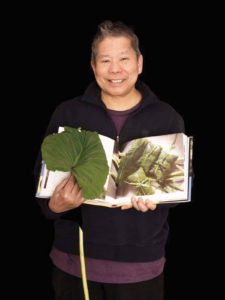
Cooking is like the fruit of a great love: a strong and slightly egotistical love on the part of the men, altruistic and sensitive on the part of the women. Be it one or the other, it is always present, demanding its share of gratitude and recognition. Isn’t this natural? Technique can improve, just as experience can be acquired. Nothing can replace this last quality, not even talent, though talent must not be neglected for it is undoubtedly, in large measure, the source of genius.
Raymond Oliver, 1969
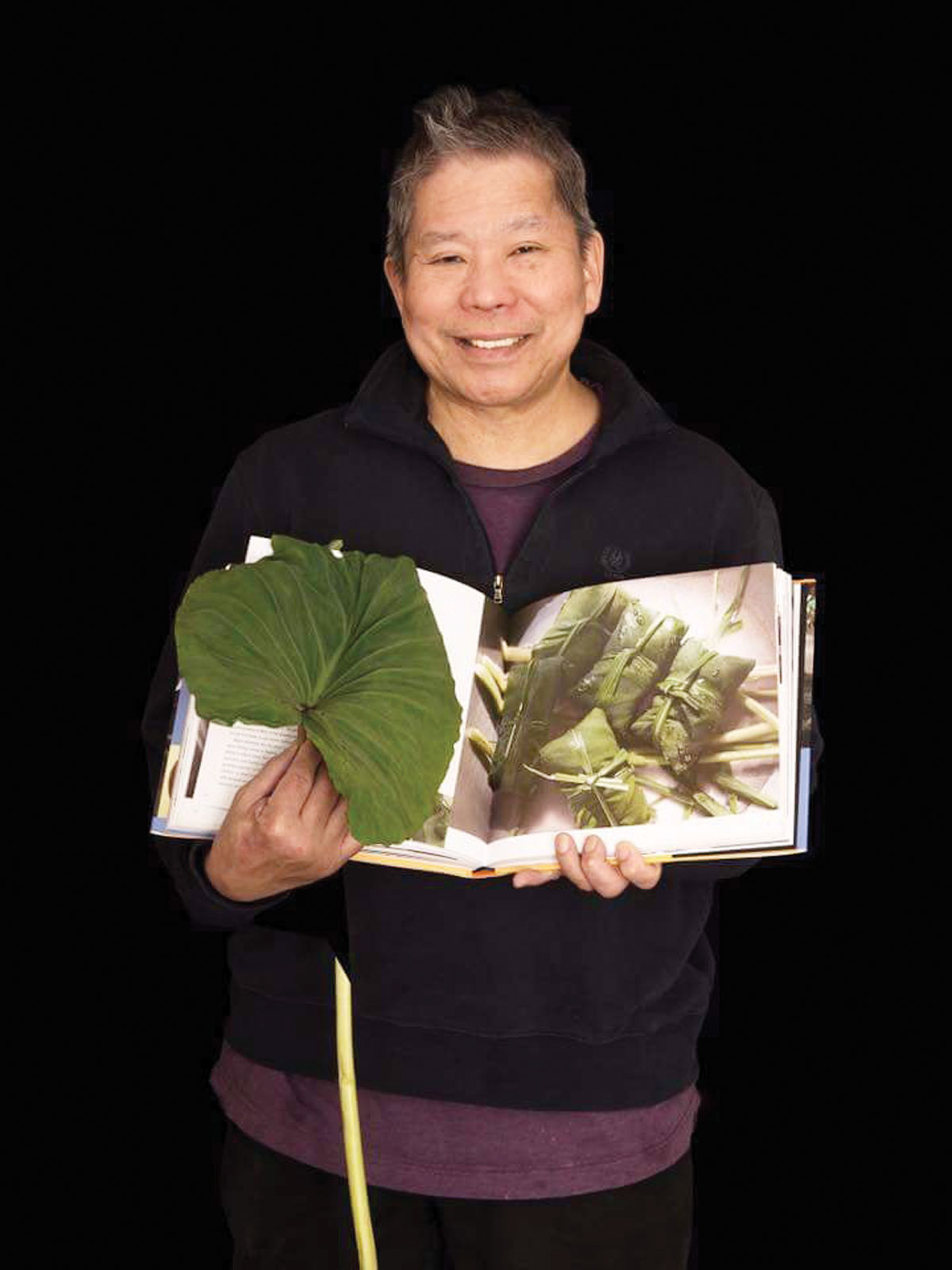
“Kaya pa ba?” (Do you still have capacity?) Chef Romy Dorotan (the Chef) in his white chef’s uniform, sporting a smile from ear to ear, came to our table in the backyard multiple times. First, to acknowledge us as if long lost family members. He walked briskly to our table, unfazed by a full house of customers, whom he serves as he alternates to go to the kitchen and even rearranges one pot back to the wood shelf, to be planted with more succulents for the summer.
“Oh, nandiyan pala kayo.” (I see you are here.) “Nag-order na kayo?” (Have you ordered?) Ever the enthusiastic foodie that I am, I enumerated the appetizers and salads we ordered and a single entrée: peach, radicchio kimchi; eggplant kulawo with mangoes and a few slices of ampalaya with coconut milk; Amy’s eggroll; watermelon with radicchio, mango and lettuce; and chicken adobo with vinegar, turmeric and coconut milk. When our friend the night before, we shared the stage with the Chef, at the book launch hosted by the Philippine Consulate Office in New York. Romy Dorotan was one of the 31 book subjects of “Even the Rainbow Has a Body.”
Conrad, a recent NY-college graduate offered to decode the metaphor embedded in the title, “Your book is evocative. You know the rainbow is ephemeral. It seems to tell us that you are elevating these subjects as worthy of being sources of awe and inspiration.”
I smiled, nodded my head. “Yes, if you look at the history of Chef Romy Dorotan, he introduced the Filipino cuisine to the American mainstream palate, here in NY, elevating it perhaps.”
Chef Romy stopped me in the use of “elevate.” I paused, open to being corrected in public. He did it gently, almost apologetic, then, explained that he, too, was corrected by his wife, Amy Besa, a founding owner of Purple Yam-Malate in the Philippines. He explained: “Our Filipino cuisine does not need elevation. It is us who need to elevate ourselves to the beauty of our cuisine, to embrace it. Imagine our community spends hundreds and hundreds of dollars to pay for American, Japanese, French, Italian dinners, but our cuisine is equally as good.”
“Long before purple yam was popularized in the American palate in 2017-2018, Cendrillon SoHo (its precursor) was the hangout of foodies in New York. Martha Stewart even invited Chef Romy Dorotan to her television show to cook our Filipino cuisine, adobo. Did you know that one of her favorites was fresh lumpia crepes made with purple ube and green pandan wrappers? And one day, my cousins and I drove from Washington, D.C. to see a play in SoHo, Miracle in Rwanda. We went to lunch at Cendrillon and after the play; we asked each other, where for dinner. The unanimous answer of 7 of us, Cendrillon, so we ate our memorable meals of bibingka, black rice squid paella, kare-kare and more,” I added.
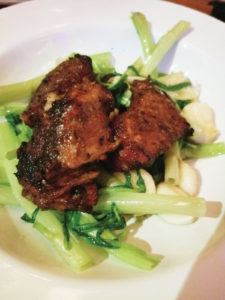

As if a computer had unraveled the ingredients of the entrees, I rattled off and shared them with the audience, and occasionally looked at the Chef for confirmation. Imagine, I made mistakes in the name of the cultural officer yet I remembered the ingredients of that delicious bibingka that our blind-lawyer friend, Ollie insisted he must “take home” to his mom in DC.
Think of how memorable your meals were that you desire to do a take-out for that special person in your life, to convey your love for her? Ollie did this even before we could finish our dinner.
After the Chef said that, my mind quickly ticked off the six-course Italian dinner we had at Bestia in LA or the eight-course Japanese dinner at Aburiya Raku in West Hollywood for special anniversaries and birthdays, evoking the anticipation, the exceptional delight and a full sense of satisfaction.
I left myself open, to be delighted at Purple Yam Brooklyn (PYB).
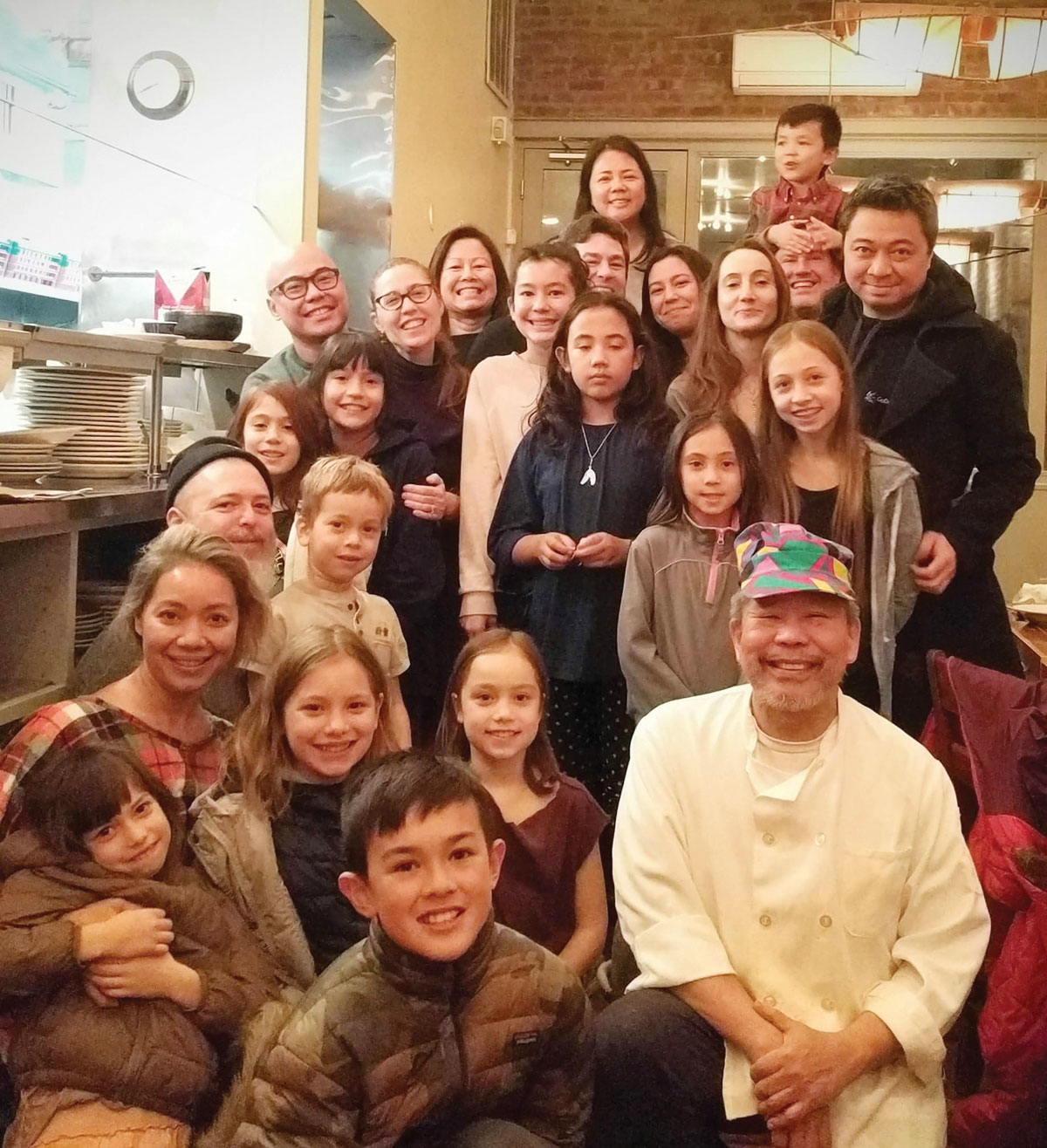
Opening our palate gifts at PYB
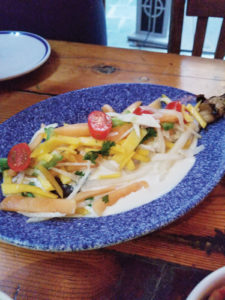
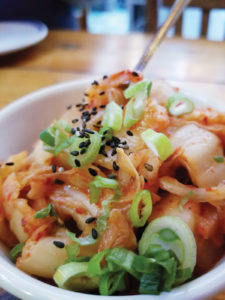
It was a continuous symphony of entrees that were laid at our table. The first group were the appetizers: two types of kimchi, potato and tocino pizza, eggplant kulawo served on a royal blue and white platter, suggesting to us how royally special this dish was. We were delighted by the eggplant kulawo, I almost ordered a second plate, but held back, and even my husband, Enrique Delacruz, who is not a foodie, raved about it.
Momar Visaya, the Asian Journal’s editor-in-chief arrived from another assignment, as this was NY’s Filipino Restaurant Week. He ordered cua pao pulled pork, kare-kare, and his favorite amongst the dessert array that he tasted the night before, ube tikoy with champoy ice-cream, with a special request of mangosteen ice cream.
The next group of entrees came with chicken adobo cooked with turmeric, vinegar and coconut milk, oxtail kare-kare and Amy’s eggroll. I had carefully spooned the last of the adobo gravy on my rice, savoring every drop. I am now salivating as I write this, hoping to duplicate it in my kitchen.
Chef came, and asked, “Kaya pa ba?” We all declined. But, ever the curious foodie, I asked what the entrée would be. He said, “soft shell crab with watercress and heirloom rice.”
“Oh, okay, we said, we have room.” He served it personally and then watched the look in our eyes as we all gasped at this dramatic offering was on a crispy nori taco. It had a palapa crust and was served with rhubarb and horseradish sauce. This was another star of the night, perhaps to merit the most beautiful and tasty offering for the night.
Another star of the evening was the array of desserts – calamansi meringue tart with rhubarb served with guava sorbet, ube tikoy with champoy ice cream, mango tart with mango ice cream and a dish of multiple scoops of homemade siniguelas and mangosteen. As a teaser, another adobo dish was served, made with vinegar, miso and served on a bed of crunchy kangkong. Oh my, another star of the night. That would make it a 17-course dinner, including mulberry vinegar, guava strips and green mango with a quail egg. I am not sure what to say at this point.
Did the eggplant kulawo steal our hearty palate the first time, as if one falls in love the first time? Or was it the adobo in miso or the ube tikoy with champoy ice cream? Or the soft shell crab so delectable and royally presented?
Endearing hospitality of Purple Yam’s owners, whether in Brooklyn or in Malate
Chef Amy Besa, who attended the Manila book launch of “Even the Rainbow Has a Body” in May 2017, invited my friends and me for lunch, her treat. She shared how we must incorporate our indigenous crops; our lesser-known fruits and vegetables or we may lose them forever, unless there is a demand for the farmers to grow them.
At Malate, during another dinner I hosted with friends, the heirloom red rice from Benguet with vegetables was laid out with pride as the lechon, and we all said, “Please pass the rice,“ as we all helped ourselves to more.
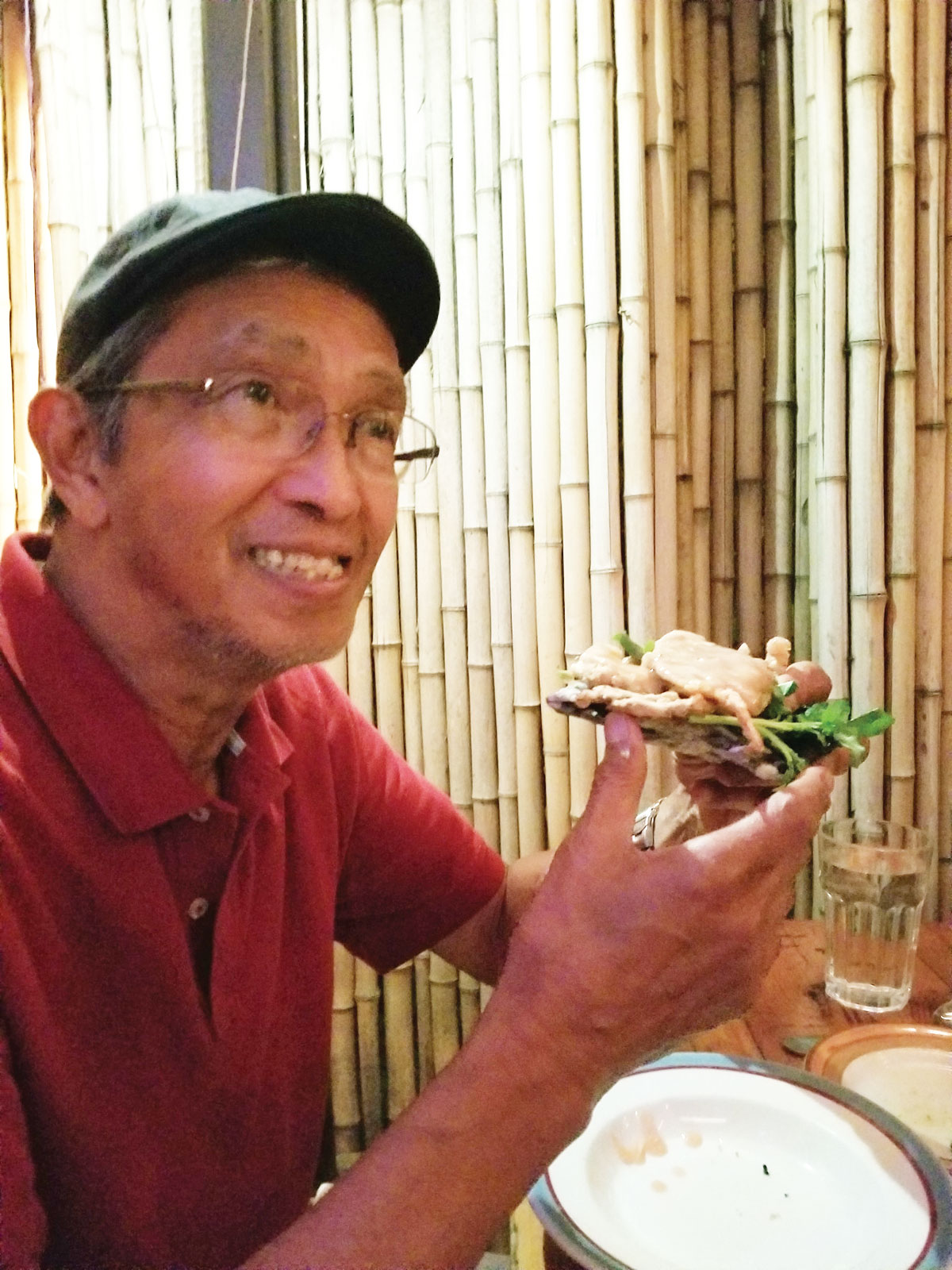
PY-Malate had the chicken adobo in turmeric as well, with a unique twist of pancit Malate served with the white noodles formed as a squid, with strips of squid and shrimps. The star of the lunch that day was the halo-halo, made with preserved fruits and homemade ice-cream, leche flan, and ube halaya. Nothing beats this Malate-based halo-halo.
You get a trip back to the earlier centuries of life with the original wood furniture handed down by Amy’s ancestors, a gift to us now, as part of this restaurant. With each meal, she honors our indigenous farmers and delights our discerning taste buds.
Both PY-Brooklyn and PY-Malate are special places for the artistic souls, gourmet foodies and those who want nutrient-dense, low fat, organic and balanced flavors with appeals to our vibrant senses and sensibilities. As we closed the restaurant down at 11 p.m., we stopped to appreciate a unique sculpture, made by another cook/artist, Perry, all from animal bones and parts.
Here in this restaurant, the guests/clients are treated royally, as each ingredient of each entrée. The Chef’s talent of combining unlikely ingredients, calamansi with rhubarb, nori as a taco shell, coconut milk and cream into adobo and eggplant is pure genius, as if schooled in the art of food science, and when combined with his decades of cooking a fusion of American, French, and Filipino cuisine, it is simply magic.
Purple Yam Malate and Purple Yam Brooklyn continue to evolve, and both age as if fine wine to be savored, as it grows more nuanced in their flavors and combinations of textures and colors. My husband, a non-foodie, shared his own version of the meal experience and wanted me to specifically write it the way it unfolds in his logical mind, prompting the Chef to say, “Sabi Ni Ike,” (Ike Said). We all laughed and slowly walked to our Q subway for the night, and with more selfies with the Chef and by the “woke,” 24/7 Times Square.
My profound thanks to Enrique Delacruz, Momar Visaya, and the Chef who made this an unforgettable gastronomic heaven for me. I told them both, “I am ready to go to heaven.” “Not yet,” they said.
Published on Asian Journal
Dear Mama,
I remembered that Saturday morning in late August in 2015 when I first told you that I was sexually assaulted. I remembered sitting on the couch and I couldn’t look at you, dad, or Andrew in the eye. It felt like the entire room froze, and no one ever expected those words to come out of my mouth. Andrew kept switching glances between the three of us, Papa had his head in his hands with tears in his eyes, and you rushed over to comfort me. I remembered bracing myself for the “I told you so” that would follow. I remembered the streamline of questions you sent my way, and I think it’s because you never prepared yourself to have this conversation with me. You wanted to avenge the pain I was in by trying to pry any information you could get your hands on and put my perpetrator away. But at the same time, I prayed that I wouldn’t see the disappointed look in your eye when I told you. I always felt like I knew exactly what I was doing, and this was the first time that I just didn’t know how to move forward.
Sometimes I found it hard to explain what I really did at school. As an Asian American studies major, I felt like you just nodded your head and trusted that I knew what I was doing. Progressive leadership to some might seem like a very radical term to describe my work as an ethnic studies student in this polarized day and age. But to others, progressive leadership is helping evolve their campus community in more than just a project that benefits themselves. I would like to think that my work at CSUN is an example of progressive leadership in higher education. I believe activism starts in many corners of campus. From the times when I called to tell you about the conferences I was going to, to the non-profit work I was doing, or when I started crying because I felt that my world was pulling me in five different directions. I just need to be comforted by you, and to be reminded that it was all a part of a process. I have learned that progressive leadership is not necessarily the end goal, but it is the never-ending journey of selfless work needed to help someone who might one day walk in the same shoes I did.
I was not sure when I realized that I was not alone in my journey, but when I took my AAS 311 – Research Methods class, I found institutional support from Dr. Tracy Lachica- Buenavista to pursue a qualitative research study on the experiences of Filipina American and Chinese American women’s experience with sexual harassment. From that research, I found that so many other Asian American women had been silently suffering from their experiences from sexual harassment and to some extent, incomplete rape. After the paper, I knew that many Asian American women did not have someone who looked like them, are open about their experiences, and knew about resources on campus to help them get through their trauma.
I knew that my experience was not an isolated case and that finding support was key to my recovery. From that point on, I realized that I had to become a model for other women and become knowledgeable about resources and support on campus in a moment’s notice. When I found Project D.A.T.E., I knew that advocating for survivors and educating the campus community about sexual assault awareness and rape prevention was going to be mentally challenging and emotionally draining, but the work would be necessary. It took me two years to gain the courage to speak to others about a serious and heavy topic, but I wanted to show other Asian American folks on campus that there are resources on campus that can be cathartic and healing for survivors. Some days I would walk out of presentations on a high, feeling like my words affected people. And then there were some days that I would leave the presentation hitting the autopilot button because I would get flashbacks from my assault, and just mechanically walk home, curl up into a ball, and avoid every single thought that ran through my brain. This was the part of my journey that I realized that sacrifices had to be made. But if I knew that I was helping someone else find support, it made the bad days worth it.
It was always been my habit to not give you full details about the trips I went on or the things I did off campus. I remembered calling you a couple of days before my first trip to Sacramento, when I lobbied with CSUN’s Student Government, Associated Students, to advocate for a fully funded CSU system. I remembered trying to explain to you what CHESS (California Higher Education Student Summit) was and what I was doing there. I did not know how I was going to explain to you that I was going to use my story in order to push assemblymembers and senators to convince Governor Jerry Brown to fully fund the CSUs. I did not know when I walked away from CHESS, it was going to a new skill to my toolbelt. I did not know that advocating for survivors and on-campus support services was crucial to my recovery, but it could be the defining moment when the next survivor needs resources and support, and I hoped that support will still be there. I never believed that I, an Asian American woman, survivor, student leader, but most importantly your daughter, could do something beyond the campus community and directly going into California government spaces to promote and actively create change.
Sometimes, I could hear your voice in the back of my head, bragging to everyone around you of how proud you are of me. I am grateful for you being so supportive of my wish to vocalize my experience when it was the norm to either remain silent or internally handle my situation within our family. I am forever grateful that you never turned me away. I am grateful for the days when you are more compassionate and understanding when I snapped for being extra sensitive around the month of August, the time when I am the mostly broken. I am blessed that you were proud of my work as I am fortunate to have an amazing supportive mother. This journey has not been an easy one, nor is progressive leadership tackled without a strong backbone of allies, friends, comrades, fellow survivors, but most importantly family. Not everyone is as fortunate as I am to have my mother pick up me from such a hard fall. I can only hope we can become an example of the change in our community, to open up a dialogue with more compassion and understanding when it comes to topics about recovering survivors. I believe that change starts with us as we continue to take steps forward together.
Love always,
Your daughter, Abigail
***
Abigail Garcia is a recent CSUN graduate who majored in Asian American Studies. She advocates for resources for Asian American survivors and hopes to one day change the dynamics of internalized silence within Asian American communities.
Footnote: Once a year, an essay competition is held at CSUN, amongst Asian American Studies and Education majors, as part of an endowment set up by Prosy Abarquez-Delacruz for her deceased mother, Asuncion Castro Abarquez and her deceased sister, Rosalinda Abarquez Alcantara to provide a scholarship grant to deserving students. The essays are then reviewed and carefully vetted by a committee headed by Dr. Teresa Williams-Leon, Dr. Philip Hutchinson and Kimberly Teaman Carroll with oversight from Dept. Chair Gina Masequesmay this 2018. This year’s winning essay is from Abigail Garcia on Progressive Leadership, Asian American Studies and Education.
Published on Asian Journal
Source: Soft Power Press Kit: Center Theater Group
I have emphasized the importance of face-to-face experience of the stranger as we form and nurture democratic habits of the heart. While experience can change the way we look at the world, the converse is also true: the way we look at the world can change the meaning of our experience.
Parker J. Palmer, “Healing the Heart of Democracy: The Courage to Create Politics Worthy of the Human Spirit,” 2011
History despite its wrenching pain cannot be unlived, but if faced with courage, need not be lived again.
Maya Angelou
Masterful playwright David Henry Hwang and composer Jeanine Tesori, both Tony-Award winners, crafted “Soft Power” with brilliant and smart dialogue about the current state of America, its last 2016 presidential elections, its democracy in contradistinction with China’s communism and the rise of China’s soft power, and its formed alliances around the silk road, a metaphor for how China is extending its influence throughout other nations, by building railroads. It opened Wednesday, May 16 at the Ahmanson Theatre and will run till June 10, 2018.
Yet, it is not a metaphor, it is actually fast becoming a reality, as China forges its ASEAN relationships with East Asia and has extended loans for building trains in the Philippines.
China has made its plans known, a railway stretching across the continent of Nigeria and Ethiopia opened its newly built railroad linking Ababa to the sea in 10 hours in Jan. 2018.
Recall that America’s railroads were built by Chinese immigrants who came to America?
“Soft Power” is a play and a musical whose setting is Los Angeles, early 21st century; and Shanghai, China in early 22nd century. It takes us to Hollywood and Vine, once the mecca of drug dealers, prostitutes and gang bangers. Recall the graffiti-laced walls of former Hollywood? But we also know in reality that councilmember Jackie Goldberg undertook the difficult work of revitalizing this area, now with remodeled Kodak Theater (renamed Dolby Theater) where the Oscars’ red carpet event is held, and surrounded by hotels, shopping complex, restaurants and of late, the remodeled Hollywood Bowl and Ford Amphitheater.
“Soft Power” is more than a play — it is a critique of both America and China and how their citizens are affected by a primary cultural conditioning of duty and saving face upon their native Chinese citizens and the cultural affinity of Americans with guns and their strong need to be always #1 amongst nations.
It makes for Chinese citizens, in the play, with muted hearts, that even if faced with a love interest, Zoe/Hillary (played by Alyse Alan Louis), Xue Xing (adeptly portrayed by Conrad Ricamora) could not muster the courage of his heart to make the relationship happen. It also presents a challenge to American citizens: Are they be worthy to lift up this country now and make a change?
The challenge comes from the lyrics of the song sung by America’s Hillary (played so effectively by Alyse Alan Louis): “So many times it [elections] has left me so battered and bruised/It is just a big big show/I dream of what it could be/I believe/I believe in democracy/until America regains soft power/That dreams is everything I am/I can’t give you [Xue Xing] what you need.”It was a very effective portrayal of American Hillary that we [the audience] could believe, as with her, that the 2016 elections was one big, big show.
Yet, I could feel, from this play’s portrayal, that her love for America is so real.
This is one brilliant play with lyrics sang by Xue Xing’s character, brilliantly performed by Ricamora, showed the hollowed-out core of America: “Who do we borrow from?/Maybe we [China] can forgive your debt/We want you [America] to join in the family of nations/We seek your happiness/You fill your emptiness with alcohol/Your selfishness is your downfall/Some call you barbarians/Cease the wars to have peace/Join us in the Future/The new Silk Road/One that Connects the Whole Family of Nations.”
It challenges the citizens of American democracy – using musical lyrics – “are we worthy enough for this American democracy – do we have the capacity to lift up this country and change it from being a barbarian nation in love with guns, wars, to lay these guns down to join the family of nations for a bold future of peacemaking?”
Are we, Americans?
Xue Xing further challenges and now in the White House with the Vice President, and other cabinet members with guns, who sings with gusto: “Other nations have joined the silk road/Lay down your fears/Lay down your pride/Lay down your need to be #1/Lay down your guns/Lay down your guns.”
The song made me recall a Smithsonian’s exhibit that I saw called, “The Price of Freedom: Americans at War,” displaying America’s military might from the French and Indian Wars to the present conflict in Iraq, about 13+ wars, from the 1750s to the present. Today’s claim on the federal budget for the military is at $700 billion for 2018, $300 billion short of a trillion.
Imagine if that budget of close to a trillion were spent for building highways, schools, potable drinking water, power resumption in Puerto Rico, research laboratories to stop EBOLA, HIV and HPV (two viruses that Bill Gates had to explain to our current #45th President)?
Imagine if that close to a trillion dollars were spent to find new wells, new sources of water around the world? Imagine what America’s soft power would be around the world in 195 countries in the world?
Would we have sustained peace-making and ensured the end of war-related violence?
It would mean the partial solution to the world’s issues and it just might make all of us more sensitive to everyone’s sufferings around the world, an example that Pope Francis showed in the recent documentary, “A Man of His Word” by Wim Wenders. It opened May 18 in U.S. theaters. It showed Pope Francis on a personal journey witnessing sufferings around the world. It was such a powerful documentary that 50 folks I watched with at the Landmark on Thursday night stayed still to watch the rolling credits and to simply soak in the Pope’s message while some cried. It was so powerful to see him inside Auschwitz, sit inside the gas chamber and to see the dome that carried the photos of 6 million Jews who perished during the Holocaust with an interfaith circle of rabbis, priests and Imam of the Muslim faith, about 20 in all, with Pope Francis in the center, humbly leading, yet humbly sharing space with all.
Back to the musical, “Soft Power.” It was awesome to watch Broadway’s dance moves, reminiscent of “The King and I” and the graceful era of Gene Kelly and Fred Astaire, as part of the love story between Hillary and Xue Xing. Equally amusing was the lessons on Chinese language tones, four of them, that got the audience hysterically laughing. It is quite empowering to watch a predominantly Asian American cast act, sing, dance and portray effectively the scenes in this play. It illustrates effectively that folks of color, as Whites, are as adept in any role we choose to do.
The lyrics by Hwang and music and additional lyrics by Tesori affected one’s beliefs about where is the heart of America’s democracy, as much as where are the hearts of duty-bound native Chinese citizens in Shanghai?
It was thought-provoking to see America’s love for guns such that the Guardian newspaper estimates 88 guns for every 100 people in America, and that 265 million guns are now owned by Americans.
Art imitates life but with this play, we hope life today imitates the aspirations of this play about the heart of American democracy and how perhaps we can get it beating more robustly by caring for those around us. Perhaps by considering their points of view and going a bit further than China and the United States as Hwang suggests in his brilliant creation, the musical “Soft Power” and as Pope Francis’ documentary “A Man of His Word” shows us by his personal journey? Can we, America?
Can we heal the heart of America’s democracy as Parker J. Palmer asks? Can we change, America from gun-toting lovers of the Wild Wild West era of the 1950s to become responsible citizens of the family of nations loving peace?
Though we may not unlive history, we can perhaps create a silk road, much like China’s building of the railroads in Africa, Philippines and across Asia.
Published on Asian Journal
Courtesy of East West Players
[Disclosure: This writer is not related to the play’s director.]
A nation’s culture resides in the hearts and in the soul of its people.
Mahatma Gandhi
Congratulations to my sistah Alison Delacruz, who directed the world premiere of AS WE BABBLE ON. Trying not to sound too much like a proud sibling, but the show was absolutely wonderful. The writing was incredible—fast-paced, funny, touching, poignant. Writer [Playwright] Nathan Ramos really has captured a “moment” in our culture. The staging was inventive and fun and capitalizes on our obsession with social media. Loved seeing characters of mixed race and the duality we feel. All of this executed with pure aplomb by a great cast. If we were only all that good looking! Well art does imitate life, right?
Jim Herr posted on his timeline on Facebook.
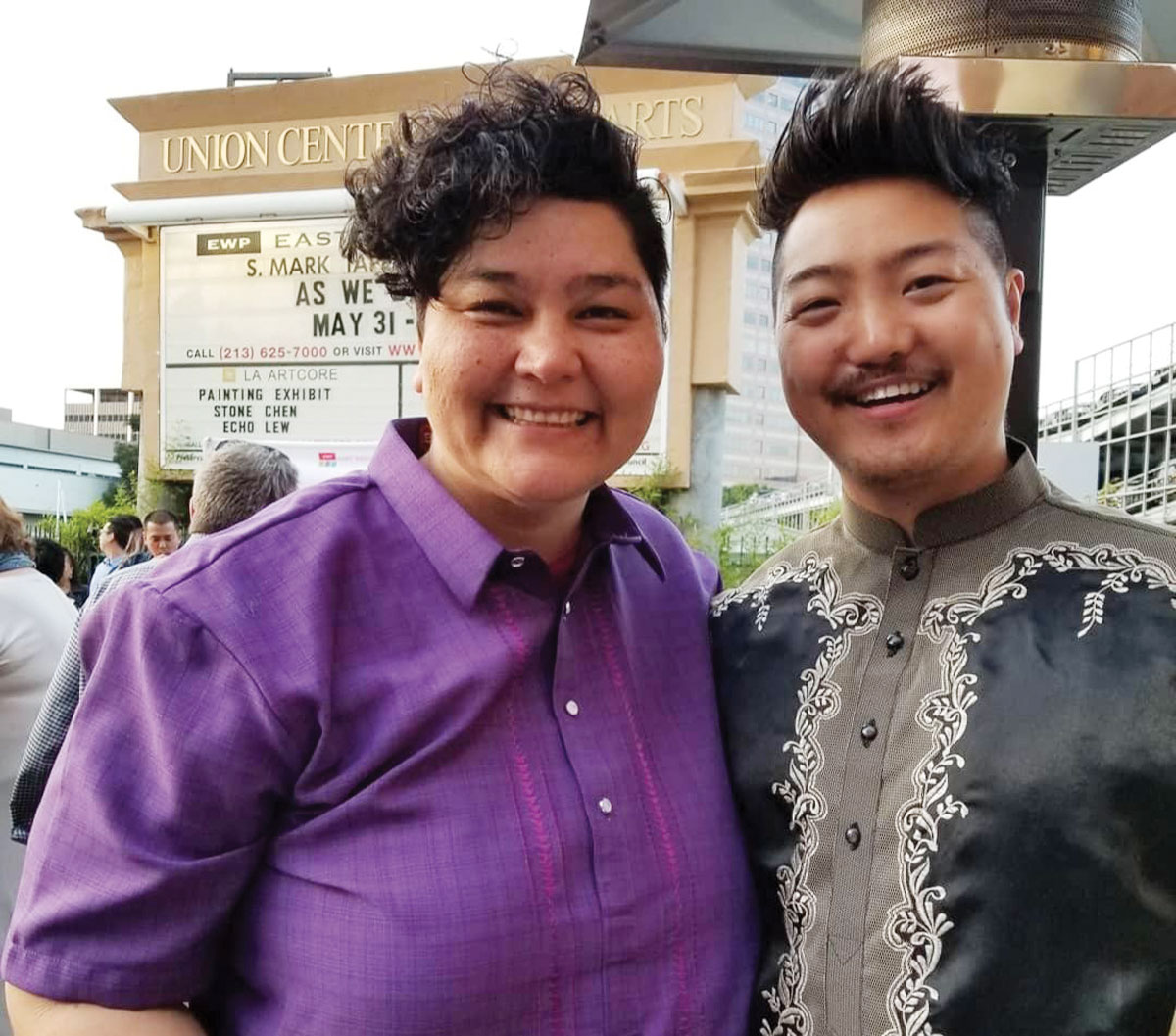
Some may presume this is Alison De La Cruz’s first directorial debut, but I remember her one-woman show, which she took to different community venues: “My solo show ‘SUNGKA’ included the Spam song [which] premiered at California State University in October 1999. It was presented by JACCC’s Fresh Tracks in 2000 at the David Henry Hwang Theatre. I then toured it to Bindlestiff Studio in SF in 2000 and around the country, mostly West Coast, through 2004.”
In “SUNGKA,” a one-woman show, she was the playwright, the actor and the director.
I recently saw “Bloodletting” (Kirk Douglas Theatre) and “Soft Power,” a Musical (Ahmanson Theatre). Both plays were awesome in all aspects of direction, playwrights’ works, cast, sets, and dialogues. This standard of quality is of course expected in larger houses, supported by an adequate production crew.
Would it be unfair to compare EWP’s “AS WE BABBLE ON,” which partnered with the LGBT Center and seen by 240 folks, on opening night? Perhaps not, particularly when with the audience, you hear laughter at key parts of the play, few times with no volume restraint, and all were babbling about “how good it was,” after.
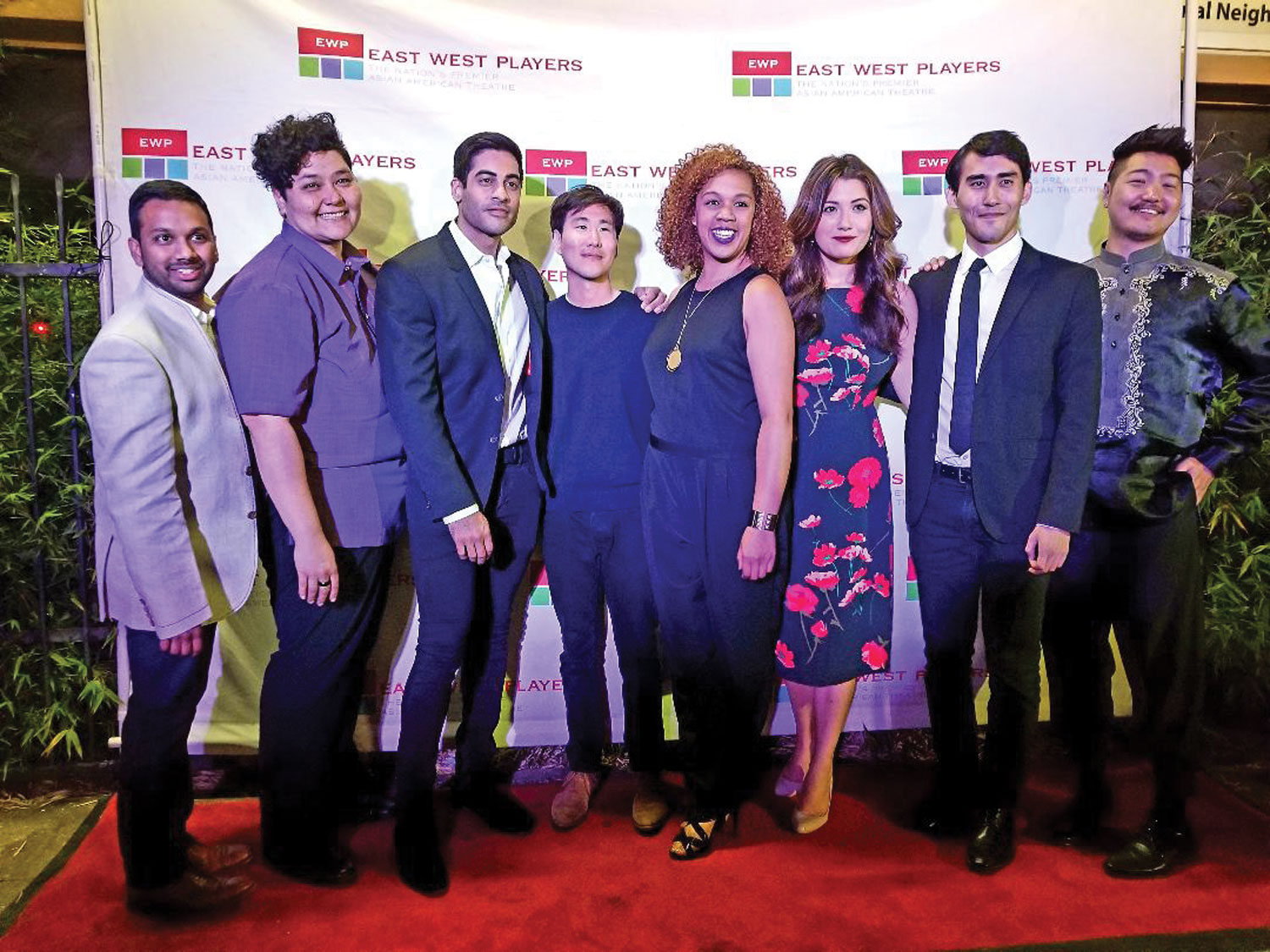
Broadway World’s Gil Kaan wrote on June 7: “the top-notch production values from East West Players shows always match, if not surpass the production expertise of larger houses.”
He was complimentary of Tesshi Nakagawa’s set design, which is “a utilitarian double decker set connected by spiral staircase with the basic furniture pieces of tables and chairs,” including the timely synchronization of projected images of “brick walls, framed artwork, phone screens, comic book sayings of superheroes” on stacked panels by Sheiva Khalily, projection designer.
A similar stage design was done for “Cabaret,” staged at Pomona College and directed by Giovanni Ortega. It made for an easy flow from one scene to the next, to simply look up or down or sideways.
The scenes moved quickly, with minimized interruptions that you sense a seamless flow; the director, the playwright, and production crew achieved their obra maestra, an oeuvre, and deemed a valuable addition to the body of work staged by East West Players for their 52nd season.
Particularly effective was the exchanges between Laura (played by Jaime Schwarz) and Benji (played by Will Choi) and the intense identity dialogues between Benji and his ex-boyfriend, Vish (played by Sachin Bhatt). It was not just a delivery of lines, but were expressive and evoked feelings from us, the audience.
De La Cruz described her artistic process in fleshing out the five characters: “I utilized my various experiences in devised or ensemble theatre and Shakespearian adaptation to help us navigate through this play with a very specific ‘Gaysian & Millennial’ dialect. We spent time building as an ensemble exploring who these people really are, what do they want, where are they going, where do they think they are going – and what kind of journey each of their characters is on in this play.
“I realized early on that this was a piece that had technology and comic book implications but had to be grounded in the comedy of life that comes out of complex people dealing with situations. I certainly looked for a cast that had comedic experience, timing and sensibilities, but I was also looking for actors who could be real people. Once we started rehearsal, I was clear with the actors that we needed to not try and play the funny, but find the humanity and arc of these characters and let Nathan’s words and the situations they are in to be what they are – funny.”
I had a quick moment before the play to ask Ramos, the playwright about his intentions, to which he said, ”I wanted to write something about how young people talk, how they go on dates, how they live lives joyfully as millennials, how they deal with frustrations, where race is a negative factor, but also how they triumphed over those obstacles.”
This is his first work as a playwright and won the EWP’s 2042: See Change Playwrighting Competition. “He is currently working on Disney’s Club Mickey Mouse and whose works have amassed millions of views on Tosh.O., Buzzfeed, RyanSeacrest.com, Reddit and other platforms,“ according to his bio.
Ted I. Benito, producer of “The Romance of Magno Rubio” at the Ford Amphitheater, “Dogeaters” at Kirk Douglas Theatre was equally complimentary, but with unfulfilled expectation: “Playwright Nathan Ramos’ AS WE BABBLE ON has some very snappy repartee, some very memorable characters and reflects (if not magnifies) some of this generation’s most pertinent issues (like technological advancement over personal growth, social media as a revenge catalyst, money/class/power vs. the have nots/wanna be’s, self-identity and self-empowerment and the intricacies of love (and in this, love-making). I think I would have enjoyed the production more so if there was a cohesiveness amongst the terrific ensemble in terms of energy and if there was just a tad bit more direction to heighten the tension in a few scenes. But the staging was brilliant and made use of today’s technology as part of the storylines. What a way to end East West Players’ 52nd year!”
In an email exchange with De La Cruz, I asked about her artistic process and how she managed to flesh out the complexities of her characters, two strong female characters (Sheila – played by Jiavani Linayao), (Laura – played by Jaime Schwarz) and three males (Benji –Will Choi), (Vish – played by Sachin Bhatt) and (Orson – played by Bobby Foley).
“I’m glad that it translated – I prepped everyone that this play had some steamy scenes and that it was all going to come from them. We built a lot of trust in the rehearsal process and I approach working with actors from a very collaborative and organic way. I trust that they are smart human beings who have a set of life experiences that can inform the work. And once we get in the room, we explore their work of creating and filling out the parts of these characters that they haven’t experienced. (Haha, like the sexiness with books).
“We also paced ourselves and layered in the more intimate moments with physical contact after we have had some time in the rehearsal room and on stage. Of course, as soon as I got the script, I saw that we had this layered scene, which I named ‘Trisexta’ and helped everyone understand that that was going to be one of our huge ensemble moments with so many things happening at once. We also talked about the fact that ‘Trisexta’ is a great scene because audiences can choose to focus on whichever part of the scene that they are most into, fascinated or turned on by, so it meant each of the tandem scenes needed to have its own authentic arc and pace that blended in with the others. All of this work then informed the other intimate moments between characters’ relationships which then manifested in all these physical ways on stage.”
In one scene, Sheila, played so adeptly by Jiavani Linayao, whose limber body made for such hilarious scenes when she made love to the bread dough, using yoga techniques. It was a clever portrayal, but also was quite credible to the audience that kept on laughing with suggestive manipulations.
As any good play with fine artistic sensibilities, the message inherent in it is what we aspire to: an understanding of why folks feel marginalized, how difficult it must be for a person with brown skin Indian features who is unfairly profiled as a “would-be terrorist,” when he is the most handsome and well-contoured actor in the cast, with a loving and supportive disposition or how difficult it is for an ultra-rich person to have real, true friends and the real-life struggles of survival of a writer and an entrepreneur.
De La Cruz had this to say: “Yes, a lot of the scenes involved people in Benji’s life (the comic writer) and the people he is closest too. Benji is struggling to figure out what his next life step is now that he has quit his job at Dynamic Comics. Laura, his sister, says to Vish that she was sorry that “Benji was doing the struggle Olympics with him.” I wanted to highlight how Nathan’s play helps us to unpack the ways people of different identities might deal with different and challenging experiences while still “rowing in the same boat” as Sheila says to Benji. Laura also calls him out on parsing things out in a genetic vacuum when he compares his experiences as a Korean American gay man vs. her as his Korean half white sister. Vish also challenges Benji to consider how his pouting about being called a doctor may not be as bad as Vish’s experience of being targeted as a South Asian man and the constant 9/11 references and racial slurs that he endures. I think that I was especially mindful of Sheila as a Pinay/Black entrepreneur who is sex positive and making choices about herself and her business when facing a racist Cookie Bakery. There are so many times when mixed, queer, immigrant or people of intersection are asked to simplify ourselves down to 1 thing. We are never 1 thing, and as a mixed queer Pinay with multiple pronouns, I have spent a lifetime of creating my own vocabulary and space to help define myself for myself, while pushing back on others telling me what they think I am. I was so excited to direct a play where it wasn’t about naming an identity but articulating the tensions, humor and hopes of those of us who are intersectional and living lives of multiplicity.”
Is multiplicity equivalent to living complex lives and allowing different textures to surface in our lifetimes or is multiplicity, a function of a soul untethered? Or simply, an evolution of a nation’s culture and its people? That, my readers, you will have to answer as you watch this play, now playing until June 24 at East West Players’ David Henry Hwang Theater.
Published on Asian Journal
Disclosure: In my prior work life, I had the unfortunate experience of working for a decade+ in a hostile environment in Sacramento, and where I pervasively felt all the disparagement and negativity all the way to Los Angeles, where I was based, via emails, phone calls and surreptitious visits after working hours by my immediate boss. I detested reading my emails as it would scrutinize or minimize our regional practices. It took very caring colleagues who reported to me and protected me. In the process, I experienced involuntary hemorrhaging for three months. I was fortunate to have my spousal support and the community support of trained mediator/friends and EEOC mediator from LA County, and psychologist wives of staffers, who made me aware of the hyper-scrutiny in a negative toxic environment. I had to enlist the intervention of the EEOC at the federal level, Fair Housing and Employment at the state level, including a letter from a very experienced labor attorney through the Asian Pacific American Legal Center.
How was it resolved? I went through mediation to make my all-male coworkers (predominantly white and one Latino) conscious of their harassment and sexist behaviors. As a condition of mediation settlement and non-filing of a lawsuit, all supervisors and managers in the department underwent a half-day training in hate and prejudice reduction training, conducted by a law firm in Sacramento, who was well versed in workplace harassment. After the department-wide training, the hostile work environment changed.
In my last year of working, given the oversight of the department’s civil rights section, I was able to work, experiencing a professional, non-toxic environment, as a manager and second-level supervisor, while training all my regional staff to be promotable.
At every public event I went to, I highlighted what was right in my public agency and no one was privy to what I was internally experiencing. Community friends cared for me and referred me to attend employment discrimination seminars, workshops, and training sessions.
How did I manage to work daily? I created a culture of care and mentoring, “We are all students, learners, and teachers” to ensure all are included and all have a chance to be promoted and are promotable. Every day as I prayed and practiced forgiveness, “Tabula Rasa,” the slate is clean. I retired after 27 years with 12 years as a manager, who worked in a toxic hostile environment, and one in which after I left had promoted more folks of color and white women in leadership positions. Though I bled physically, I found the succeeding staffers of mine did not have to.
Have you found your voice?
Fourteen years later, I am healed to fully discuss this experience, prompted by the changing culture of the #MeToo movement, founded by Tarana Burke and amplified by working women in Hollywood (like Angelina Jolie and many others), who were preyed upon by Hollywood’s power bigwigs, the likes of Harvey Weinstein and Kevin Spacey. No longer feeling like a victim, I am able to reclaim my voice and mentor others who face similar situations.
I consider my working life at present, a great privilege that I am most grateful for, that I can stand in parity and equal to anyone, even to my female employer, a very good friend, and even very privileged men, socially dominant in any situation in America.
With my found voice, I get to share what I think, not speaking brutally, but with honesty and respect to the other person, be they CEOs, community leaders, parking lot attendants, store owners, entrepreneurs, and even men and women of faith. I am most grateful to have this weekly column, where I find my connections in a just world, and wherein I can share what I believe we must all do to improve our current situations where disparities exist and that includes me, of course.
What are the features of a hostile environment?
The 1980 EEOC Guidelines interpreted Title VII and defined hostile environment harassment as “has the purpose or effect of unreasonably interfering with an individual’s work performance or creating an intimidating, hostile or offensive work environment.” It is defined in the Code of Federal Regulations Section 1604.11 (a). Barbara Lindemann and Paul Grossman, authors of Employment Discrimination Law, described it further, “whereas Vinson (a court case) spoke of altering conditions of employment and creating an abusive environment.”
Can you, AJ readers, think of abusive environment’s features? I am sure you can, as our current 45th president, ranting, raving and screaming at his underlings, as reported on national broadcasts and the New York Times and the Washington Post. I often wonder why a single staffer has not filed a complaint with the EEOC?
Shouting indiscriminately as visible displays of anger directed at someone in the workplace, where that person feels belittled, are features of a hostile workplace.
In my prior workplace at this public agency, the top-ranking Caucasian scientist used to belittle me as unable to hang with the white guys. For one, I did not drink beer, alcohol nor play golf (as they did) and my boss was perturbed that I would be reduced to tears, when he struck the table with his fists, in anger.
The mediator pointed out to him that women cannot be made into men and that women resort to tears when they are offended. I cried because my heart was broken and my spirit was crushed. To recover my center, I spontaneously cried and after, I found my voice. I recovered from being traumatized to articulate what I observed. Because I cried, my male boss invalidated me and dismissed my perspective, yet when another white male articulated my ideas, using his own words, my boss would immediately say, “Good ideas, Jim.” It was patently unfair to its face and he kept repeating his behavior until it became a pattern of disparity and it rose to become offensive. He sent other colleagues to out-of-state training sessions but not me, another disparate treatment feature.
My boss criticized our regional enforcement work and questioned what and why we did, professional and vetted work that was complimented by local district attorneys and their cadres of law enforcement officials that we worked with. It made for an unhealthy environment that our meritorious work was considered substandard, yet our region became the nurturing spots for problematic employees “to be rehabilitated.”
In collaborative meetings with the federal government, my colleagues in Sacramento shunned me, as if I had the plague. But since I had close collaboration and working relationships with the federal folks, they invited me to join them at dinner. I found it amusing that the federal government leaders were inclusive towards me, while my own in-house Sacramento colleagues shunned me, clearly showing me the contrast in professionalism.
My superiors made up false written reprimands that I had to seek the intervention of the department’s civil rights section. I befriended a staffer who advised me how to respond allegation per allegation. When they alleged I was insubordinate and unable to do my assignments, I was under the care of a physician, who had diagnosed my internal bleeding and what she called “stress-induced hemorrhage.” Imagine bleeding for three months and the anemia which resulted from it, and even imagine that this was happening as my eldest daughter was growing up to be a teenager. How does one maintain functionality as a professional, a working mom and spouse and even a community volunteer?
Thanks to the professional associations I belong to and headed as the chair in the field of quality and women’s groups in the Asian American community, I was fully supported by healthy behaviors and good character. I knew what the features of a healthier work environment by serving the community and the professional quality community and not to normalize hostile environments.
The #Metoo Movement
#Metoo Movement founder Tarana Burke has used her voice quite prominently as to say, “You have to use your privilege to serve other people.” Hollywood actor Reese Witherspoon is one of those using her privilege, amplifying the collective women voices to clean up their working environment, including fundraising for legal fees for others who may need legal services. At a community gathering for the organization Look What She Did, Felicity Huffman shared that she attended a gathering of women and collectively, they have now raised $21 million. The fund has oversight by a national group of women lawyers to determine who will need legal representation, which Witherspoon shared on a national television platform with Oprah Winfrey.
Last Thursday, April 26, I attended Cal State University Northridge’s Department of Asian American Studies Awards Night where students visibly advocated for CSUN’s D.A.T.E, “a peer education, date or acquaintance rape prevention program,” as described on CSUN’s website. One student spoke of being a survivor and how she used her own past to rise to become a student leader on campus. It was also so inspiring to see Dr. Shirley Hune, Dr. Edith Chen, Dr. Eunai Shrai, Dr. Tracy Buenavista, along with Allan Aquino and Glenn Omatsu speak coherently, with ease, with confidence, but with care and consideration for their “community family” at CSUN. One speaker, a founder of the Department of Asian American Studies, Dr. Kenyon Chan, said, “I am home.” That same night, Aquino recalled this is the week of the Armenian genocide, where an estimated 1,500,000 Armenians were killed by the Ottoman government and the 1992 LA Riots, the same anniversary day for my promotion to a regional administrator at that state agency.
Imagine working at CSUN’s Department of Asian American Studies and to feel your second home is your workplace?Students, though trembling as they approached the lectern, found their sheepish voices realized and shared their dreams and what they have learned as graduating seniors, including their mission on how to develop other leaders in their midst. Do you find this environment quite healthy? That as their professors guiding them towards finding their voices, they are encouraged to be integrated into CSUN, to discover their own pathways in higher education and no longer lost, able to graduate on time, and as they succeed, they lift others as well.
What if America was one community family?
I am quite fortunate today that my employer, the Asian Journal, values my strengths. Just a few days ago, I was given an assignment to attend Parent Community Education night at St. Genevieve’s School in Panorama City. I was intrigued to experience being welcomed with vibrant and energetic voices, led by their principal, Dan Horn, as with 500 other students and their working parents. He introduced Craig Scott and Beth Nimmo, the brother and mother of Rachel Scott, respectively, the first victim killed by hate-filled student/shooters at Columbine High School in 1999.
That evening, the parents listened for two hours and learned about the faith convictions of Rachel Scott, and how she befriended her classmates by writing in a journal which she passed on discreetly to others. Her journal became a space for an honest exchange of their interior feelings, and how they developed friendships, while sharing Rachel’s love of God and love for them. It was a tear-jerking moment, but also inspiring for parents and students, whose social awareness was being raised that these Columbine shooters were angry, isolated and felt diminished. So, it was incumbent on all these St. Genevieve students, their teachers, their support staffers to create a ‘community family.’
In America today, unresolved anger at home or in school turns to hatred. To deranged minds filled with hatred, it can take on planning multiple deaths, as in Columbine, where the two student shooters wanted the destruction of the school’s more than 500 population and planted bombs in critical areas. Nimmo shared that the planned massive deaths of hundreds did not happen, as the bombs did not detonate but 14 students and a teacher died, including her own daughter, Rachel.
The following week, I returned to interview the principal, Dan Horn, and to my good fortune, as others in the Valley, St. Genevieve has undergone their own transformation to become a ‘community family’ and self-identify as a National School of Character with three values: to know God, to live with honor, and to change the world. I considered this assignment my own spiritual gift from God using my enlightened employers, for I can see clearly by these two examples, one at St. Gen and another at CSUN’s Department of Asian American Studies, what an inclusive community family is.
Published on Asian Journal