“First. Love ought to manifest itself more by deeds than by words. Second. Love consists in a mutual communication between the two persons. That is, the one who loves gives and communicates to the beloved what he or she has…I will consider how God dwells in creatures; in the elements, giving them existence: in the plants, giving them life; in the animals, giving them sensation; in human beings, giving them intelligence; and finally how in this way he dwells also in myself, giving me existence, life, sensation and intelligence…I will consider how God labors and works for me in all the creatures on the face of the earth; that is, he acts in the manner of one who is laboring. For example, he is working in the heavens, elements, plants, fruits, cattle, and all the rest—giving them their existence, conserving them, concurring with their vegetative and sensitive activities, and so forth. Then I will reflect on myself.”
Contemplation to Attain Love of Jesuit Recruits, as cited by Chris Lowney, Heroic Leadership: Best Practices from a 450-year-old Company [Jesuits] that Changed the World, 2003.
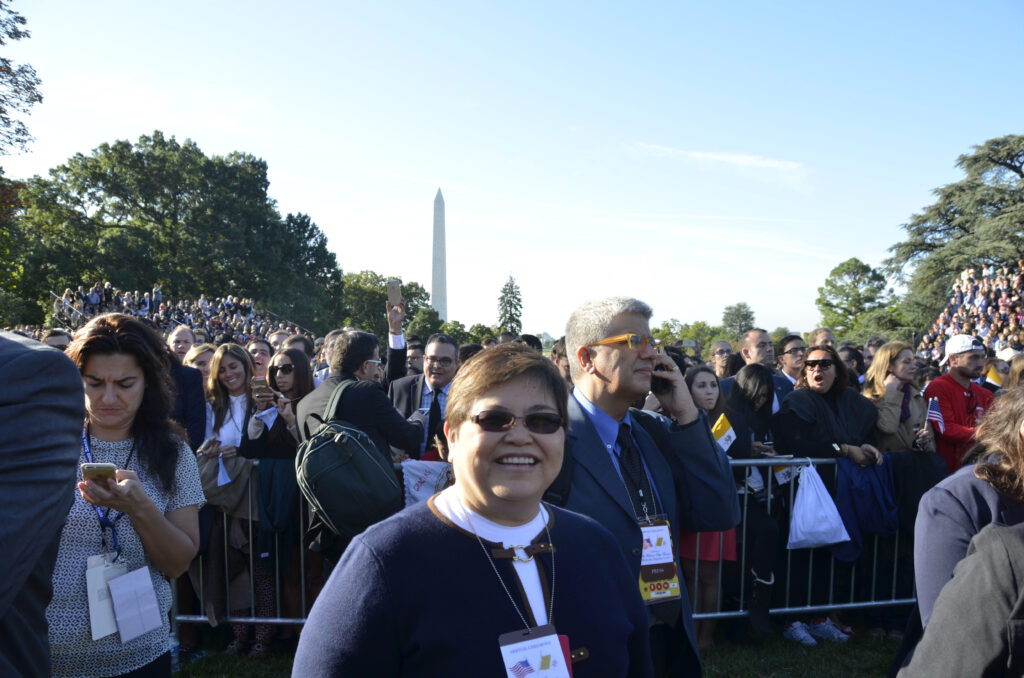
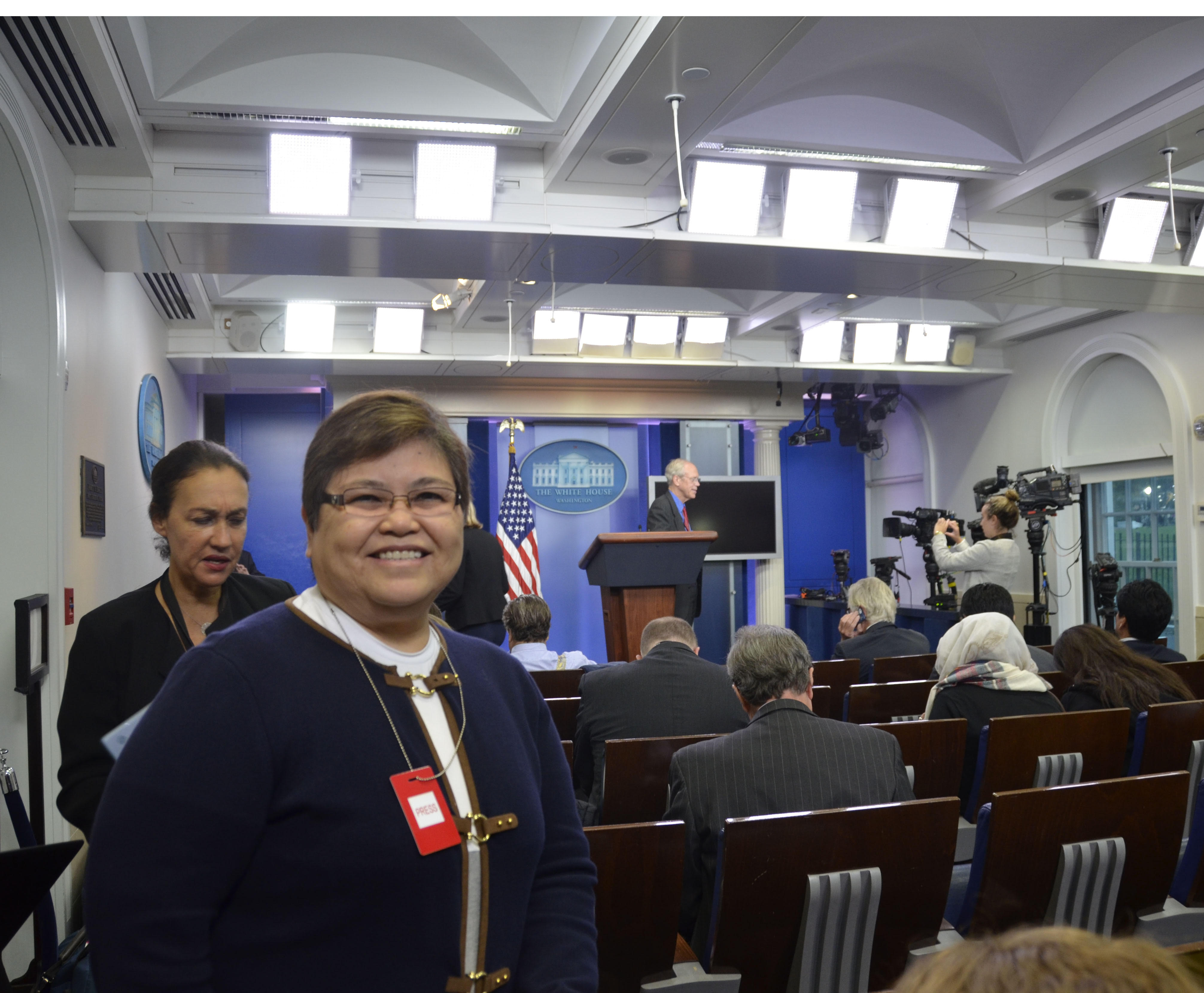
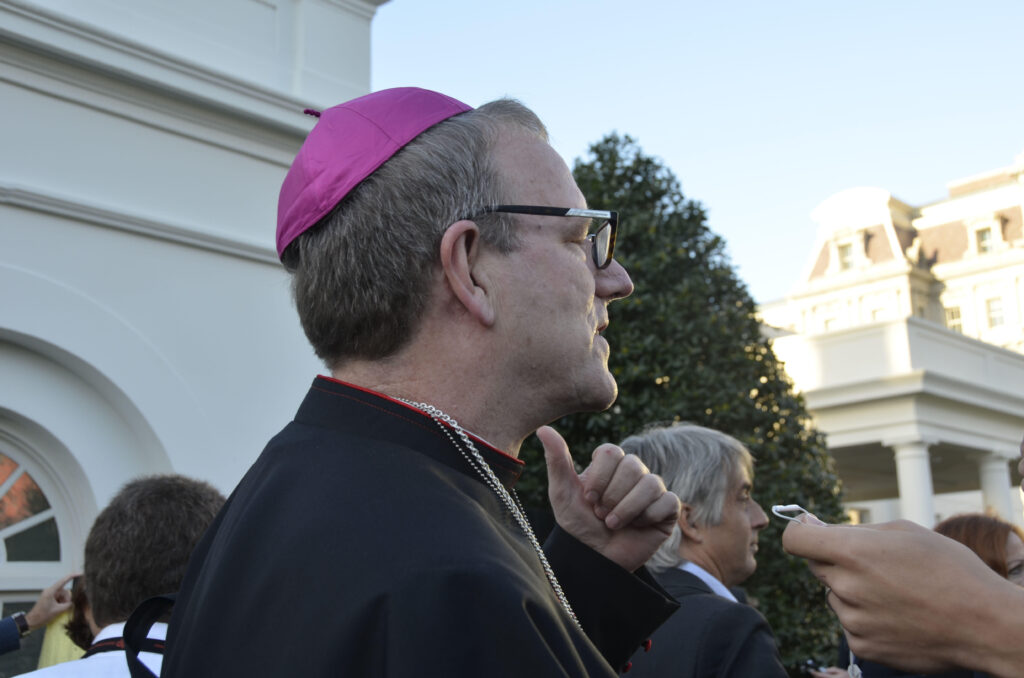
Pope Francis generates so much enthusiasm from people, wherever he goes, as he embodies love, humility, wisdom and uncommon warmth, thawing out chills of hostility. It is as if his presence in the United States, on Sept. 22-26, electrified the crowds, as his tweets have gone viral, and on Facebook, became trending news. Prior to his historic visit to the US, the Holy Father hosted both the Cuban and the US delegations to broker the peace talks between the two countries. The long-standing conflict has now turned into a new chapter of peace-building, with embassies opening up in both Cuba and the United States. Arrival ceremonies at the White House’s South Lawn I got to 17th and Pennsylvania at 3:40 am on Wednesday, Sept. 23 and already, Reuters, Fox, Associated Press and Korean Television were in line. Network television crews and morning talk shows were allowed to set up before 5 am, and security checks for hundreds of journalists took two hours for all of us to get press cards and our camera equipment checked. 11,000 ticketed guests had gathered at 9:15 am. By now, the sun had tempered the chill, making for a beautiful morning, with blue skies and mild temperatures. The Program started with Ruffles and Flourishes and Hail to the Chief. The President and Mrs. Obama greeted His Holiness Pope Francis, followed by introductions to the official welcoming committee. The National Anthems of the Holy See and the United States followed, with Musical Troop in Review. Loud cheers erupted when the Holy Father arrived. President Barack Obama welcomed the Holy Father. He jokingly referred to the White House’s backyard as not being typically this crowded. He underscored the gathering as reflective of “the size and spirit of today’s gathering and the deep devotion of some 70 million American Catholics. It reflects, as well, the way that your message of love and hope has inspired so many people across our nation and around the world.” The president spoke of the Pope’s unique qualities as a person, “In your humility, your embrace of simplicity, in the gentleness of your words and the generosity of your spirit, we see a living example of Jesus’ teachings, a leader whose moral authority comes not just through words but also through deeds.” He spoke of “the Lord’s most powerful message is mercy. And that means welcoming the stranger with empathy and a truly open heart—from the refugee who flees war-torn lands to the immigrant who leaves home in search of a better life. It means showing compassion and love for the marginalized and the outcast, to those who have suffered, and those who have caused suffering and seek redemption. You remind us of the costs of war, particularly on the powerless and defenseless, and urge us toward the imperative of peace.” These drew loud applauses. The president spoke of the Vatican’s role in thawing out the chill in US-Cuba relations as well as the need to take care of our common home. “And, Holy Father, you remind us that we have a sacred obligation to protect our planet, God’s magnificent gift to us. We support your call to all world leaders to support the communities most vulnerable to changing climate, and to come together to preserve our precious world for future generations. Your Holiness, in your words and deeds, you set a profound moral example,” he said. The White House, during a conference call with the open press, in preparation for the visit of the Pope, recognized common values shared with the Vatican on climate change. The president remarked, “Here at home and around the world, may our generation heed your call to never remain on the sidelines of this march of living hope. For that great gift of hope, Holy Father, we thank you, and welcome you, with joy and gratitude, to the United States of America.” Pope Francis’ remarks centered on dialogue, of tolerance, of being inclusive“Mr. President, I am deeply grateful for your welcome in the name of the all Americans. As a son of an immigrant family, I am happy to be a guest in this country, which was largely built by such families. I look forward to these days of encounter and dialogue in which I hope to listen to and share many of the hopes and dreams of the American people.” The Pope addressed the Joint Session of Congress and Senate on Thursday, Sept. 24 and traveled to Philadelphia for the eighth World Meeting of Families over the weekend “to celebrate and support the institutions of marriage and the family at this critical moment in the history of our civilization,” he said. “Mr. President, together with their fellow citizens, American Catholics are committed to building a society which is truly tolerant and inclusive, to safeguarding the rights of individuals and communities, and to rejecting every form of unjust discrimination.” The Pope reminded us all that cherished freedoms are America’s most precious possessions, and “to preserve and defend that freedom from everything that would threaten or compromise it.” On climate change, the Pope found it “encouraging that you are proposing an initiative for reducing air pollution. Accepting the urgency, it seems clear to me also that climate change is a problem, which can no longer be left to our future generation. When it comes to the care of our common home, we are living at a critical moment of history. We still have time to make the change needed to bring about a sustainable and integral development, for we know that things can change. Such change demands on our part a serious and responsible recognition not only of the kind of world we may be leaving to our children, but also to the millions of people living under a system which has overlooked them. Our common home has been part of this group of the excluded, which cries out to heaven and which today powerfully strikes our homes, our cities, our societies. To use a telling phrase of the Reverend Martin Luther King, we can say that we have defaulted on a promissory note, and now is the time to honor it.” These imperative statements drew the loudest applauses. St. Augustine Catholic Church’s Choir of Washington, D.C, sang “Total Praise” after the remarks and energized the crowds. Moments later, the Pope appeared on the balcony with President Barack Obama and First Lady Michelle Obama. Crowds gathered included Los Angeles Bishop Robert Barron, who told a group of reporters, that he was a guest of NBC’s “Today” show. Maria Shriver interviewed Robert Barron on what might be expected from the Pope, “He’ll speak of Jesus Christ, but also of basic human values that appeal across the denominational lines and to the secular world. He’s someone very at ease with that kind of communication.” I spoke to Maria Peña, of La Opinion, about the Pope’s remarks, “It was short, poignant, did not emphasize immigration [although she thinks that will be addressed in the Joint Session of Congress and Senate] instead, emphasized climate change. It was good, all together. I like the finishing touch of someone yelling out, “We love you Pope Francis.” She also shared the story of Jersey Vargas, who gave a handkerchief of Our Lady of Guadalupe to the Pope, and who at her tender age of 10 years old met with Pope Francis to save her father from deportation and to call on the president and Congress to act on immigration reform. Shortly after 10 am, the crowds were dispersed, leaving behind empty plastic bottles, once with water to satisfy the biological thirst of these thousands gathered. For this writer, this momentous occasion was a satisfaction of her spiritual thirst, a wish to see Pope Francis in person, as a personification of a moral authority whose actions are aligned with his beliefs. But also, Pres. Obama and their appearances onstage made for a sacred moment, given their shared common values on big ticket item issues: climate change, poverty, refugees and “the conviction that all members of the human family have equal value and infinite worth and should have the opportunity to realize safe and productive futures for themselves; the belief that reconciliation can happen not only between people but also between nations; the conviction that we must secure the unalienable right of all people to practice their faith according to the dictates of conscience, standing against those who would target people for violence, persecution, or discrimination based on their religion; and the duty to manage the resources of the earth today in such a way that will allow our children and grandchildren to live their lives abundantly tomorrow.” But also to represent the Asian Journal amongst these hundreds of journalists, as I covered these historic firsts of convergences at the White House. I felt a sense of pride, a feeling that I was once an immigrant, now an American citizen/journalist, getting access to walk on the soft grass of the verdant South Lawn, and to have a photo taken with hundreds of journalists, thousands of citizens, fellow Catholics and non-Catholics warmly welcoming the Holy Father in the United States. To be privileged in this manner with God’s grace to a lapsed Catholic of 25 years, is indeed God’s blessings in many ways! I got to talk to young folks who waited since 2:30 am. One is Duddh of Washington, DC, formerly of Philadelphia: “It is momentous, once in a lifetime that we are not going to pass up.” Another is Maria, from West Virginia, who was “feeling great, excited and has been waiting since dawn.” Brandon, who came from New York, found the Pope “inspirational, a leader, like no other, who will work on issues that matter to humanity” and even though he was lined up since 2:30 am, “it was worth every second.”
“What could more profoundly vindicate the idea of America than plain and humble people – the unsung, the downtrodden, the dreamers not of high station, not born to wealth or privilege, not of one religious tradition but many – coming together to shape their country’s course? What greater expression of faith in the American experiment than this; what greater form of patriotism is there; than the belief that America is not yet finished, that we are strong enough to be self-critical, that each successive generation can look upon our imperfections and decide that it is in our power to remake this nation to more closely align with our highest ideals? “We the People…in order to form a more perfect union. We hold these truths to be self-evident, that all men are created equal.” These are not just words. They are a living thing, a call to action, a roadmap for citizenship and an insistence in the capacity of free men and women to shape our own destiny.”
President Barack Obama, March 7, 2015.
Clarity. Loud Call. Trumpet. Clarion. American Leader. Pinay. When Lillian Galedo calls a community into action, clarion is her middle name.
Much like President Barack Obama’s description, these shapers of America came not from high stations of life, but they would shape our country into a course of inclusion, prosperity and great freedoms. Lillian’s voice resonates with the young ones to the older ones through her examples of consistency, of sustained selflessness, and progress towards the common good. In Dr. Dawn Mabalon’s book, “Little Manila is in the Heart,” 18 pages identify Lillian as a part of the Americanization and ethnic identity movement, Filipino/a American movement, transcending community divisions, the groundbreaking of Stockton’s Filipino Center and an integral part of a University of California, Davis research project on the Filipino community.
Added to that is a high regard for her leadership of Filipino Advocates for Justice (formerly Filipinos for Affirmative Action) since 1980. Her brand of unique leadership is that of an American Pinay, whose personalities are “family, hospitality and openness to cultures.”
The Pacific Crest Trail reportedly “ascends more than 50 major mountain passes and skirts the shores of innumerable bodies of water. Diversity is the hallmark … on its route, temperatures can top 100° F in the deserts and drop below freezing in the mountains.”
Lillian is our modern day’s PCT’s trail angel, embracing diversity and helping fellow life travelers along the way, crossing many pathways and ascending summits.
Dr. James Sobredo, a long distance hiker, who completed 621 miles of Camino de Santiago in Spain and Portugal, and an Associate Professor of Asian American Studies at California State University in Sacramento, has this to say: “I admire Lillian Galledo’s dedication. She has been advocating for social justice since the 1970s and has been unflinchingly steady in her social justice work. Lillian has managed to evolve into a pragmatic community leader who has figured out a way to ensure the survival of her Filipino-American organization, even after nearly a decade of budget cuts to social service funding. Many organizations have closed during this difficult budget crisis, especially during the Deep Recession, but Lillian and the Filipino American social justice organizations [she leads] have managed to survive and indeed thrive throughout the decades.”
Ascending her 1st summit of academic research proficiency and efficacy “I saw my father, Inocencio, a farmworker born in Bohol in 1898 who migrated to the US at age 24, leave the house at 530am and come home at 530pm, covered in dirt. Us kids’ job was to remove his boots and give him his pipe. He then had dinner, watched television for a while and went to bed early. Sometime he would ask us to walk on his back. He would get up the next morning and do it over again. He also worked on Saturdays.”
Her father planted, irrigated and harvested crops like asparagus, lettuce, grapes and sweet potatoes. As extended farmhands, the family helped in harvesting sweet potatoes. Here, she learned the values of teamwork, hard work and discipline, even while in grammar school.
The 1950s was “a generation within our community’s history that emphasized being American”, Lillian Galedo recalled (Mabalon, p.306), “You were now American so you will act like an American.” Our little neighborhood was very diverse, “where we were one of only two Filipino families who had a Filipino mom and dad, the rest were hybrid families, Filipino/white, Filipino/Mexican, Filipino/black.” She was neither taught Tagalog nor Cebuano, as her parents believed, “You are American, you learn English, You will not become a farmworker.”
Raised by her mother to be a God-fearing Catholic, she went to Catechism classes like a good girl — as a child, even fantasizing about becoming a nun — and was generally unaware of the contradictions in the outside world.
Her mother, Sotera, taught her discipline and self-restraint, not to desire things one cannot have, and how “not to aspire to huge expectations.” Her mom declined to sign Lillian’s EOP (a student affirmative action program) papers, as she could not believe all of Lillian’s tuition fees and expenses would be paid for in college. Thanks to her older sister, Herminia’s example Lillian was inspired to reach for her dreams, and entered UC Davis.
At UC Davis, she saw a new way of life, distinctly different from living in unincorporated South Stockton, near the San Joaquin River, which divides the delta from Sacramento on the north and Stockton to the south. Segregationist municipal policies led to no infrastructure in Stockton, where they were not connected to the city sewage system and had no sidewalks. Segregation was a characteristic of the whole city. South Stockton and East Stockton were almost all people of color, while North and West Stockton were predominantly white.
Much like the Pacific Crest Trail, she became exposed to pathways, and later in college, to anti-war activists.
Tackling the 2nd summit of Americanization and ethnic identity Around the pivotal period of the late 60s, she read the Warren Report’s findings about urban unrest following the assassinations of Dr. Martin Luther King and Robert Kennedy in 1968, the march from Selma to Montgomery and the killings of the four students inside a church in Alabama, while the war in Vietnam was raging.
In college, she heard student activists like Jean Quan, who would later became Mayor of Oakland, educate students about the Vietnam war.As a work study student for Professor Fujimoto, she got a glimpse of the world through the New York Times, which he assigned her to clip from every week. Professor Isao Fujimoto, who himself had rural roots, pushed UC Davis to have community-relevant ethnic studies.
With a Ford Foundation grant, that Prof. Isao Fujimoto helped to secure, students like Lillian, as community researchers tasked to go to their home communities to document their histories. Lillian found herself going back to study the Stockton Filipino community.
Widely known for her social justice advocacies and youth leadership development programs that trains high school students to become engaged in electoral politics, her awards span two decades plus: Asian Business League’s Community Service Award, The Wallace Gerbode Fellowship, Filipinas Magazine’s Community Service and Leadership Award, Californians for Affirmative Action, East Bay Californians Affirmative Action, Berkeley’s Committee on the Status of Women, The Eureka Communities Fellowship, UC Davis’s Alumni Service Award, Filipina Women’s Network’s 100 Most Influential Women, Kenneth Hoh Award for Excellence in Family Bridges, Upward Bound’s Commitment to Social and Economic Equity Award, Philippine News’ Filipino American Pioneer Justice Advocate Award, Multi-Ethnic Sports Hall of Fame’s Women in Service Award, Asian Law Caucus’ Yuri Kochiyama’s Lifetime Achievement Award for 2013 and Office of Assemblyman Bill Quirk’s Distinguished Women of the Year, Social Justice Honoree for 2014.
Cynthia Bonta, herself a community leader who heads a non-profit, has this to say: “While I was building my nonprofit organization in Sacramento, Lillian was building FAA and empowering the Filipino American community in the East Bay and the SF-Bay Area to make their voices heard on issues that affected their civil rights in the areas of education, immigration, employment, housing, etc. In 2007, Philippine National Day Association (PNDA), vested her with the Title of Lakandiwa, awarded to an outstanding Filipino American leader. The Lakandiwa translates to the highest regard, whose life achievements are to be emulated; and who is held up, as a role model to the young. The Lakandiwa has a deep understanding of man, arising from knowledge of one’s own history and culture. From such enlightenment comes compassion and service to others.”
The Pacific Crest Trail reportedly “ascends more than 50 major mountain passes and skirts the shores of innumerable bodies of water. Diversity is the hallmark … on its route, temperatures can top 100° F in the deserts and drop below freezing in the mountains. Lillian Galedo is our modern day trail angel of the PCT, embracing diversity and helping fellow life travelers along the way.
The first part of this two-part series appeared in the Asian Journal’s March 14, 2015 issue where we tackled her story from her roots in being raised by a farmworker father and a full-time mother to her time in college at UC Davis.
In college, “I walked into the room, and it was a room full of Asians and it was so empowering to see I could’ve just broken down and cried, “ Galedo remembered. (Dr. Dawn Mabalon “Little Manila is in the Heart,” 309).
Transcending a third summit: From community development to progressive social change. With a Bachelor’s Degree in Child Development, Lillian went to Stockton where she got a job as an eligibility worker for the County welfare department. After two years, she moved back to UC Davis, where she finished up her paper on “Roadblocks to Community Development in Stockton.” This paper gained critical significance.
During a meeting with County Supervisors, community members offered evidence of the need for the Filipino Center. “Lillian Galedo and Laurena Cabañero, Stockton-based UC Davis researchers made a dramatic presentation in which they showed how the planned Crosstown Freeway would obliterate what had been left of Little Manila after West End redevelopment demolitions. According to Galedo and Cabañero, half of all Filipina/o businesses in Stockton would be destroyed and hundreds of Filipino single men would be displaced. Few had realized the devastation the freeway would bring to the last blocks of Little Manila, “ Dr. Dawn Mabalon described. (Mabalon, 321).
Lillian learned from Jose Bernardo, a community leader, whose charisma was built on humility, and one who bridged the gap between the first generation, those who struggled and learned to preserve their language and culture and the post-1965 immigrants who waged a campaign to fund a housing project for low-income senior citizens and commercial space.
El Dorado and Center streets were the main drag of Stockton, where Filipino Town was located. This was the center where “most happenings” occurred, a place where farmworkers would go to after a days work. In nearby Chinatown, they could buy crunchy pork bellies in paper cones, or eat at restaurants and shop for their basic needs. But, it also the hangout for the homeless, who slept by the riverbanks.
From the mainstream’s perspective, it was a blighted area, but to the farmworkers and their families, it was a place of community, of hospitality, including a place where farmworkers could buy quality work boots and hats.
Little Manila ended up being destroyed, as Stockton’s development plans called for a Crosstown freeway, “cutting a wide swath through Stockton, leaving only two blocks of Little Manila.” (Mabalon, 297).
Lillian no longer has recollection of Washington St., including the house where she grew up in, as it was torn down by redevelopment. But the campaign for a Filipino Center taught her how to build consensus amongst divided members of the community, including how to speak truth to those in power. Lillian crossed more summits.
Seeking to further her knowledge about Filipino American history, particularly how it is portrayed in school textbooks, Lillian joined a workshop at the 1975 Filipino People’s Far West Convention held in Stockton, where she met Cynthia Bonta, Jessica Ordona, Terry Bautista and Vince Reyes, who were Katipunan ng Demokratikong Pilipino (KDP) members, interested in education. For two long years, they studied how Filipino history was covered in school textbooks, and reported their findings to the Calilfornia State Board of Education where publishing companies lobbied for their textbooks. The committee’s critique of textbooks offered an accurate telling of Filipino American history, which included a century of community building, footnotes and references, and contributions made by Filipinos, much like the history of Stockton, memorialized in a textbook, meticulously and factually sourced from archival research, written by Dr. Dawn Mabalon.
Fourth summit: At the helm of a non-profit and civic engagement In 1980, she was hired by Filipinos for Affirmative Action (FAA) — what Filipino Advocates for Justice (FAJ) was formerly known as — as the program coordinator. She came in as one of the last employees hired under the CETA program to do outreach while Jessica Ordona was executive director. A year and a half later, Lillian became the interim director. Under her 35-year leadership, she stabilized funding and grew the organization from a budget of $30,000 to $550,000 and expanded youth development programs from Oakland to Union City, Hayward, and Alameda. She refreshed the community analysis by looking at the census, which showed that more than 60 percent of the community are foreign born. In the mid-1980s FAA helped parents in Union City respond to high rates of Filipinos suspension and expulsion rates. FAA helped parents bring their concerns to school board meetings winning changes in the school district’s suspension and expulsion process and the way parents were treated by the school district. More recently FAJ has been advocating for violence prevention programming, through a coalition that includes faith-based and other community groups who went to City Council meetings to obtain violence prevention funding to divert young people away from violent activity and gangs. Today, these young leaders are involved in getting citizens to vote by phone banking, and even, precinct walking, some doing it for the first time. Over the years, Filipino voter participation has increased. In 2008, only 17 percent of the Filipinos voted; in the 2012 elections, that percentage went up to 60 percent. In 2001, when airport screeners — 60 percent of whom were Filipino in the San Francisco Bay Area — were fired after the September 11 terrorist attacks, FAJ helped them defend their jobs. Most of them were older folks, some of whom were once engineers and other professionals. Some of those who lost those jobs became caregivers and FAJ helped to organize them into an organization called PAWIS. FAJ’s advocacy for the rights of caregivers has expanded since then, joining the National Domestic Worker Alliance (NDWA) and helping to organize the California Domestic Workers Coalition. As 78 million baby boomers age, the caregiving industry in the US has expanded prompting some Filipinos to set up caregiving businesses. Some work their employees 24/7, fail to pay decent wages of overtime pay prompting a clamor from caregiver advocates for a statewide Domestic Workers Bill of Rights. The California Domestic Workers Coalition, which also includes the Pilipino Workers Center in Los Angeles, won legislation that authorized overtime pay for caregivers, signed by Gov. Jerry Brown in 2013. FAJ has also worked on helping caregivers file wage theft complaints. So far, FAJ has helped caregivers win more than $500,000 in ‘lost’ wages. In a partnership between the Asian Law Caucus and FAJ caregiver in Fresno are on deck to win $750,000 in back wages. According to Julie Su, Labor Commissioner of the State of California, “Law is the language of power. Those who speak it get the goods and those who don’t do not.” But aside from law, organizing grassroots gets workers the goods, while the law protects their rights to those goods. The likes of Lillian Galedo are few and far between, and their clarion leadership styles will resonate for generations to come, as Geraldine Alcid recalls. “I began working at FAJ, previously FAA in 2006, as the Programs Director. I had always been aware of Lillian Galedo as a leader in the Filipino community, but after working with her closely, I have even greater admiration and respect for her. Her tireless drive and determination to make things happen to further justice have inspired a generation of leaders in the community, whether she’s fighting for immigrant rights, low-wage workers, youth programs or the recognition of the veterans. But the invaluable lessons I take with me are found in her displays of resilience, compassion, self- care and love. Because it’s not what she does at “work” that really set Lillian apart for me. During an exceptionally busy period, Lillian found out she had cancer. For many months she endured extensive treatment. This hardly slowed her down. In that time, she still managed to oversee FAA’s name change to FAJ, launched a website, continued to serve on her multiple boards, and fundraise. There I witnessed her steady optimism and fierce spirit guide her through such an intense personal experience while never missing a beat in her dedication to her community,” Geraldine Alcid shared. As a caring leader, Lillian volunteered to serve and lead more boards: Equal Rights Advocates, Dignity Campaign for Real Immigration Reform, Oakland Asian Cultural Center, National Network for Veterans Equity, East Bay Asian Consortium, Filipino Civil Rights Advocates, United Way, National Network for Immigrant & Refugee Rights and The Women’s Foundation.Clarion leadership is Lillian Galedo’s footprint, everyday, while she consciously invites folks to make America a more perfect union, not just for its longtime citizens, but for its immigrants, who are later integrated as citizen voters and community builders. Much like the Pacific Crest Trail that takes us to 50 mountains, Lillian Galedo’s life has taken us to many summits of justice building, fairness and equity for many more. P.S.: This writer is grateful to her husband, Enrique Delacruz, Ph.D, for his invaluable support in interviewing this public figure and filling in the gaps in civil rights history pertinent to the Asian Americans.
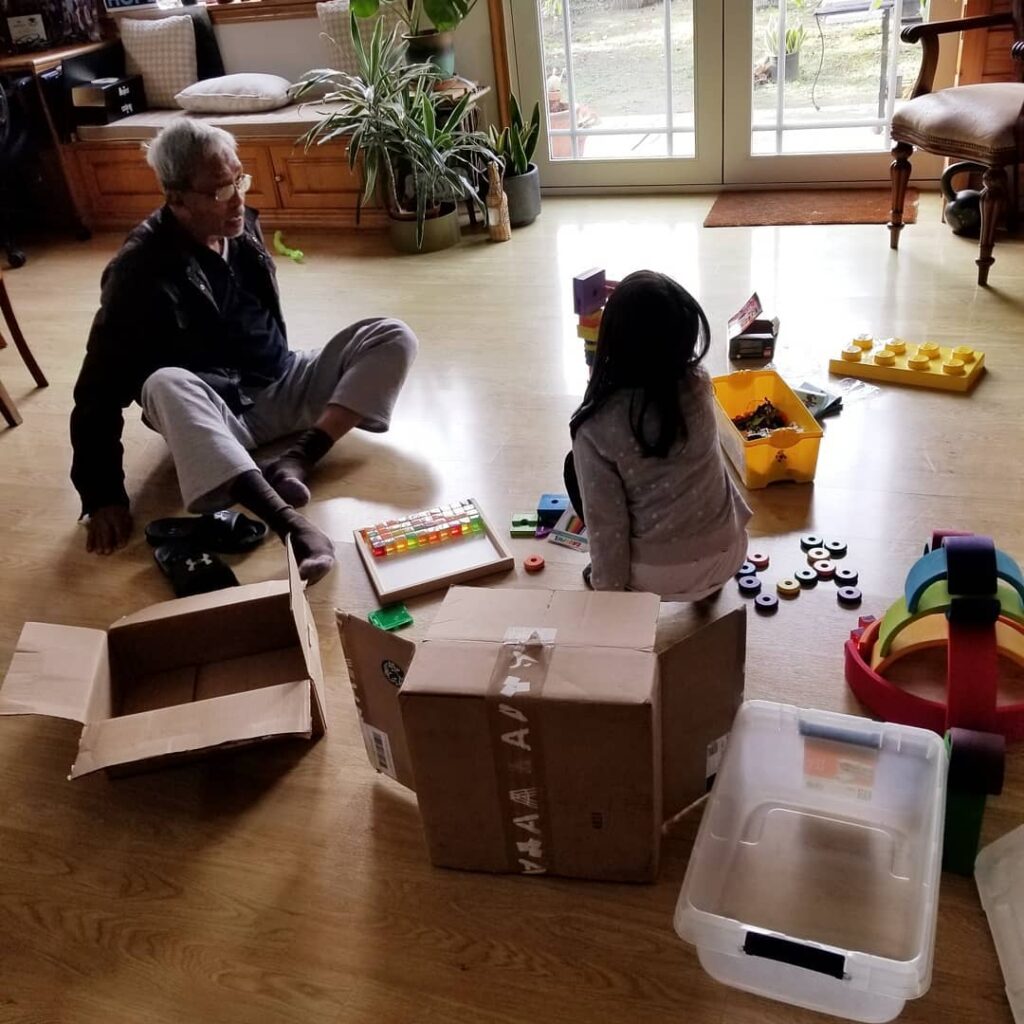
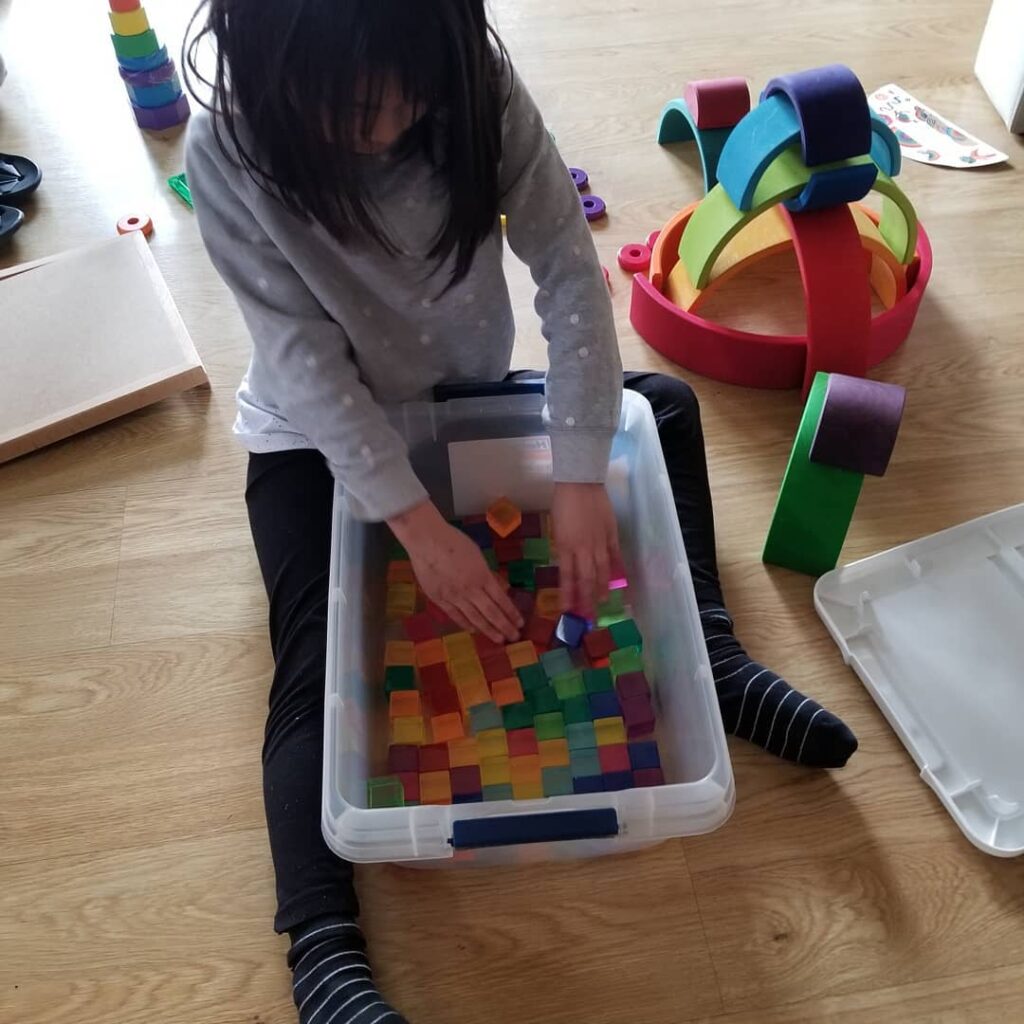
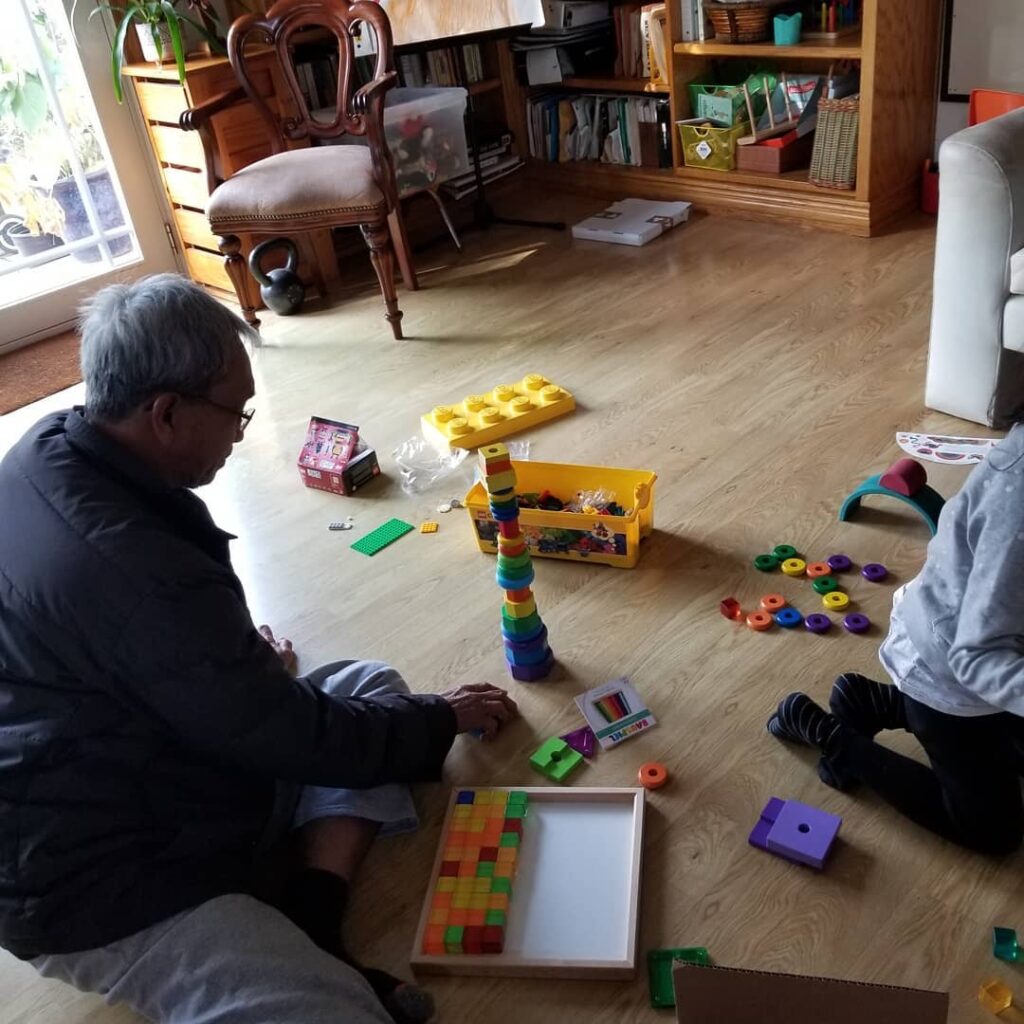
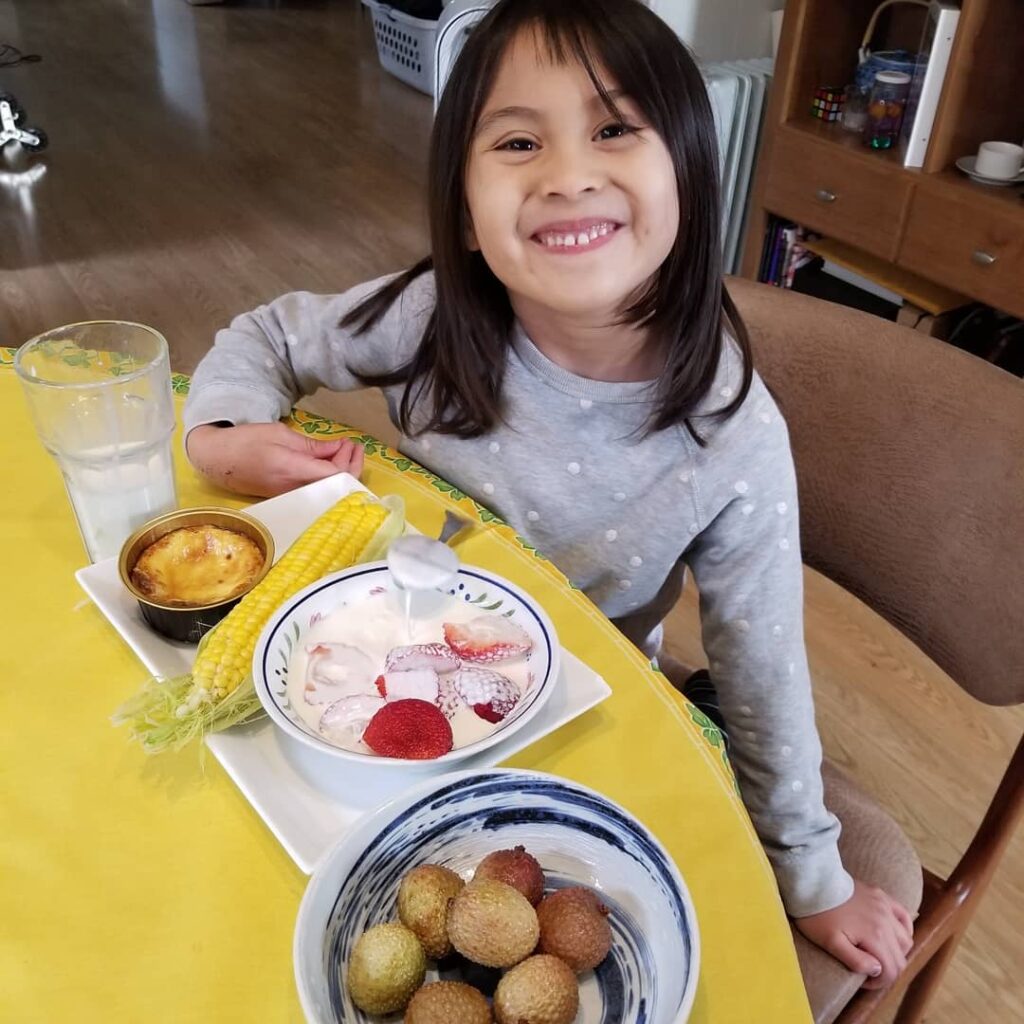
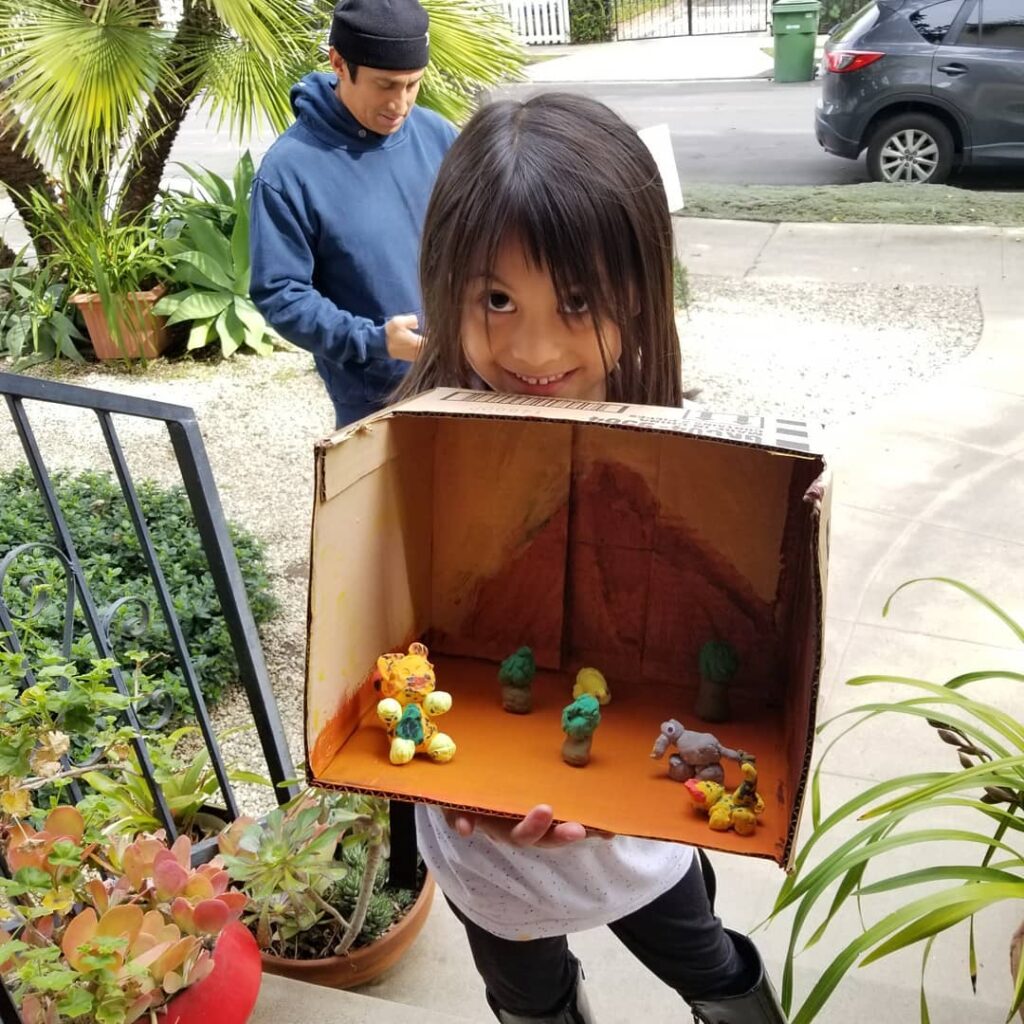
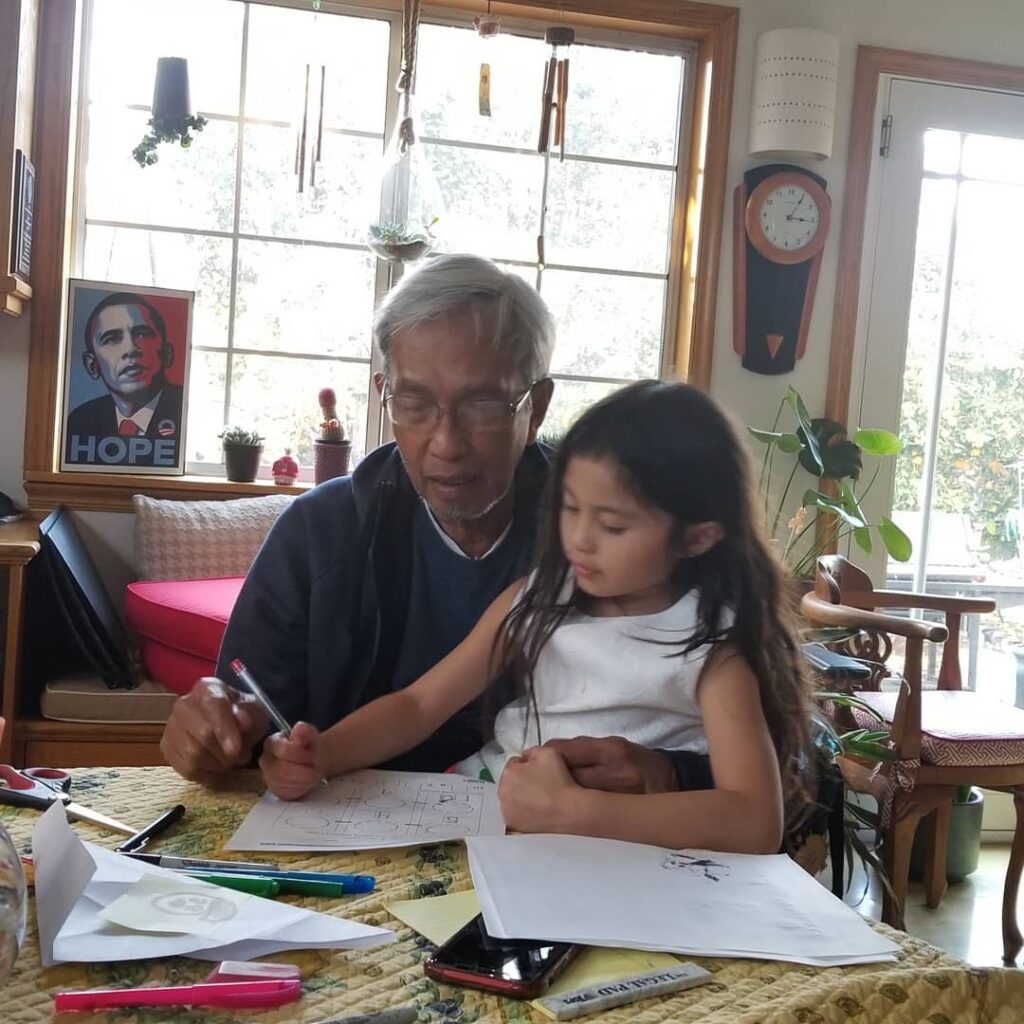
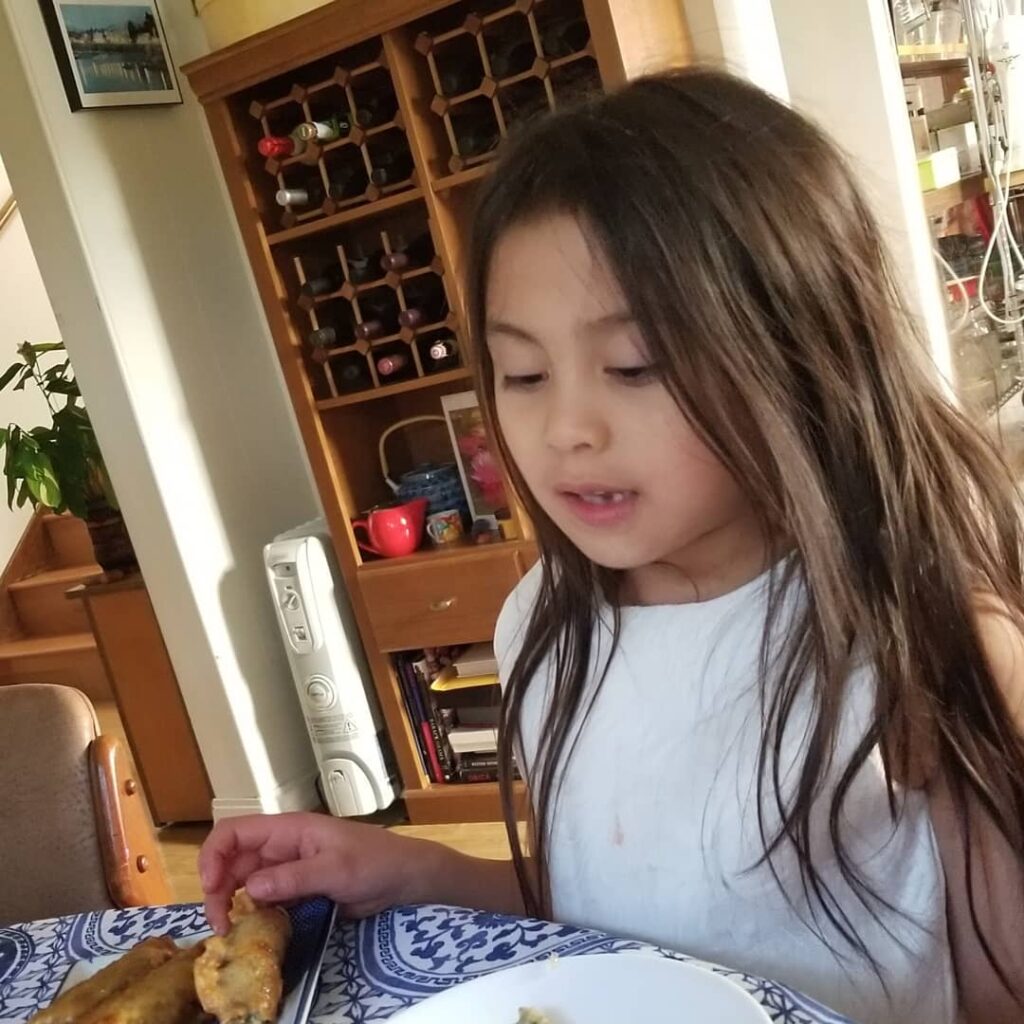
Lolo: “If I am that good, I don’t have to be better.” Apo: “Grandpa, you are not that good.” —– Dialogue on Valentine’s Day. Lolo: “If I love your Grandma daily, why do I need to do it on Valentine’s day – what is Valentine’s day anyway? Does it mean I should love her only on Valentine’s?” I told my #princess2015la that her Grandpa changed the cabin filter in my car and just made me #bloodorange juice. That’s how he conveys his love, I continued. Unpersuaded, my granddaughter persists. Apo: “Grandpa, how much do you think I love my Mom?” Lolo: “Oh, I know you love her very much.” Apo: “Yes, I love her very much. On Valentine’s day, I will show I care for her, much more.” I laughed in the background as Lolo is getting a lesson on what’s love, what’s Valentine’s day and more.
Amanda Gorman became the youngest person to deliver a poem at a U.S. presidential inauguration, with the 22-year-old reciting her poem “The Hill We Climb” after Joe Biden and Kamala Harris were sworn in as president and vice president.Gorman spoke for nearly six minutes.
Amanda Gorman says she referenced ‘Hamilton’ in inauguration poem
Amanda Gorman wore ring gifted by Oprah, honoring Maya Angelou at
Read a transcript of her remarks below:
When day comes we ask ourselves, where can we find light in this never-ending shade? The loss we carry, a sea we must wade We’ve braved the belly of the beast We’ve learned that quiet isn’t always peace And the norms and notionsof what just is Isn’t always just-ice And yet the dawn is oursbefore we knew it Somehow we do it Somehow we’ve weathered and witnesseda nation that isn’t broken but simply unfinished We the successors of a country and a time Where a skinny Black girl descended from slaves and raised by a single mother can dream of becoming president only to find herself reciting for one And yes we are far from polished far from pristine but that doesn’t mean we are striving to form a union that is perfect We are striving to forge a union with purpose To compose a country committed to all cultures, colors, characters and conditions of man And so we lift our gazes not to what stands between us but what stands before us We close the divide because we know, to put our future first, we must first put our differences asideWe lay down our arms so we can reach out our arms to one another We seek harm to none and harmony for all Let the globe, if nothing else, say this is true: That even as we grieved, we grew That even as we hurt, we hoped That even as we tired, we tried That we’ll forever be tied together, victorious Not because we will never again know defeat but because we will never again sow division Scripture tells us to envision that everyone shall sit under their own vine and fig tree And no one shall make them afraid If we’re to live up to our own time Then victory won’t lie in the blade But in all the bridges we’ve made That is the promise to glade The hill we climb If only we dare It’s because being American is more than a pride we inherit, it’s the past we step intoand how we repair it We’ve seen a force that would shatter our nationrather than share it Would destroy our country if it meant delaying democracy And this effort very nearly succeeded But while democracy can be periodically delayed it can never be permanently defeated In this truth in this faith we trust For while we have our eyes on the future history has its eyes on us This is the era of just redemption We feared at its inception We did not feel prepared to be the heirs of such a terrifying hour but within it we found the power to author a new chapter To offer hope and laughter to ourselves So while once we asked, how could we possibly prevail over catastrophe? Now we assert How could catastrophe possibly prevail over us? We will not march back to what was but move to what shall be A country that is bruised but whole, benevolent but bold, fierce and free We will not be turned around or interrupted by intimidation because we know our inaction and inertia will be the inheritance of the next generation Our blunders become their burdens But one thing is certain: If we merge mercy with might ,and might with right, then love becomes our legacy and change our children’s birthright So let us leave behind a country better than the one we were left with Every breath from my bronze-pounded chest, we will raise this wounded world into a wondrous one We will rise from the gold-limbed hills of the west, we will rise from the windswept northeast where our forefathers first realized revolution We will rise from the lake-rimmed cities of the midwestern states, we will rise from the sunbaked south We will rebuild, reconcile and recover and every known nook of our nation and every corner called our country, our people diverse and beautiful will emerge, battered and beautiful When day comes we step out of the shade, aflame and unafraid The new dawn blooms as we free it For there is always light, if only we’re brave enough to see it If only we’re brave enough to be it
“People learn who they are through the stories they tell. As they touch the imagination, stories become alive. The images trigger the imagination to realize what is in the narrative. When the imagination awakens, and the stories are told, existence itself comes to fullness, to completion.” –Fr. Aris Martin, Nov. 2020 in his Santo Niño Christology dissertation 5th chapter.
It was a cold evening on the first of March 2020, the start of the coronavirus community spread, and without masks required. Winds were howling, and no down jacket could keep the chills away until we got inside.
It unmasked the perspective of John Arcilla, who is an international award-winning Philippine-based actor, skilled in musicals on stage, acting in films and has a commanding presence.
When I asked him if he has unfulfilled dreams, he shared instead his sacred purpose: “I want to reach out to everyone, from A to Z, so [my acting] can affect lives. I want to be a catalyst for change, not for self-fulfillment, but to make this world a better place. Like an engineer or an architect, h/she build good shelters for people, I want my [artistic] craft to have a purpose, not just for me, but to have others realize that they have their gifts, and to improve their lives, [self-mentoring, self-realizing] when they share their talents with others.”
Arcilla was born in Quezon City, a descendant of former Pres. Manuel Quezon. His family moved to Baler after martial law was declared in 1972. A year after, at age 7, he discovered his interest in acting, influenced by a mom who loved Broadway, and a father who loved films.
Theater and cinema converged in him early, as he became a Philippine Educational Theater Association and a teen theater league participant in high school. He graduated from St. Joseph’s College in Quezon City, majoring in mass communication.
The Actors’ Workshop Foundation, the pillars of acting, Laurice Guillen and Leo Martinez, mentored him. Martinez has been in 100 staged plays with Repertory Philippines, one of the primary theater groups, while Laurice Guillen, who easily migrated from acting in films to TV to directing, was a protégé of the late Lino Brocka, an award-winning best director.
From his teens in theater to adulthood in cinema and television, Arcilla methodically climbs to his peak, and by now, has been validated by fourteen nominations, and six wins in two categories of the best lead actor and best supporting actor (FAP, Gawad Urian, Craft, Cinemalaya Film Festival, Asian Film Award, British Independent Film Award, FAMAS, Golden Screen Award, Pista ng Pelikulang Pilipino, and Star Awards for Movies). He has appeared in 83 movies and television shows from 1989 to 2020.
Quite masterful, don’t you think? His masterfulness is defined by the “wealth of knowledge that he has and his willingness to share that knowledge,“ as he participates when requested by students working on their university thesis.
He travels to New York and Los Angeles, and tours Europe and London to perform in musicals and acted in “Birdshot,” “Bourne Legacy,” and gained national prominence in the biopic of “Heneral Luna.” He expected it to run for five days, even presumed it was a student project until he met the young, talented director Jerrold Tarog. The entire cast selected, Tarog waited for Arcilla to audition. He was subsequently chosen for the lead role.
Arcilla discovered that Heneral is more than his fury and that his anger comes from the huge responsibility of fighting against the biggest country, America, and stopping it from colonizing the Philippines in the 19th century.
“Despite odd moments of bumpy storytelling and prosaic dialogue, Heneral grossed $5.3 million and in limited U.S. showings, $200,000. It was shown in 100 cinemas and an extended run for 9 weeks in the Philippines,” according to a Variety review. Arcilla was grateful that Heneral was actively promoted by Vice Ganda, Joey De Leon, Channels 2 and 7, showbiz actors in the Philippines, as well as a social media campaign by college students.
Arcilla received 21 to 22 recognitions and the film became the official entry of the Philippines to the Oscars.
Who are your favorite actors and how do you prepare to act for the lead roles?
“I grew up with Robert De Niro, Jeremy Irons, Al Pacino, Glenn Close, and Meryl Streep,” Arcilla said.
“When I was 10 years old, I looked in the mirror and I counted 11 lines. I still have the 11 lines on my face. I was an old woman then and I’m a young woman now. We all have the whole thing in us all the time. We are the old people that we’re going to be when we’re young,” Meryl Streep says, conveying how steely self-assured she is, accepting all of herself along her life’s journey, in Ruben V. Nepales’ book, ‘Through a Writer’s Lens,’ published in December 2020.
Equally self-assured, Arcilla shared: “I do not idolize actors, I respect them, the likes of Christopher de Leon, Amy Austria, Jacqueline Jose, and Bembol Roco. Also, I don’t want to be a Xerox copy of them. I don’t want to play a cardboard character.” He wants the character to come alive, so the audience can appreciate him, see themselves, and even move forward with that character in mind.
For Heneral Luna, an “outsized character,” Arcilla memorized the lines, dressed in general’s uniform, and curled the corners of his mustache. When he gazed at the mirror, he became Heneral Luna, and he wanted Heneral perceived as the “best example of what we are as Filipinos,” as intended by Director Tarog.
General Antonio Luna and Fr. Fernando Suarez – the public figures behind the film characters
General Antonio Luna has a doctorate in pharmacy and published his study on malaria. “He participated in reform activities while in Spain and wrote under the pen name, ‘Taga-Ilog,’ for the periodical, La Solidaridad, which criticized the friars and abusive government officials and aspired for changes for the society,” as mentioned in the National Historical Commission of the Philippines’ website. He commanded the Philippine Troops in the Philippine-American War from 1899 to 1902.
In December, another public figure came to life, compelling audiences to watch. This healing priest, Fr. Fernando Suarez, became a public figure who invited appreciation, gratitude and consternation.
A testimonial of Fr. Suarez’s actual healing prayers’ intervention for Maria Benel Se, a CPA and a business entrepreneur in Los Angeles moved me, to include it here:
“My husband and I had a burning desire to have another child after our first child was born in November 2000. I was excited about being pregnant in 2006, but I had bleeding. I had a molar pregnancy, an abnormal formation of placental tissue that led to a miscarriage. After a D&C procedure, the hormone HCG (human chorionic gonadotropin) level continued to increase, indicating a rare form of cancer, choriocarcinoma [fast growing cancer in the uterus]. I was referred for immediate chemotherapy. I was emotionally devastated, confused, and scared!
I attended Our Lady of Miraculous Medal Catholic Church. I remember during the homily, Father Suarez emphasized that he is not the healer but an instrument of the Holy Spirit to heal sick people. He reminded us that Jesus is the healer and that Jesus in the Blessed Holy Eucharist. After the mass, the people gathered. Many fell on the floor and a “catcher” would lay them down, as they were “Resting in the Holy Spirit.” Many were in wheelchairs, others had crutches and I saw them started walking without any aid. The experience was so surreal to witness.
When Father Suarez came to bless me, I fell on the floor. I could not move while lying on the floor and emotionally overcome. At that time, I did not understand what had happened to me and whether my cancer was healed but I knew in my heart that the Holy Spirit touched me. A week after, I went back to Cedars Sinai Hospital for CT Scan and lab tests, my oncologist told me my HCG level decreased below zero and canceled my chemotherapy. I diligently went weekly monitoring lab tests and after a year, declared cancer-free. I knew in my heart that I experienced God’s miracle through the gift of healing of Father Suarez. I am so grateful to God for his love and mercy.”- Maria Benel Se, as shared in an email, with this writer.
Fr. Albert Avenido, a pastor in Santa Clarita, eulogized Fr. Suarez during the burial mass. It was broadcast on Facebook Live. He too had his own testimonials: two relatives got healed, one was scheduled for surgery and after a healing mass encounter with Fr. Suarez, no longer needed the heart surgery and was canceled, while a mute relative after being blessed, started to enunciate sounds and words. Fr. Suarez had been doing healing masses for 17 years.
Preparing for the character of Fr. Suarez
To prepare for his role, Arcilla met with Fr. Suarez, who was beset with controversy. Fr. Suarez was banned by at least four dioceses: Cubao, Lingayen, Malolos, and Malaybalay. Bishops questioned why he was not part of a diocese. He revealed to ABS-CBN that “he went through an ordeal of mental torture, calumny, gossips, especially amongst priests and bishops.”
He sensed Suarez’s commitment to God. Arcilla shared what Fr. Suarez said in part: ”Even if I [Fr. Suarez] lose my healing gifts, and I keep attributing this [gift] as coming from God, as He alone can heal, as He alone can make the lame walk, and He alone has that power. What I have is a charism [extraordinary power] to follow God’s mission and proclaim His word. I will keep on with this charism as a priest and bring others to God, which cannot be equaled.”
Fr. Suarez influenced Arcilla, once a doubtful Catholic to be a more confident believer, after Arcilla was dismayed by countless reports of priests’ and bishops’ sexual abuses.
Fr. Suarez was accused of sexual abuse in 2019, and in January of 2020, Vatican cleared him of these accusations. He died shortly on Feb.4, 2020, from a massive heart attack, while playing in a tennis tournament that he organized yearly for priests.
Exploring personal creativity
The character Hipolito in the five-year strong FPJ’s “Ang Probinsiyano,” a teleserye is credibly brought to a global television audience by John Arcilla. He methodically differentiated what it is to act for the film, television, and in staged plays.
“For me, acting is pleasurable,” Arcilla said. “I supply the intention behind the toy gun.”
Yet, for the television audience sometimes wrapped up in doing dishes or cooking, his dramatic performance is ‘over the top’ to attract much-focused attention to know this villain, Hipolito, who thinks “he is the law.”
“I am having fun portraying him. [In contrast] Heneral thinks big about how he can save the country, while Hipolito thinks big where everyone is dispensable and he can kill the whole world. Hipolito has no virtues at all,” Arcilla continued.
During the pandemic, Arcilla “explored his personal creativity within existing, infinitely flexible, now-emancipated modes of expression,” as one author describes acting.
Arcilla subscribed to TikTok, an app to create a character for subscribers’ self-expression and their followers, for 15 seconds. He created young animated characters, with various distinct voices and personalities, which made millions laughed. He now has 1.8 million followers and 5.9 million likes. His acting, evolved from being masterful, to now viral in today’s pandemic world, and with his robust and alive imagination, he has created a sense of wholeness for John Arcilla, while bringing joyful relief to millions watching his TikTok characters.
#princess2015la needs extra patience from us. She finds her classwork too easy that she wants to play.
We finally got her to focus for two zoom classes, lunch (I had to explain to her the value of nutrition and illness and when she understood, she ate); and now homework with her Grandpa. I don’t see how working parents handle this.
We truly need full time, healthy teachers, they need to be vaccinated second, after the hospital staff of doctors, nurses, and all, then students, then the elderly in assisted living places.