It is to be regretted that the rich and powerful too often bend the acts of government to their selfish purposes. Distinctions in society will always exist under every just government. In the full enjoyment of those gifts of Heaven and the fruits of superior industry, economy, and virtue, every man is equally entitled to protection by law; but when laws undertake to add to these natural and just advantages artificial distinctions, to grant titles, gratuities and exclusive privileges, to make the rich richer and the potent more powerful, the humble members of society — the farmers, mechanics and laborers – who have neither time nor the means of securing favors to themselves have a right to complain of the injustice of their Government. There are no necessary evils in government. Its evils exist only in its abuses. If it would confine itself to equal protection and, as Heaven does its rains, shower its favors alike on the high and low, the rich and the poor, it would be an unqualified blessing.
Andrew Jackson, 1832.
When U.S. President Andrew Jackson was presented with a Bank Renewal Bill from Congress in 1832, he declined to sign it based on his concerns that narrow concentration of wealth and power in America would create monopolies.
“Such a monopoly, he believed, only exacerbated the tendency toward a tyranny to which all nations eventually drift. Eventually, the principle of his argument became one of the cornerstones of American conservatism, so despite the fact that its economics no longer enliven the national debate, its politics do,” George Grant wrote in the “Patriot’s Handbook.”
The word patriot has been thrown around on television this month of November 2019 when the 116th U.S. Congress through its chairmanship of the House Intelligence Committee, Rep. Adam Schiff, presided over the publicly televised proceedings on impeachment of the 45th US President Donald Trump, and said, excerpted here from The New Yorker’s The Talk of the Town, Nov. 25, 2019.
“If we find that the President of the United States abused his powers and invited foreign interference in our elections…must we simply get over it? Is this what Americans should now expect from their President? If this is not impeachable conduct, what is?”
The concern of Adam Schiff mirrors the concerns of Andrew Jackson then who believed that no undue favors and advantages attach to the rich and powerful, as well as Alexander Hamilton who wrote to George Washington in 1792, further quoted by the New Yorker, “When a man unprincipled in private life desperate in his fortune, bold in his temper, possessed of considerable talents…is seen to mount the hobby horse of popularity — to join in the cry of danger to liberty — to take every opportunity of embarrassing the General Government & bringing it under suspicion — to flatter and fall in with all the nonsense of the zealots of the day — It may justly be suspected that his object is to throw things into confusion that he may “ride the storm and direct the whirlwind.”
Why was there such a concern? First, U.S. President Donald Trump took this oath of office, swearing on the bible held by his wife, Melania Trump, “I do solemnly swear that I will faithfully execute the Office of President of the United States, and will to the best of my Ability, preserve, protect and defend the Constitution of the United States,” on January 20, 2017, 1,037 days, as of this published article.
That moment, Mr. Donald Trump became U.S. President Trump, sworn to uphold the interests and common good of all Americans. From that oath of office, he was transformed from being in a private businessman position to a position of public trust, a position with potentials of adverse impact on the in- tegrity and/or efficiency of the country’s mission to the rest of America.
That day marked the start of his presidential role to be the guardian of American democracy and the interests of all American citizens to have an honest president, who shall protect its U.S. elections. He was no longer Mr. Trump, the businessman, seeking to run his businesses from the confines of the White House.
He is now our president, enjoying taxpayers-funded Air Force One, U.S. Secret Service, the entire cabinet and legal staff inside the White House, the White House residence, plus he is now our U.S. commander-in-chief, whose interests should be America first and foremost.
Yet, Mr. Trump is still Mr. Trump, 1,037days later and has failed to muster his presidential duties to benefit the public’s common good.
President Trump is still governing as Mr. Trump
The day after Robert Mueller testified in Congress on July 24, 2019, Trump had a phone conversation with a comedian who was elected as Ukraine President Volodymyr Zelensky on July 25, 2019.
Trump congratulated Zelensky and encouraged him to do an investigation on the Bidens. As the New York Times’ Mark Mazzetti and Eileen Sullivan reported on Nov. 15, 2019, ”During that call, Mr. Trump appeared to condition American military aid to Ukraine on whether Mr. Zelensky agreed to pursue investigations into the Biden family and he claimed that Ukrainians tried to undermine the Trump campaign in 2016.”
Dr. Fiona Hill, the former National Security Council official specializing in Russian and European affairs, testified at the impeachment public hearings and debunked the claim of Trump that, “Ukrainians tried to undermine the Trump campaign in 2016.”
She said, “Russia’s security services and their proxies have geared up to repeat their interference in the 2020 election.”
She warned us all on televised proceedings that we are running out of time to stop them. Two more witnesses who appeared in the impeachment proceedings stressed the fact that American intelligence agencies’ consensus is that Russia interfered in the 2016 presidential elections. TheNew York Times in 2018 reported it as eight intelligence agencies’ consensus.
Dr. Hill called it fiction, a narrative being advanced by Russian operatives, “Russia readily exploited partisan divisions to undermine the United States from within.”
Yet, Mr. Trump advanced the lie that Ukraine interfered in 2016 Presidential elections in the U.S., even though the facts and indictments are plainly clear and directly traceable to what Vladimir Putin’s talking points are. All the while, Robert Mueller testified before U.S. Congress that the interference was sweeping and systematic which led to the indictment of 26 Russian citizens and three Russian organizations.
But more than that, Mr. Trump is now soliciting an investigation from Ukraine to benefit himself, for Ukraine to do opposition research on Biden, for the purpose of benefiting Mr. Trump in the 2020 presidential elections. Why and how? Mr. Trump wants an investigation into former Vice President Joe Biden and his son, Hunter, who was a board member at Burisma, an energy company, from 2014 to 2019. Mr. Trump is presuming that VP Joe Biden will be the Democratic Party’s presidential candidate in 2020.
But aside from that solicitation of the investigation from Ukraine to benefit Mr. Trump’s prospective reelection, Mr. Trump in his capacity as Pres. Trump, leveraged the security assistance funds to pressure Ukraine to do it and ordered a hold on nearly $400 million security assistance funds approved through bipartisan support in Congress.
Note that U.S. presidents are not given any spending powers by the Constitution, that spending power lies squarely in the hands of.
Congress. The framers of the U.S. Constitution wanted the separation of powers, or else the enormous weight of U.S. spending powers, placed in the hands of elected presidents would amount to unchecked corruption. It was meant to be a system of checks and balances so that each branch has certain powers so as to check and balance other branches.
Mr. Trump’s move to usurp spending powers to benefit him
So now, Asian Journal readers, have you considered the Facebook post of Atty. Norberto Jojo Reyes, “Did Trump violate the federal statue on bribery?”
U.S. Federal Statute, 18 U.S. Code Section 201 on Bribery of public officials and witnesses.
It states, “(2) being a public official or person selected to be a public official, directly or indirectly, corruptly demands, seeks, receives, accepts, or agrees to receive or accept anything of value personally or for any other person or entity, in return for: (a) being influenced in the performance of any official act; (b) being influenced to commit or aid in committing, or to collude in, or allow, any fraud, or make opportunity for the commission of any fraud, on the United States; or (C) being induced to do or omit to do any act in violation of the official duty of such official or person..”
Witness after witness during the impeachment proceedings, starting with William B. Taylor, Jr, a decorated Vietnam War veteran and top diplomat in Ukraine, New Yorker reported that in the closed hearings, Mr. Trump acting in his capacity as U.S. President, “sought to pressure the beleaguered President of Ukraine to sully the reputation of a Democratic rival, Joe Biden, in exchange for a meeting at the Oval Office and the release of the defense funds approved through bipartisan support in Congress.”
This was further affirmed by U.S. Ambassador to the European Union, Gordon Sondland, who donated $1,000,000 to Mr. Trump’s presidential inauguaration, and was subsequently appointed to this position and who testified in the impeachment proceedings against Trump.
Another impeachment proceeding witness, David Holmes, a political counselor at the U.S. Embassy in Ukraine, testified that “Trump cares more about the investigation of Biden than about the fate of Ukraine,” the New Yorker added.
When Mr. Trump acted to condition the release of the security assistance to Ukraine, he violated not only several federal statutes, but also breached the separation of powers in a democracy, calculated to prevent abuse of power and to safeguard freedom for all.
By leveraging the security assistance, he was using the federal powers of his presidential position to benefit him, Mr. Trump, the presidential candidate and failed to act honorably as America’s elected president.
But more than that, he has continued his lawlessness pattern of defying the Constitution by ordering his presidential staff not to testify, in further contempt of Congress, including staffers of the State Department and his own chief of staff, Mick Mulvaney, Secretary of State Mike Pompeo, and U.S. National Security Adviser John Bolton, who just received a $2,000,000 advance for a book deal and, of course, the president’s own lawyer in charge of mucking up the swamp by bubbling up false narratives, Rudolph Giuliani.
Our founding fathers were prescient, and provided for this in our U.S. Constitution, Article I, Section 2, that “the House of Representatives shall have the sole power of impeachment.”
Article 2, Section 4 provides that “the President, Vice President and all civil officers of the United States shall be removed from Office on Impeachment for, and Conviction of Treason, Bribery, or other high Crimes and Misdemeanors.” High Crimes and Misdemeanors include abuse of powers.
Alexander Hamilton, in Federalist Papers 65 described impeachable offenses as arising from “the misconduct of public men, or in other words from the abuse or violation of some public trust.”
Andrew Jackson said it even more plainly, “There are no necessary evils in government.” Government is an instrument of the public’s common good and Mr. Trump has failed to promote the common good, and has sustainably advanced his private interests, using public funds.
If you have walked the Camino de Santiago, you will come across acres and acres of wheatfields. The wheatfields have no shade and you will see colors of yellow-brown as far as the eyes can see on the horizon. They are called mesetas or plateaus found in the high plains of central Spain. You will also find irrigation dams constructed, of course descending columns of water to irrigate these wheatfields.
The pages in Leny Mendoza Strobel’s memoir, “Glimpses: A Poetic Memoir (Through the MDR Generator),” struck me as this plateau of wheatfields. Read the pages, and embedded are nuggets of her observations, experiences and reflections. The memoirs are easy to read, a page at night gets you to discover what she has gone through in her childhood, but not replete with detail, it leaves you to imagine what is embedded in those wheatfields, or when she describes a camping trip, she hints at the joy she gets in moving freely in a dance.
Perhaps the weblike designs of lace-liked motifs on the book cover hint at what you will find as a reader. At times, it reminds you a lot of Mother Nature and its offerings, the garden crops she nurtures, or simply what she likes to reflect on daily as she journals.
I met Dr. Leny Strobel during a writing workshop organized by Mike Gonzalez and a second time in her house with her husband, Cal. I was so impressed that she was already a practicing vegetarian before the organic movement got popularized in the last decade. She prepared a four-course meal using produce from her garden, all certifiably organically grown in her gardens. I could not forget that evening as I had too many vegetables, and enjoyed her cooking so much that the toilet and I became best friends temporarily. I admired her tenacity even then as it took her quite a while to prepare all the entrees by herself.
Should that be our lives — marked by self-reliance, but also connecting in conversation with her husband and a group of friends?
“If you are confused, you must be thinking clearly,” said Fr. Ed de la Torre many decades ago in a lecture in a conference in the U.S. This saying comes to mind as I read Strobel’s memoir, published in 2019, and at the same time, it appeared to be simulating an endless movement of a dance.
If your mind is attuned to how a book is formed, aggregating information and words around a theme for each chapter, there is no such thing in this book.
It is unlike a book, though presented as a paperback of 112 pages. It is a compilation of journal entries containing her feelings, her thoughts and her journey back to the past and her hopeful gaze to the future.
The book feels like going through a field of wildflowers, at times sensual, few times cerebral. More often, the pages contain her musings of philosophy, observations about the world, and healing from a past trauma of sexual assault. It is also a reconnection to what her childhood was — to what was “indigenous,” something organic within her, before her words of Tagalog and Kapampangan succumbed to the use of a language, English, once foreign to her and now, a medium of creative self-expression for this book. While she considers English as a medium for colonization, it is also through English that she liberates her colonial mind to create this book.
You sense a sustained critical tension embedded in Strobel’s pages, questioning and then sometimes having the answers and then to question again what she came around to discovering until perhaps her mind gets exhausted, or simply stops at a page for the night?
It is amusing to see the thoughts on each page, discussing for example on page 37, if in fact, the Luna brothers – Antonio and Juan – are siblings of her great grandfather, Joaquin? Why does she want this linkage, one might ask?
Antonio was a well-known historical figure who fought for Philippine Independence while his brother Juan was a talented artist who painted the ceiling to floor sized painting called Spoliarium. “In a fit of jealousy Juan murdered his wife and mother-in-law but was acquitted on account of insanity. He was deported to Hongkong and lived in exile,” Strobel wrote.
Her great grandfather, “Joaquin was La Union’s Governor, worked for a tobacco monopoly, a violinist and who was sent to the 1904 St. Louis World’s Fair to represent the government.” She asks the question: “How did these brothers become infamous? How did their descendants squander their legacy of greatness?” That form of questioning is really passing judgment on the lives of these descendants that a historian must dig some archives to respond to her conclusion. Did the Luna descendants squander their legacy?
Why is there a National Historical Museum of Juan and Antonio Luna in Badoc, Ilocos Norte with six galleries displaying paintings, artifacts including describing Antonio as a man of science, as he was a chemist? It traces the history of being an artist on the part of Juan Luna, including his commissioned works and where Juan’s words were captured: “Genius has no country’ genius bursts forth everywhere: genius is, like light and air, patrimony of all.” The Museum is a middle-class bahay na tisa, that was completely damaged by fire in 1861 and the Luna house was ceded to the government in 1954, and the house was rebuilt by the National Historical Institute and opened its doors in 1977.
We visited that multimedia museum, replete with the uniform worn by Antonio, a video clip of their respective histories and of course, if one visits the National Museum of the Philippines, the Spoliarium painting is on display. One may argue that the descendants actually preserved their ancestors’ legacy with the help of the government.
Strobel has fused prose and poetry and in 112 pages, there is a structure of keeping each page distinct from one another. There is no binding theme that one might expect from a book, suspend that idea for a bit, and work with the author. Engage each page as she wrote and soon, you get to appreciate she had you in mind that perhaps each night, after work or school, you just have the stamina to be amused by reading just one page.
I read the book over a period of time, and dog-eared pages: 22 for her description on Filipinos’ musicality and then her recollection of a Filipino choir in the south of France; and 26 for the audacity of cruelty and the violent American culture. She proceeds to offer root causes for this violent culture to perhaps disconnection and isolation, loneliness, fear, shame and anger. She then states that “by the time cruelty becomes audacious there’s already a culture that made that possible.”
The natural question on the reader’s mind: Did this author experience cruelty? Has she healed from it or is she still suffering racial micro-aggressions? On that page, she distances herself from the cruel person and then, from that distant vantage point, she asks a question, “if one acknowledges the problem of being cruel, will that perspective offer the possibility of change? Will they automatically change?”
Then, the zinger page describing her becoming a silent witness to the 25 women who claimed in that circle they have been molested, raped, abused and betrayed by men in the community, by men who are leaders, men who are protected by other women, and men who are damaged.
I sometimes cringe at the conclusions that I find on each page, looking for evidence and proof and at times, wanting the memoirs to be coherent the way I am accustomed to reading a book. But, a light bulb switched on inside me and I decide to simply move along as if water was coming down the irrigation dams and appreciate what she has for us at every page.
M. Evelina Galang, the author of “Lolas’ House: Filipino Women Living with War,” wrote: “In her innovative memoir (through the MDR generator), Strobel “reveals connections that run deep in our collective memories in a collage of personal narratives….Strobel assembles a complex montage of a woman’s life, fully lived. This inventive form challenges conventional approaches to memoir writing as it is born of a collaborative act that is at once as courageous and vulnerable as it is inventive and beautiful.”
To me, Strobel succeeded in making me imagine some more, in making me do some more research, in wanting to mine data and facts to support her conclusions.
In that regard, her memoir — with lacelike stencils of four cover design layouts, though unusual — has literary value. Notice I critiqued Strobel’s formed conclusions on her journal entries, yet, here I am, passing the same judgment about her book of memoirs. Isn’t that what a writer would do in reviewing a book?
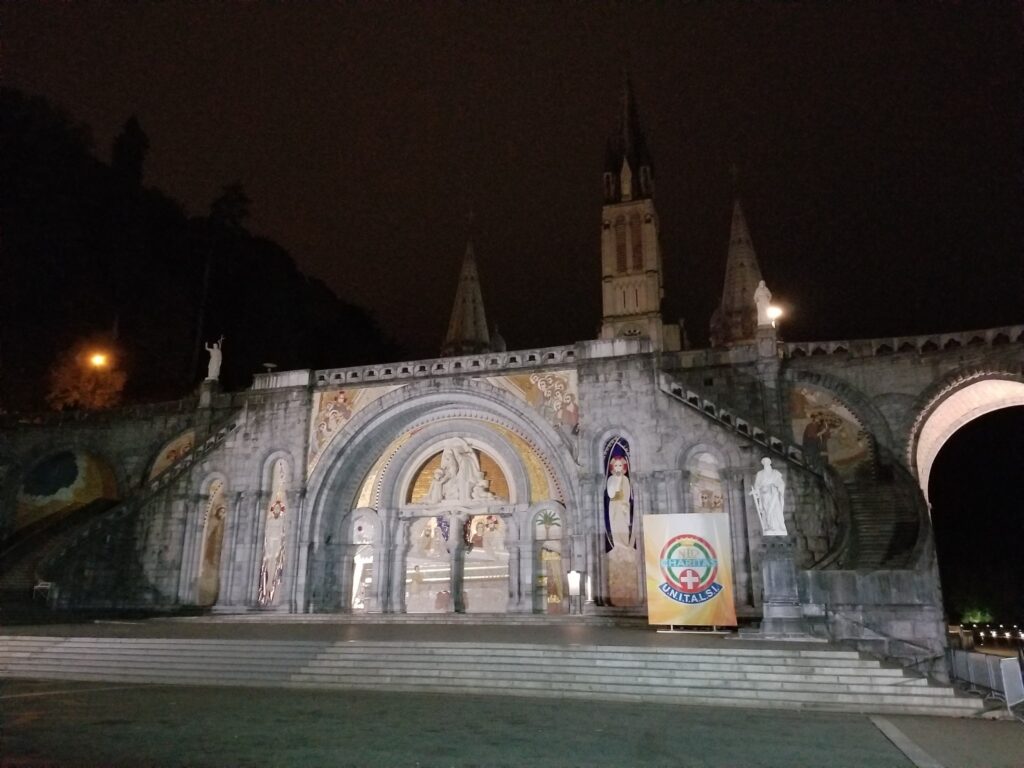
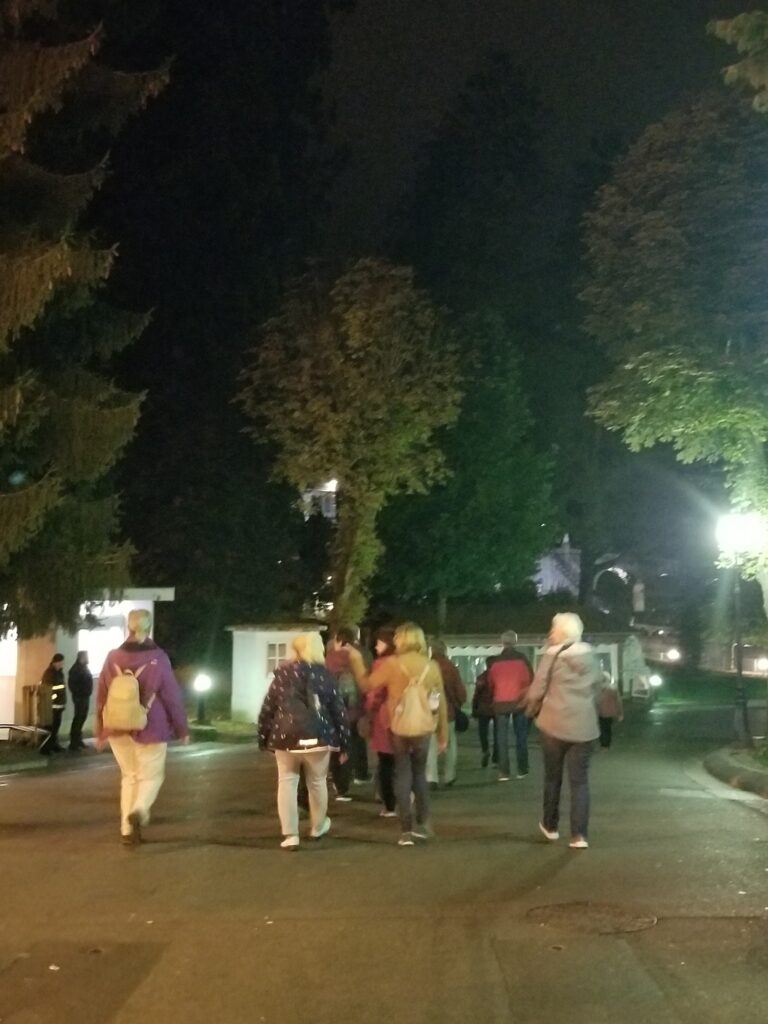
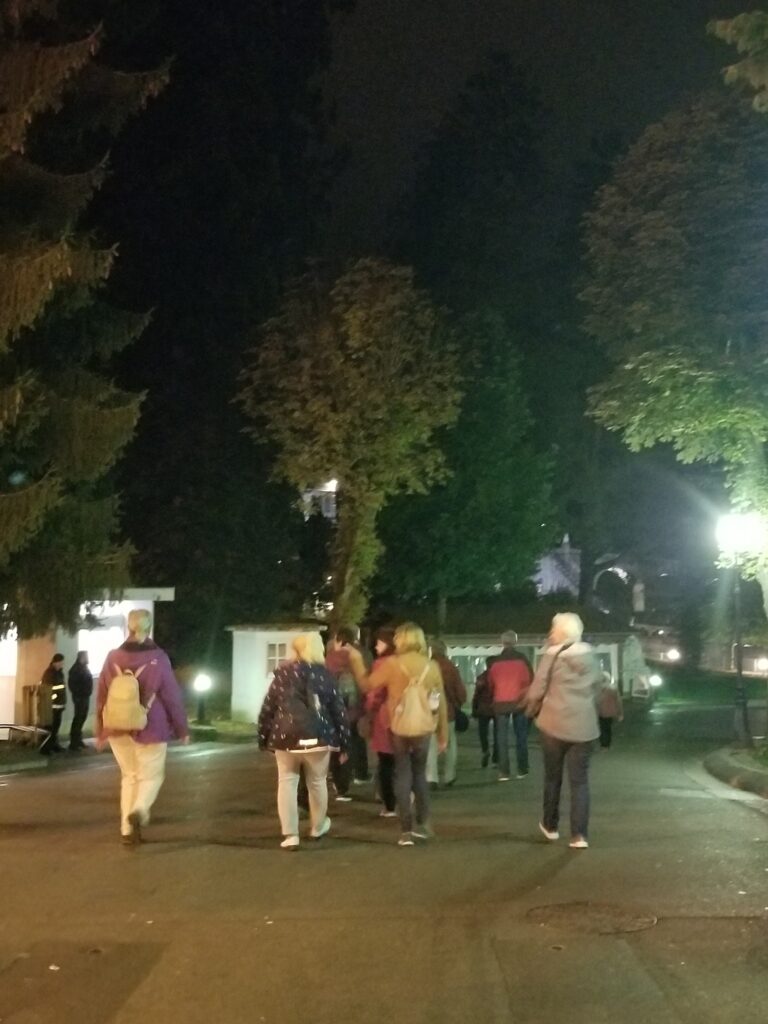
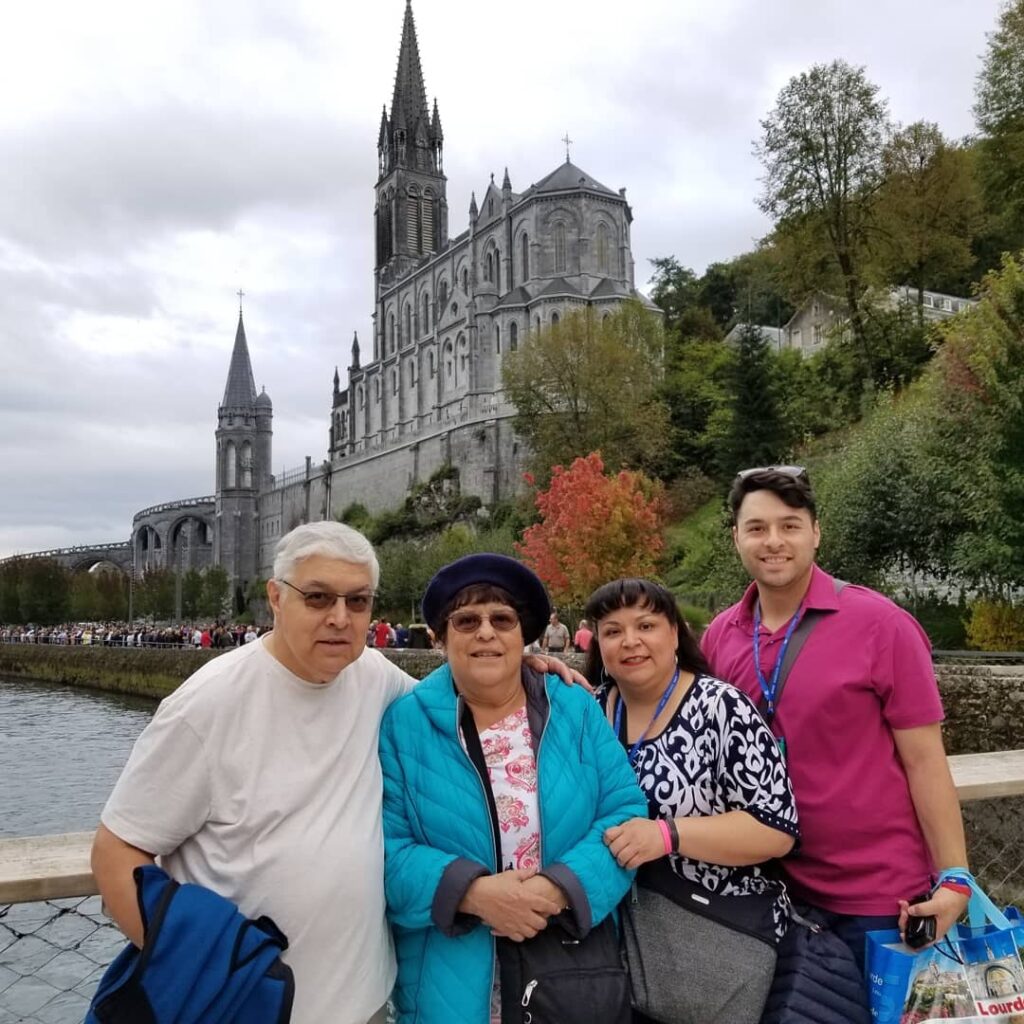
This holy, humble, humorous, happy priest, Rev. Joel Bugas is a miracle medium. I observed him get his wishes many times. Yesterday, he got to say mass at the Chapel of the Virgin Mary inside the Basilica of Sacre Cour. Usually, all we get is an audio tour but thanks to QTS Tours and Christina Vives, this chapel was secured and we had mass.
Today, our last full day of touring, Fr. Joel got another surprise, Cardinal Gerald Ciprien La Croix of Quebec City waited to ask his permission to concelebrate the mass as Fr. Joel is the designated priest for 3pm. Fr. Joel of course deferred to His Eminence and I could see how happy Fr. Joel was not as the main celebrant, but as a concelebrating priest.
God’s abundance is indeed overwhelming and overflowing to this priest who genuinely puts our spiritual growth ahead of anything else, yet we also had fun, we got to shop a little and one pilgrim got to visit with her college classmate. God is good all the time.
Being in a pilgrimage is both the best experience and a space for observing miracles of wishes granted plus God’s abundance to those serving him and those with total faith.
Our spiritual director, Fr. Joel Bugas, is one of the best priests I have met, now 53 priests and 2 bishops in person and via one on one interviews: thoughtful, humorous, considerate, caring and had the best 3 minute homilies.
He too had a health issue but if you look at him, he made no noise about it, no complaints and I love seeing him allow us to take care of him: like a septuagenarian who would split her plate with him, or others would offer to carry some of his bags which had the vestments and chalice or pack him breakfast one day as he had no time to get one. He reciprocates with kindness and thoughtfulness, moving from table to table at dinner to check on folks, buying us snacks and cookies to share. He is quite endearing as anyone approaches him and he is accessible with sharing his own observations and wisdom.
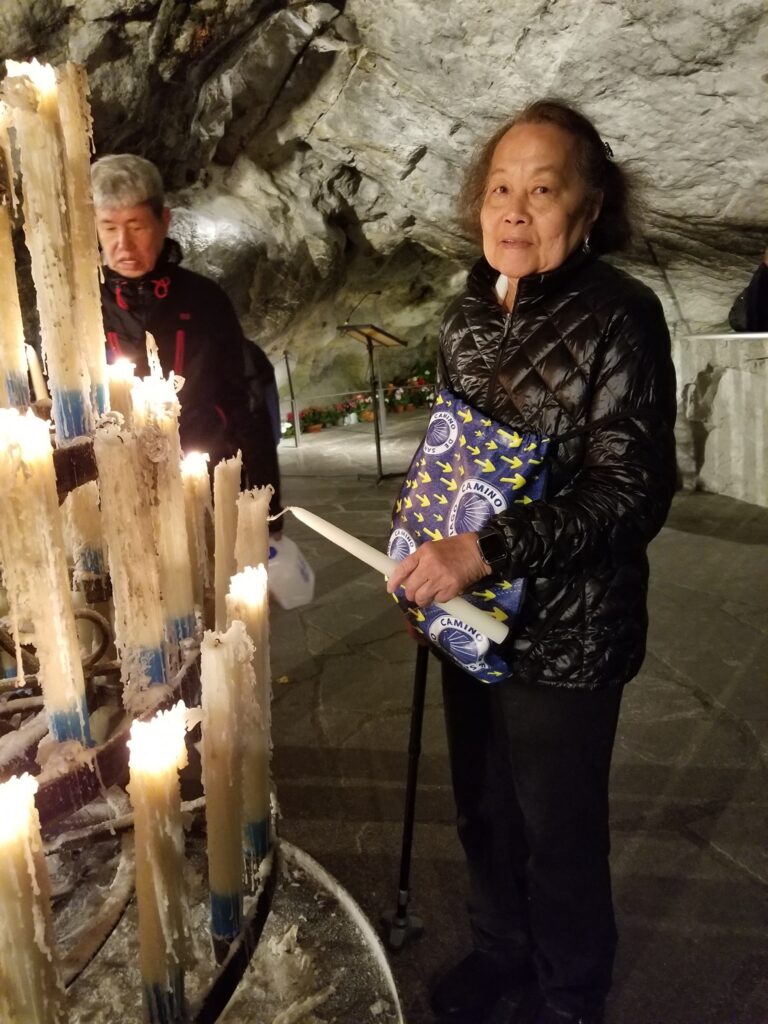
It is also observing physical changes, like a mom in her retirement years shedding a cane, feeling stronger to walk without her anchor to her disability. She got stronger.
It is also observing folks’ quirks transformed for days, from just a voice box to a voicebox of sacred choral music. It is observing folks with rigid standards shed them for awhile to go along for just even a day to align with the group’s choice or food chosen for us. It was a welcome treat though to savor good French food at lunch: escargots and beef bourguionon.
Then, there are earth angels: they ask how you are and keep you company, they extend their arms as anchors as you walk, they sat behind to make sure the ailing, the sick, and slow walkers like me with asthma are encouraged to walk the distance, and there are those who provided us with inspiring examples of sprinting uphill in Sacre Cour.
In the end, we are all triumphant as we walked a total of nearly 130,000 miles, about 75 miles, had masses and communion all of 13 days, had offered over 500+ prayers for peace on earth, unity in America with justice for all, family, parents, spouses, children, grandchildren, grandparents, cousins, aunts, uncles, in-laws, neighbors, praying for healing, health, love and more time on earth.
P.S. Portugal has one beautiful square with chapels, museums, and two basilicas built for Our Lady of Fatima and a factory that makes chalices with pure silver, gold and precious stones, discounted at 1,500 euros, and stores that sell the most beautiful priests vestments, fully gilded, at 500 euros and above.
Spain and France seem more aligned in taking care of their surroundings, bringing out the green fields, lots of man-made lakes that are for the most part kept clean (Japan has the most pristine lakes near their homes with daily dredging to remove leaves and debris).
It got me thinking of Merced River and beautiful Yosemite. California is still my best state, except at some of the French restaurants, I heard Chinese tourists condemning the homeless in San Francisco and Los Angeles.
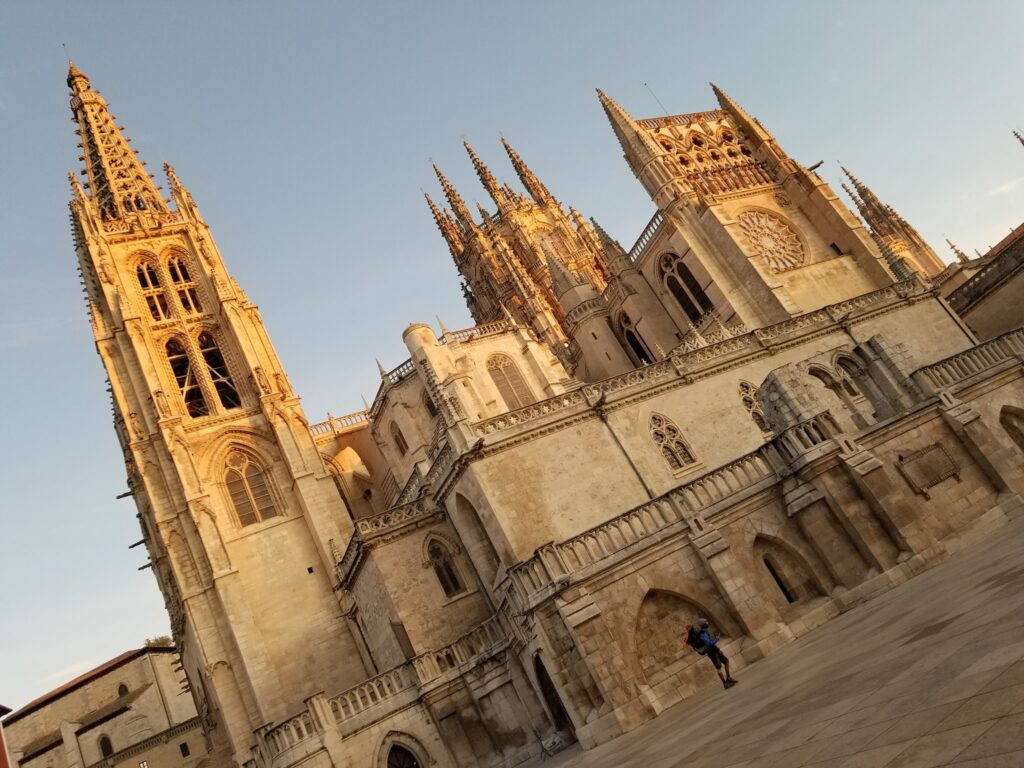
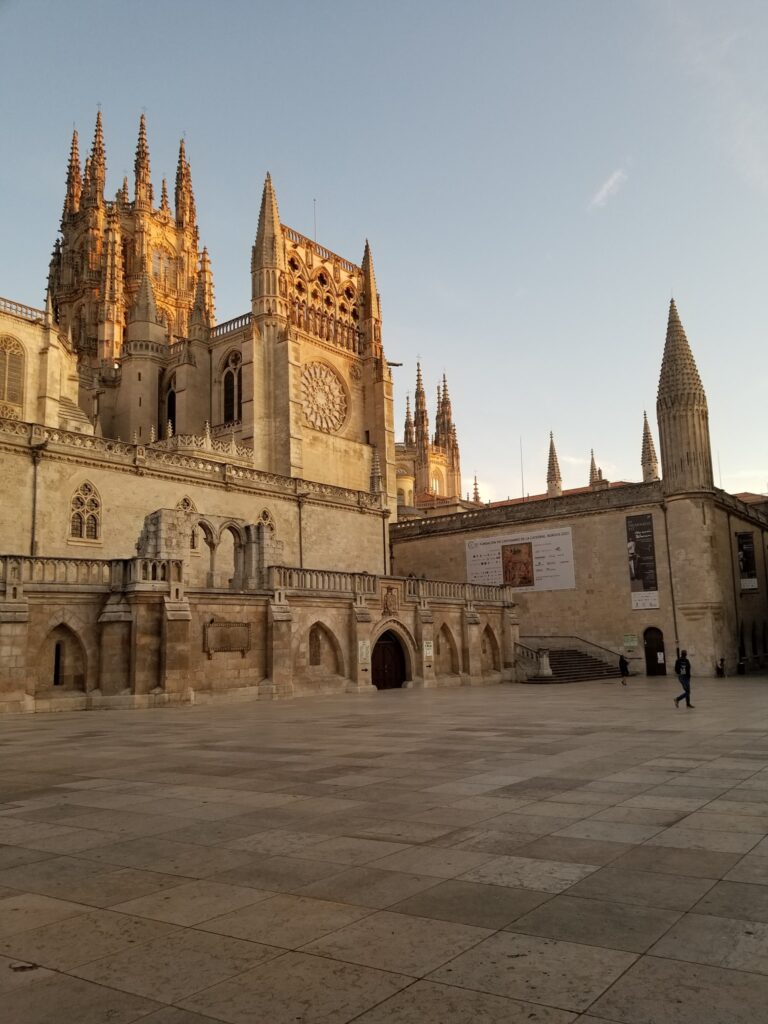
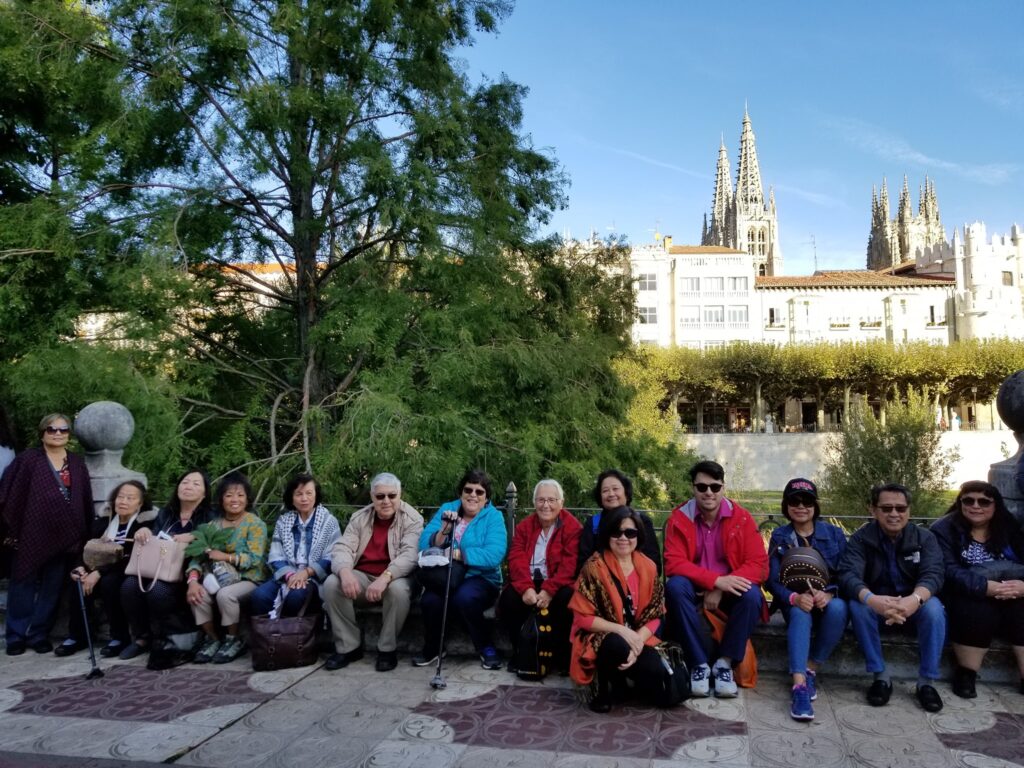
We need better examples of Spain in how they take care of their people. In Burgos, old folks were just talking while enjoying the sounds of the river, the shade of trees whose branches were joined to give a natural green awning, young folks enjoying their hot chocolate and churros.
Blue skies for the most part, white clouds and sometimes gray that gave us rains, for two days and it poured when we left Paris, as if saying bon voyage until we meet again.
Pilgrimages test your entire person physically to shoulder on despite your ailments, lack of mobility and even, breath. Yes, the ability to breathe at all times of the day.
It also tests who is caring, who is kind, who is considerate to the entire group and who makes us laugh with jokes.
It also tests those of us how far we are indulgent of our own pleasures in wine, food and shopping.
It makes you leave what is superfluous, superficial and connect with the better Angels, with our best selves, helping one another go through customs with grace and patience.
A special treat was to have mass inside the airport in Paris, in front of terminal 66 of Lufthansa airlines. How Fr. Joel made this happen was a miracle to see the end of a terminal with space seemingly reserved fo tdd 26 pilgrims. This must be how early Christians prayed with silence during Eucharist and we also received communion. Imagine the logistics of saying mass with communion wafers for 26 of us in all those days.
It was equally a treat to see the calm, serene, thoughtful Lou who curated this pilgrimage and gave us this pilgrimage with the best direction for travel, from south to north, driving from Portugal, Spain and France to linger to be with nature, ancient churches, great architecture in Basilicas, church museums and more in prayers at masses and daily communion at LAX.
“The river of water is the grace of God given to us through the Holy Spirit. Angels try to lead us to that grace by teaching us to surrender our will to that of God. They are also powerful messengers who call us to worship our God and serve our neighbor.”
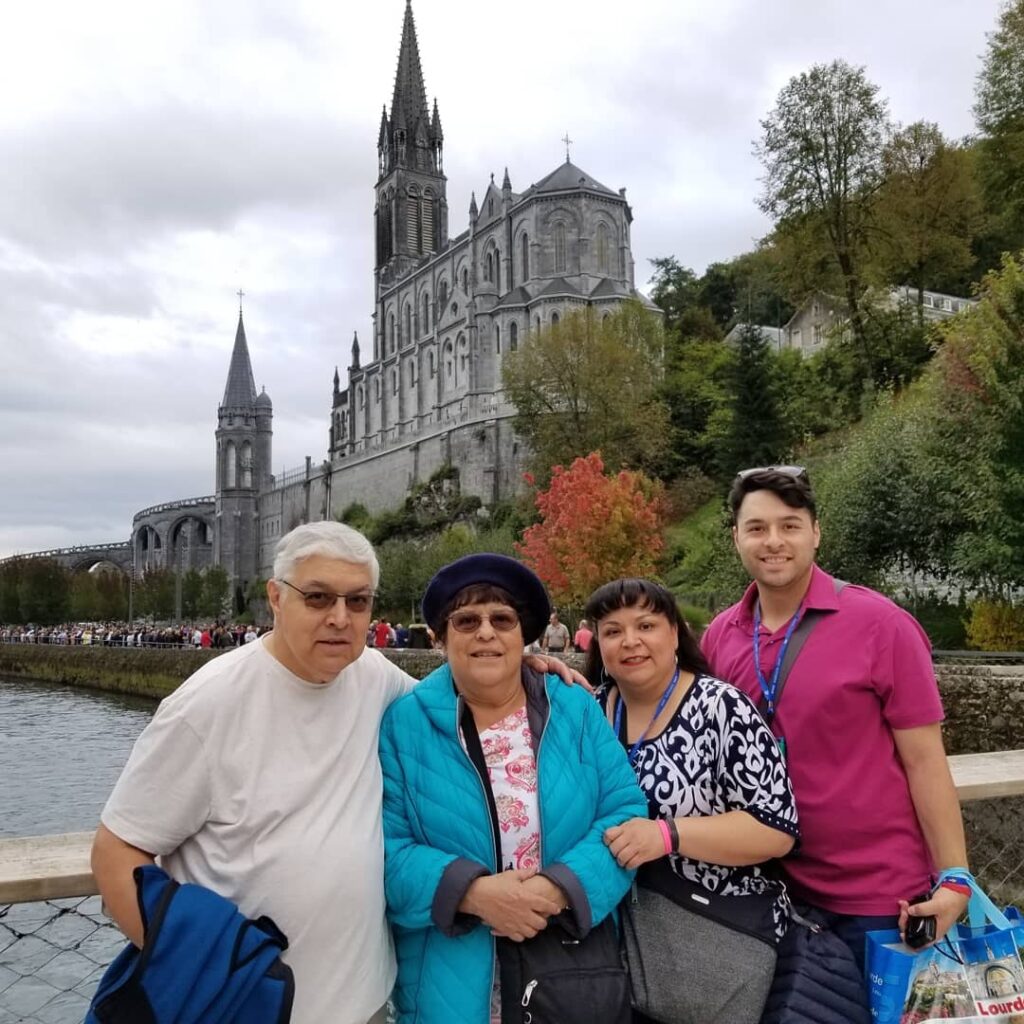
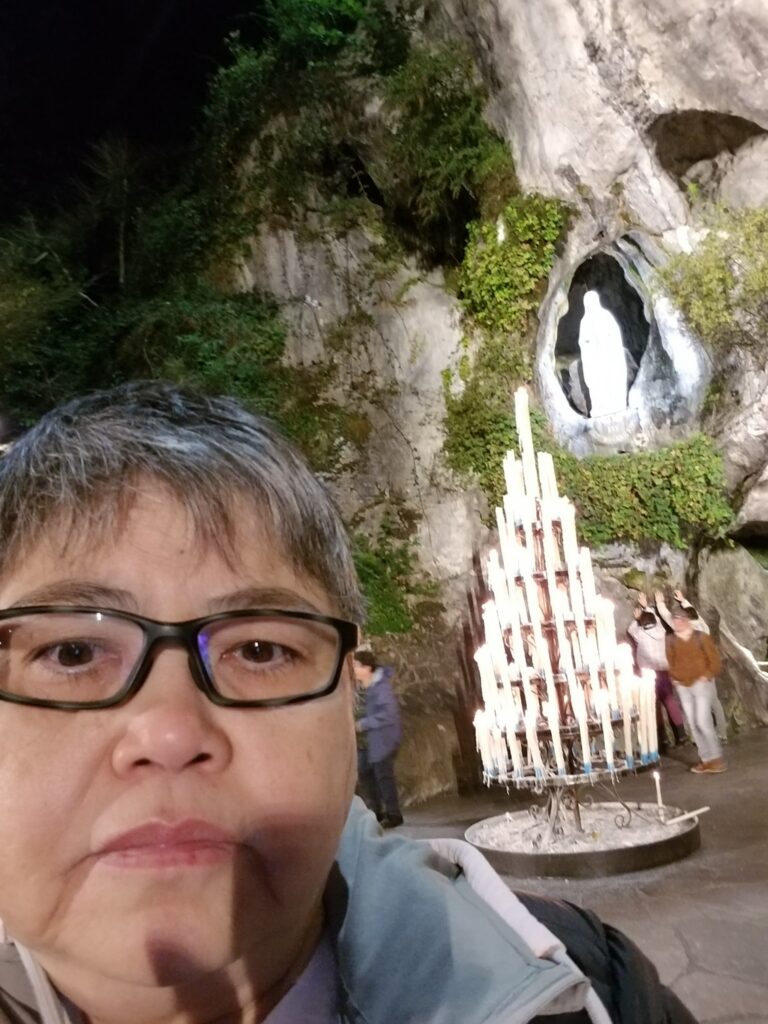
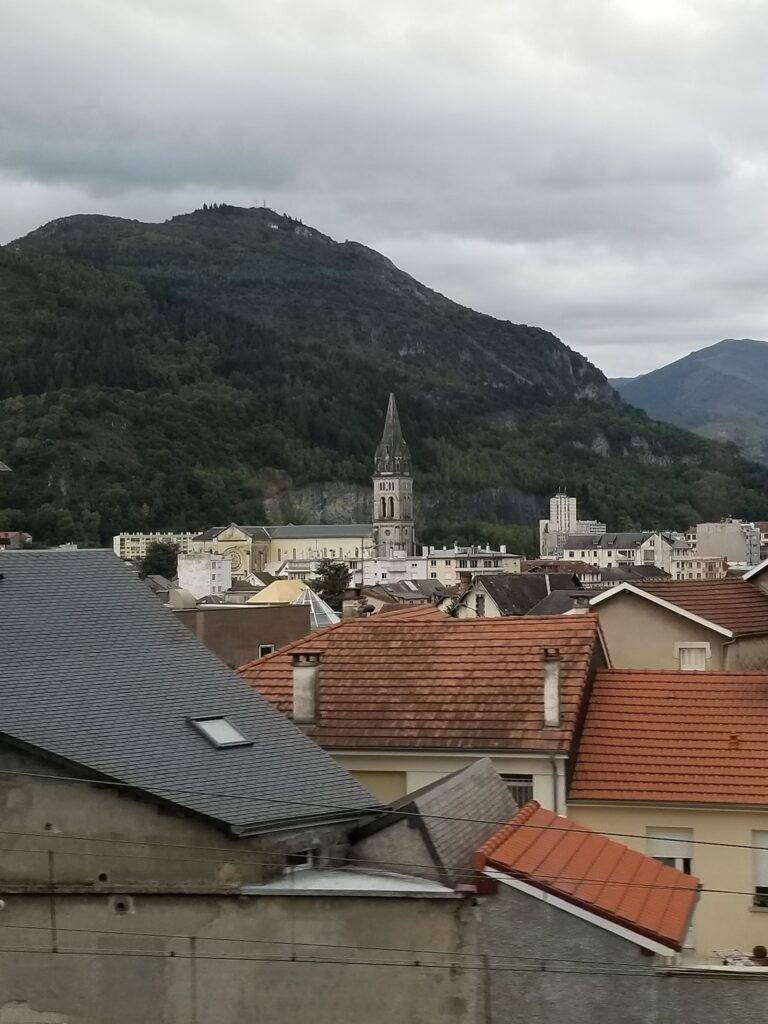
I am most grateful I am here in Lourdes, a place I just dreamed of going last year. God listens, I tell you.
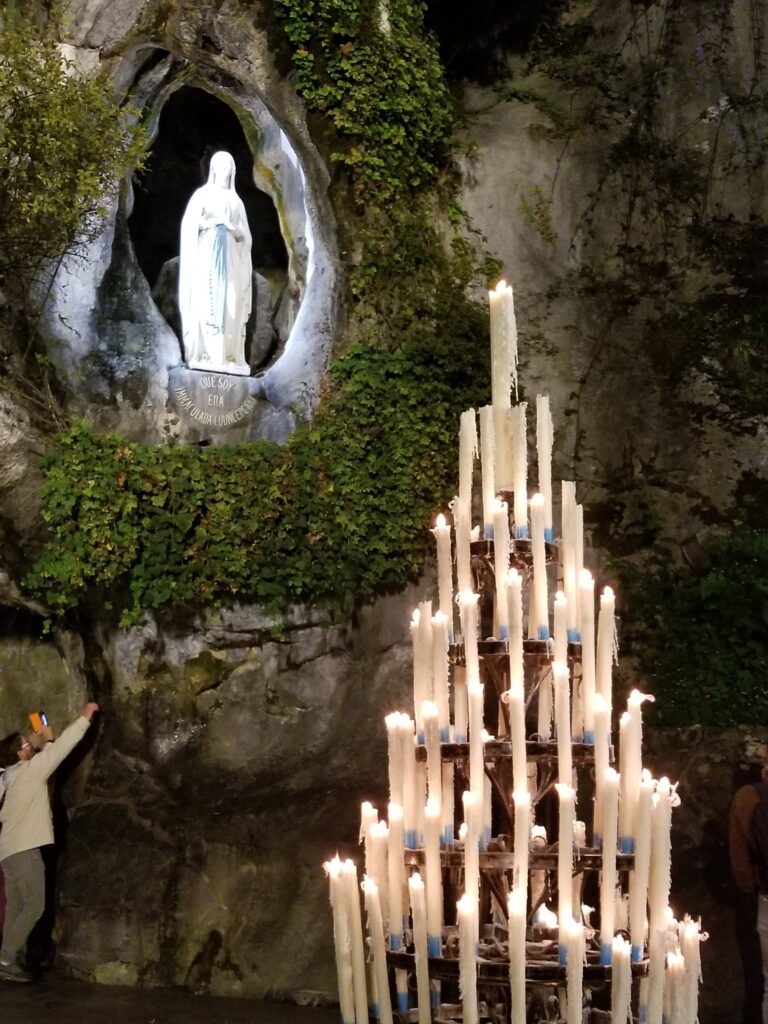
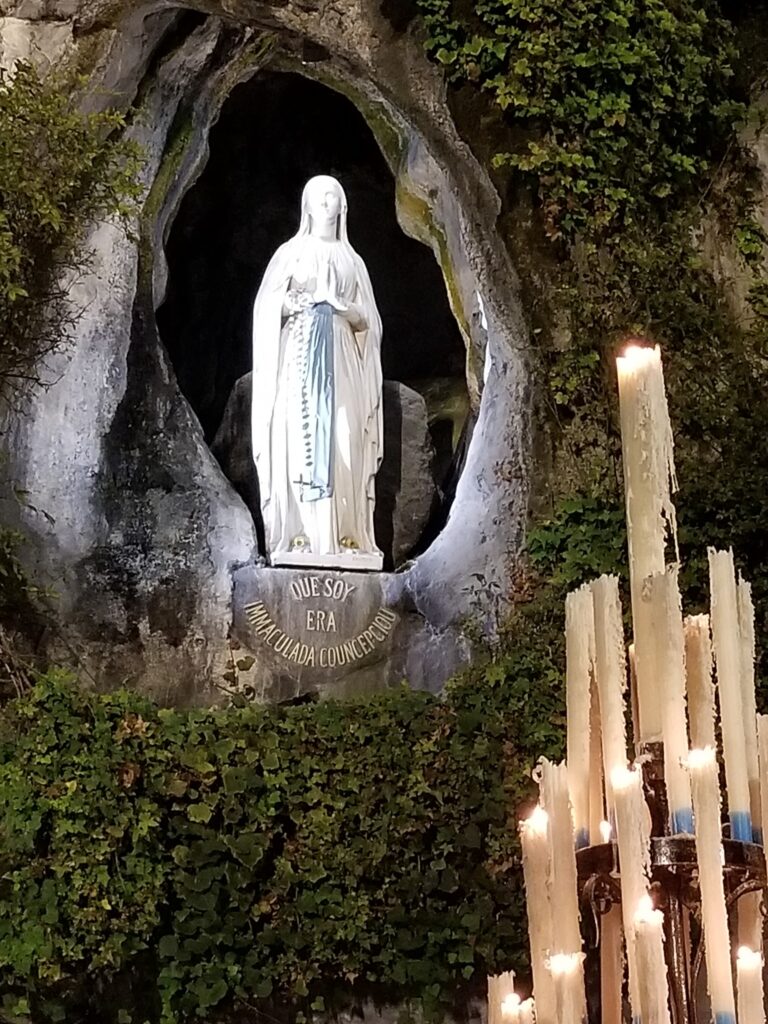
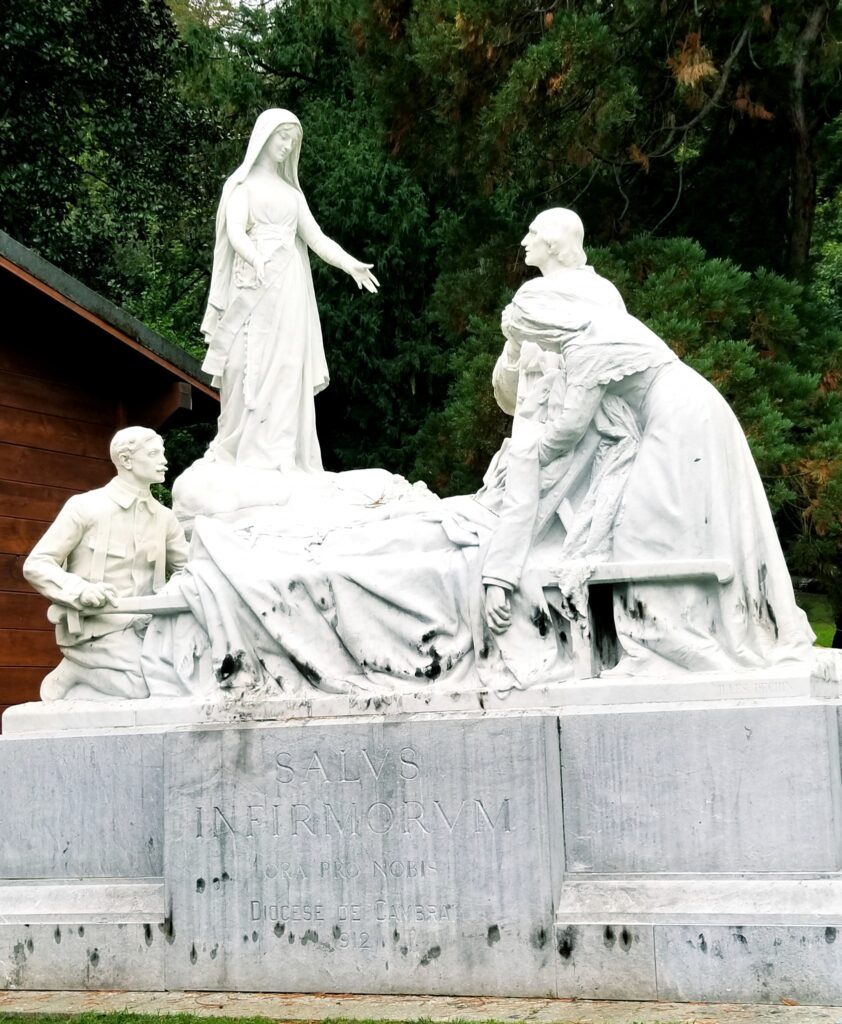
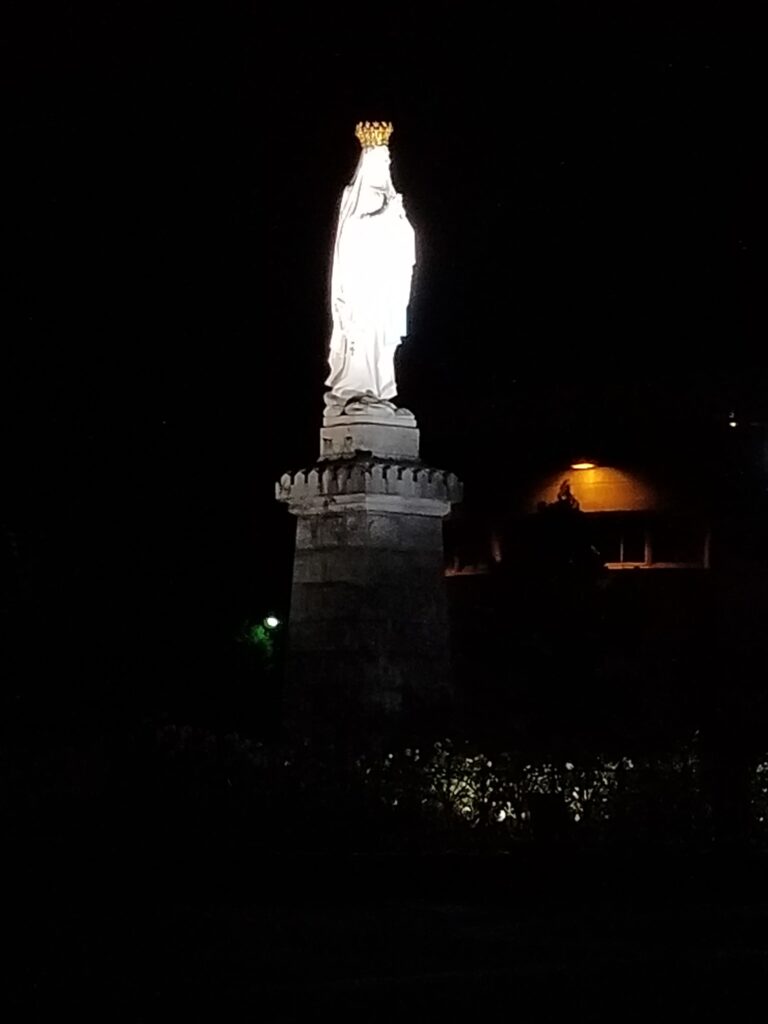
Thank you great God and thank you for your faith St. Bernadette, for witnessing the Immaculate Concepcion’s 18 apparitions, the last one, July 16, 1858.
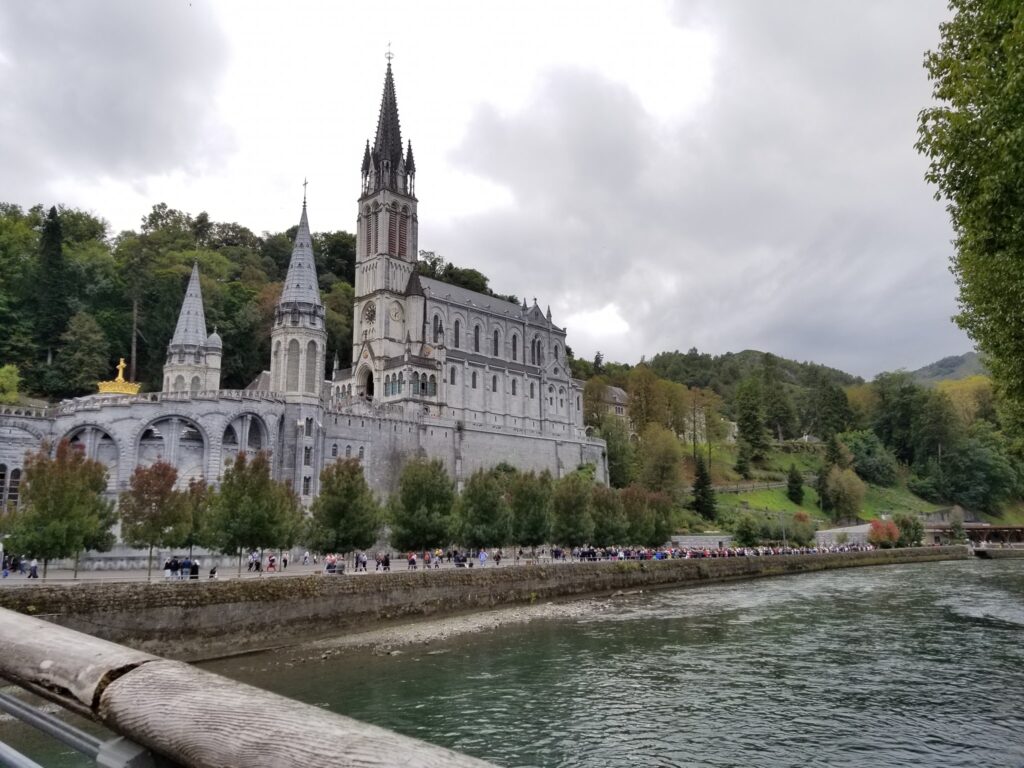
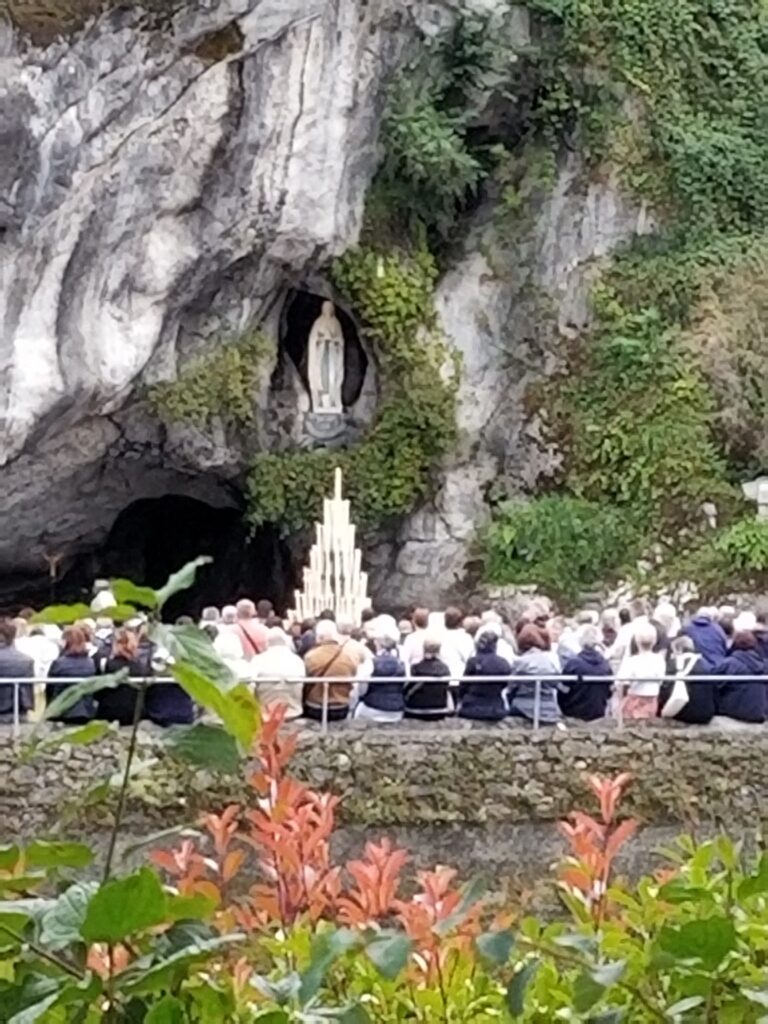
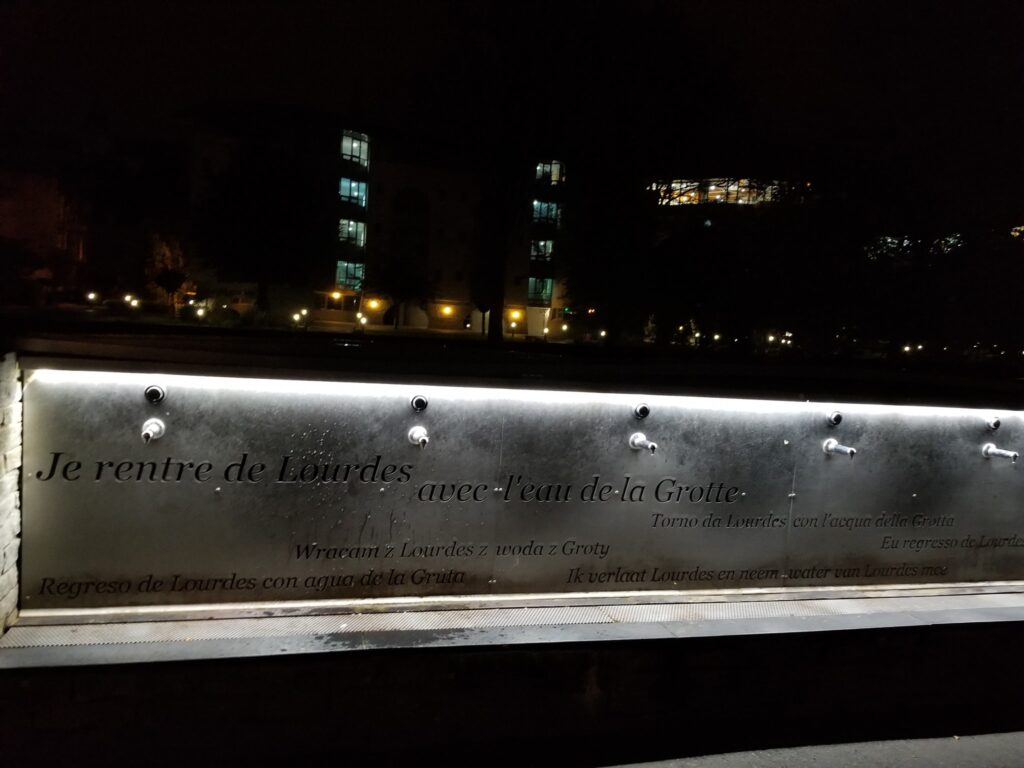
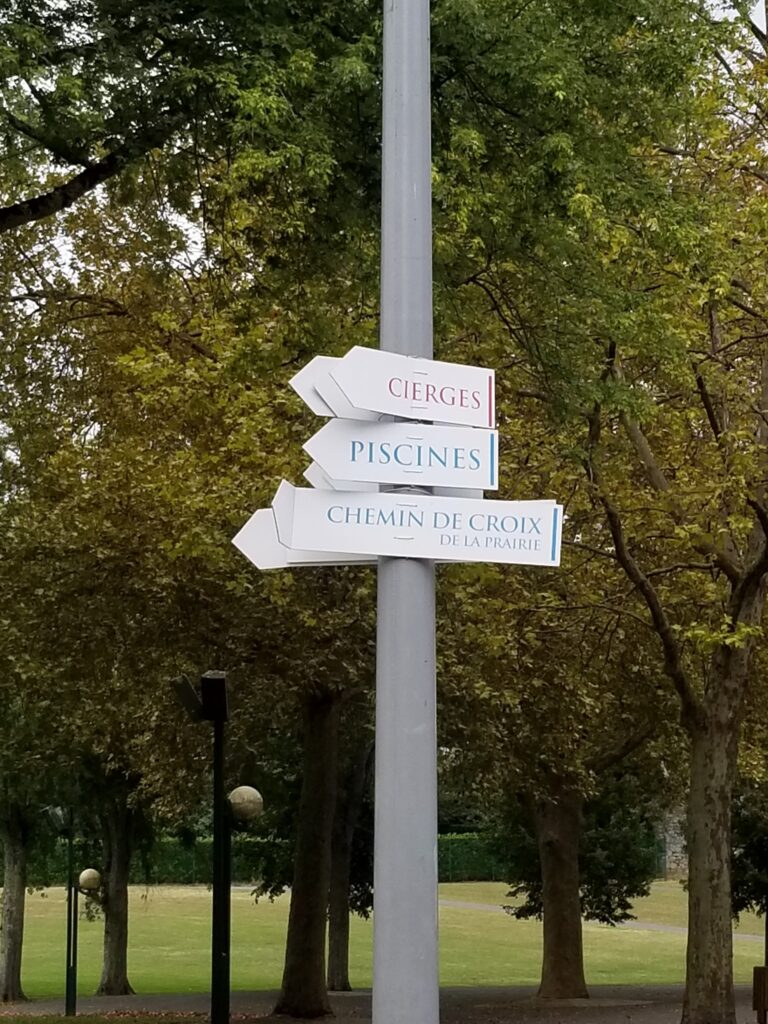
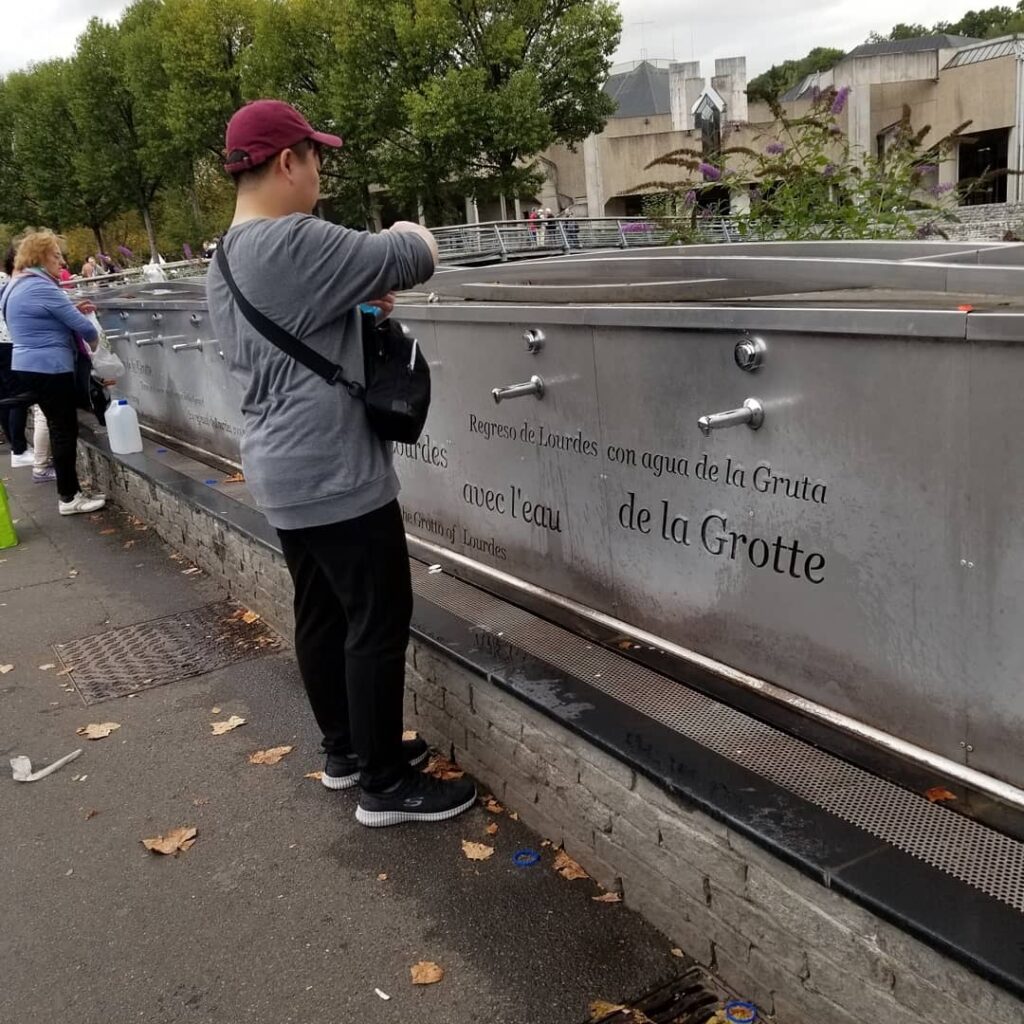
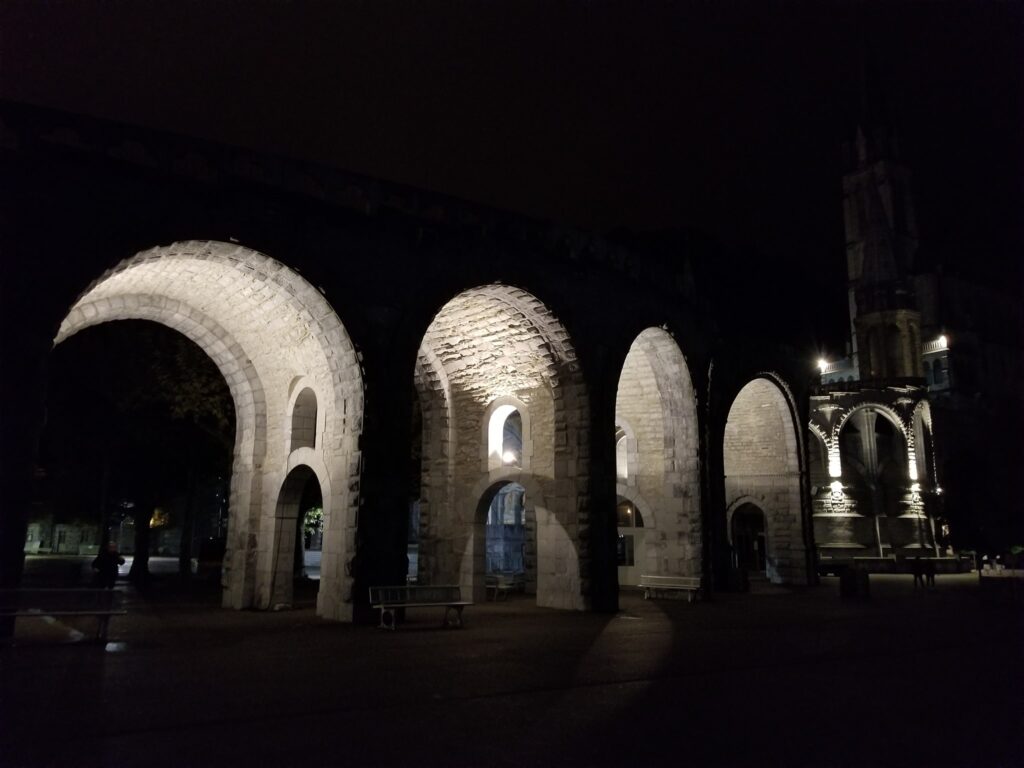
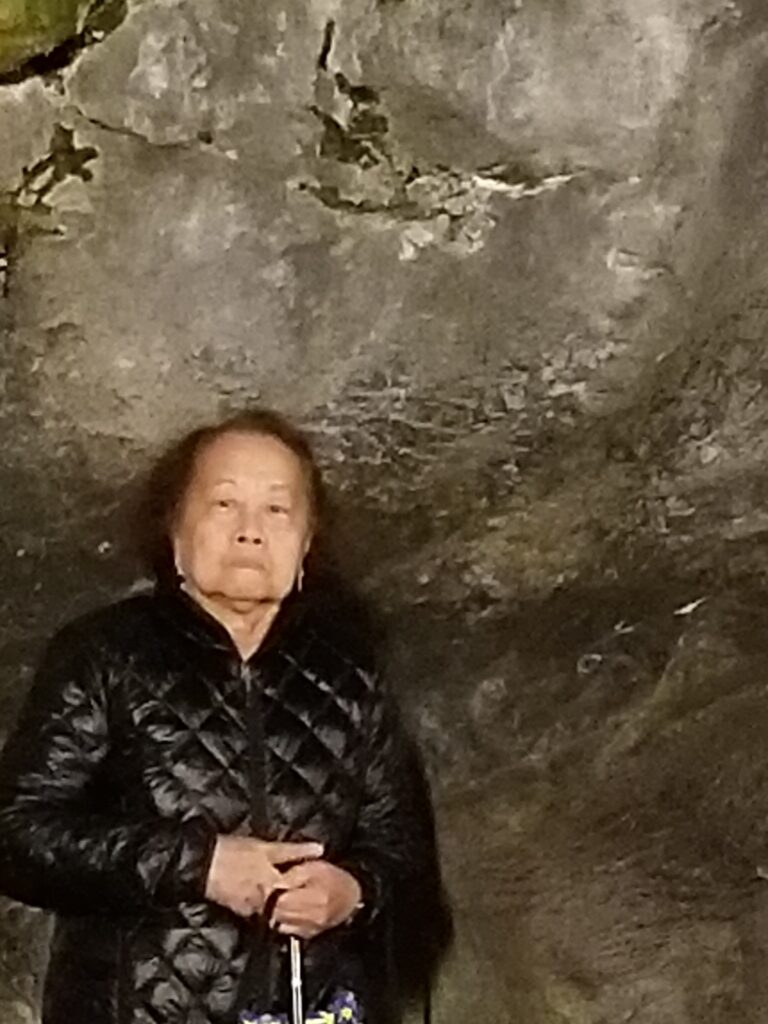
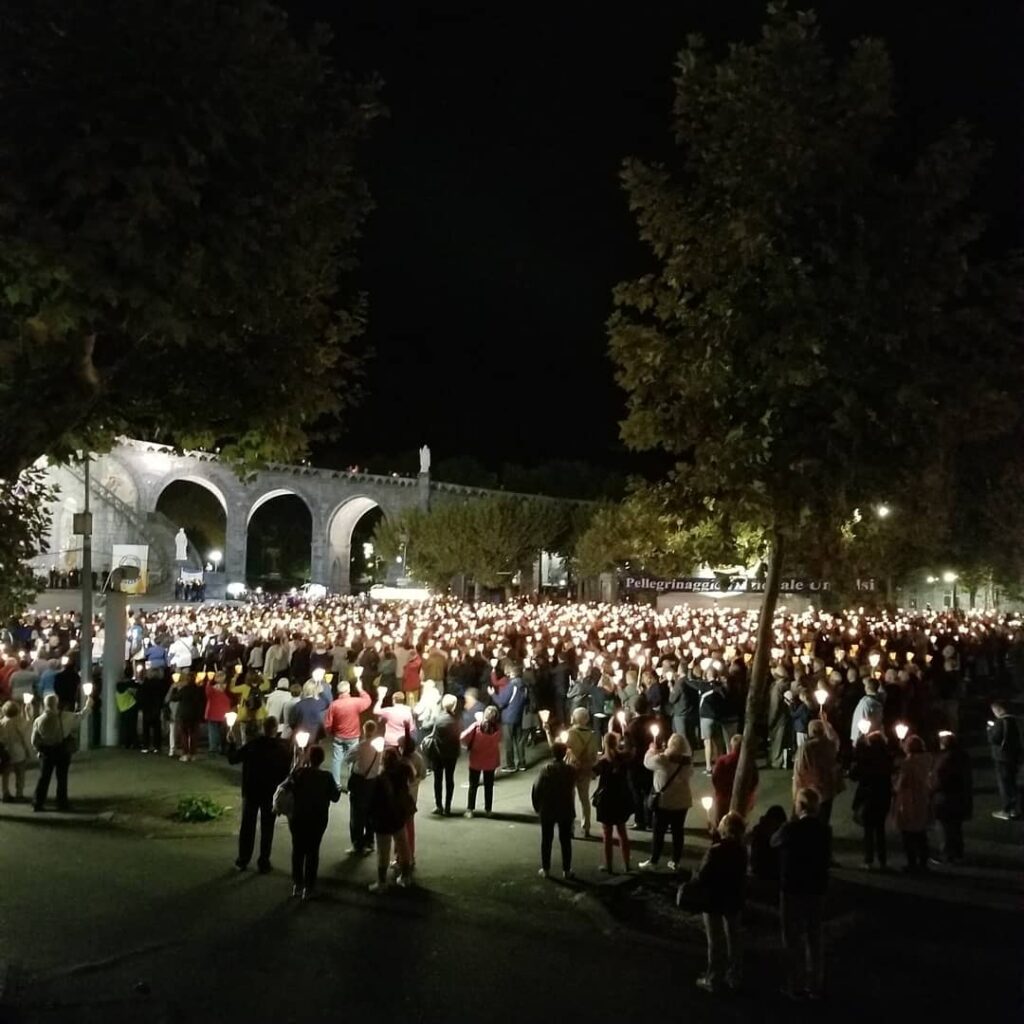
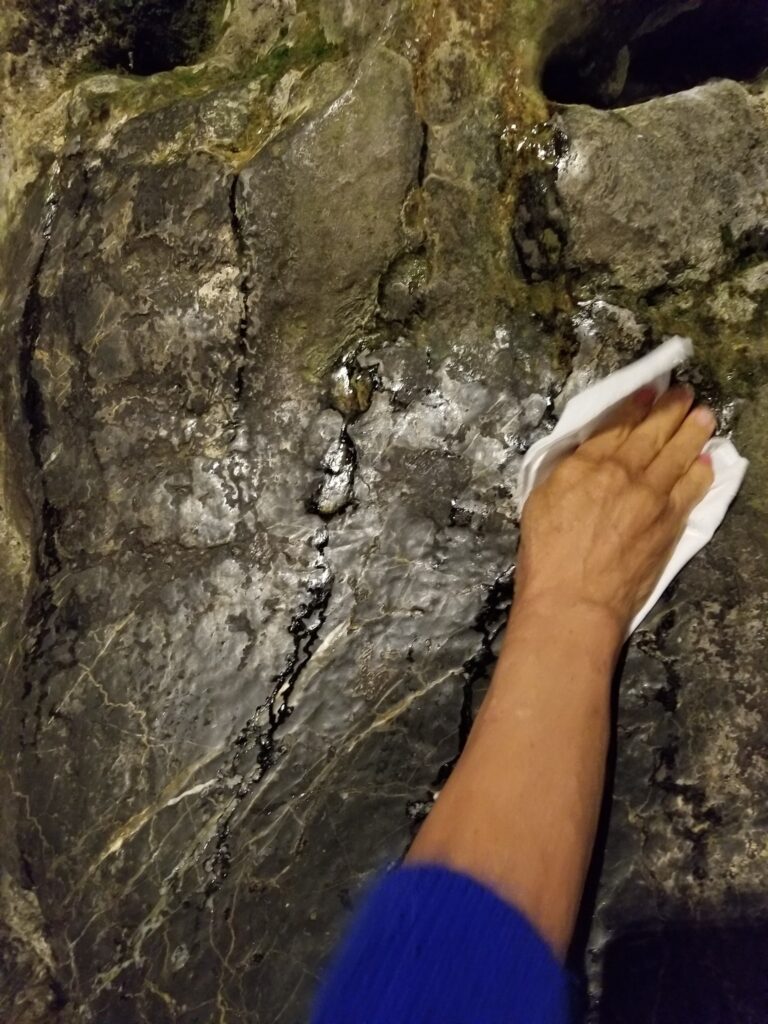
The Immaculate Concepcion came to this special place, called Lourdes, a very small town in rural France that now has campsites and 400 hotels, a hospital for the disabled needing healing, thousands of pilgrims who visit daily and where tens of thousands now come every night to pray the rosary, a robust river and sustained springs, feeding the grotto.
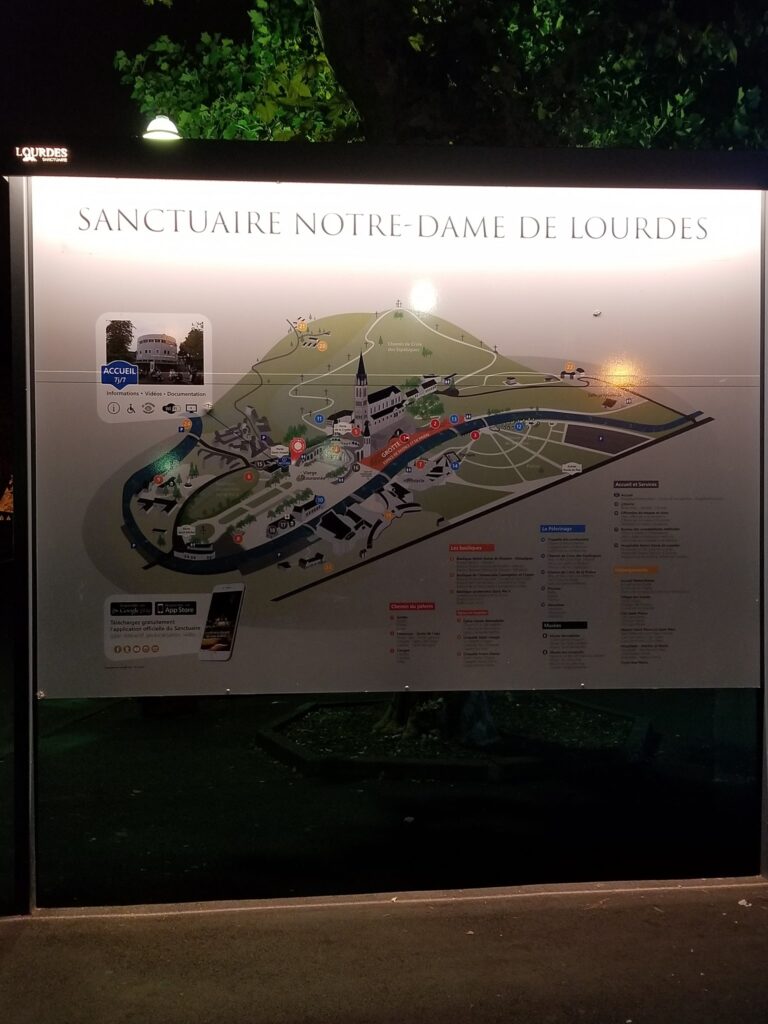
“In the Southwest of the department of Hautes-Pyrenees, at an average altitude of 400 meters, nestling within a sea of greenery in the foothills of the Pyrenees, on the banks of the Gave which flows down Gavarnie, stands Lourdes, the meeting point of the Seven Valleys of the Lavedan.”-Lourdes Souvenir Book
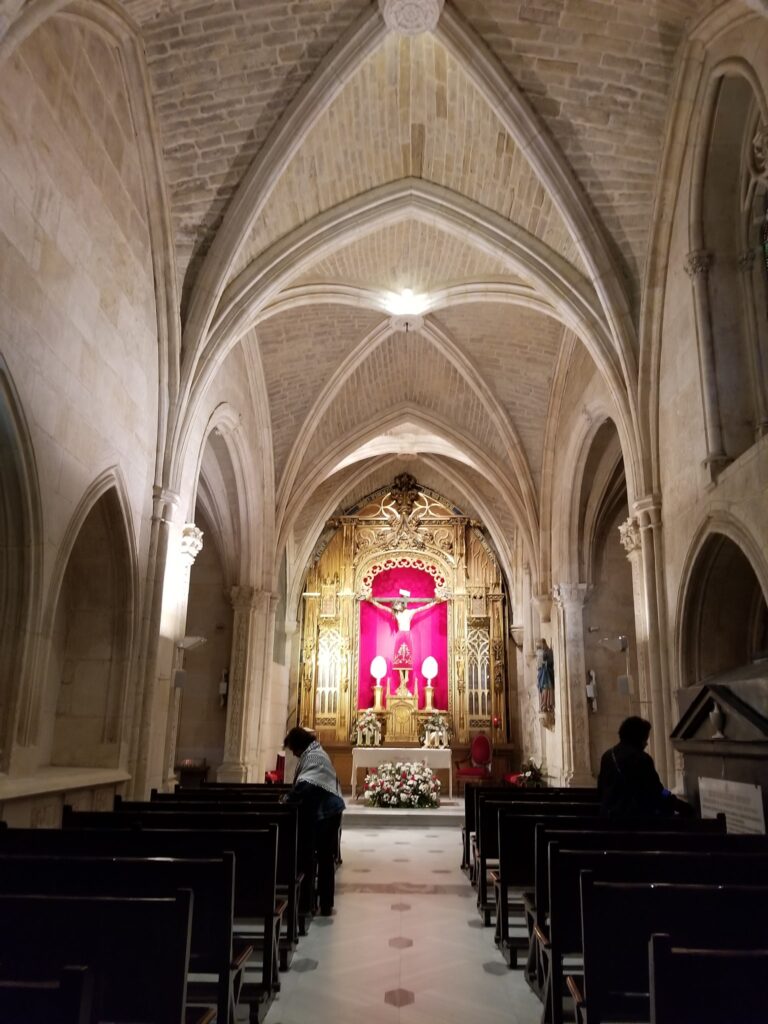
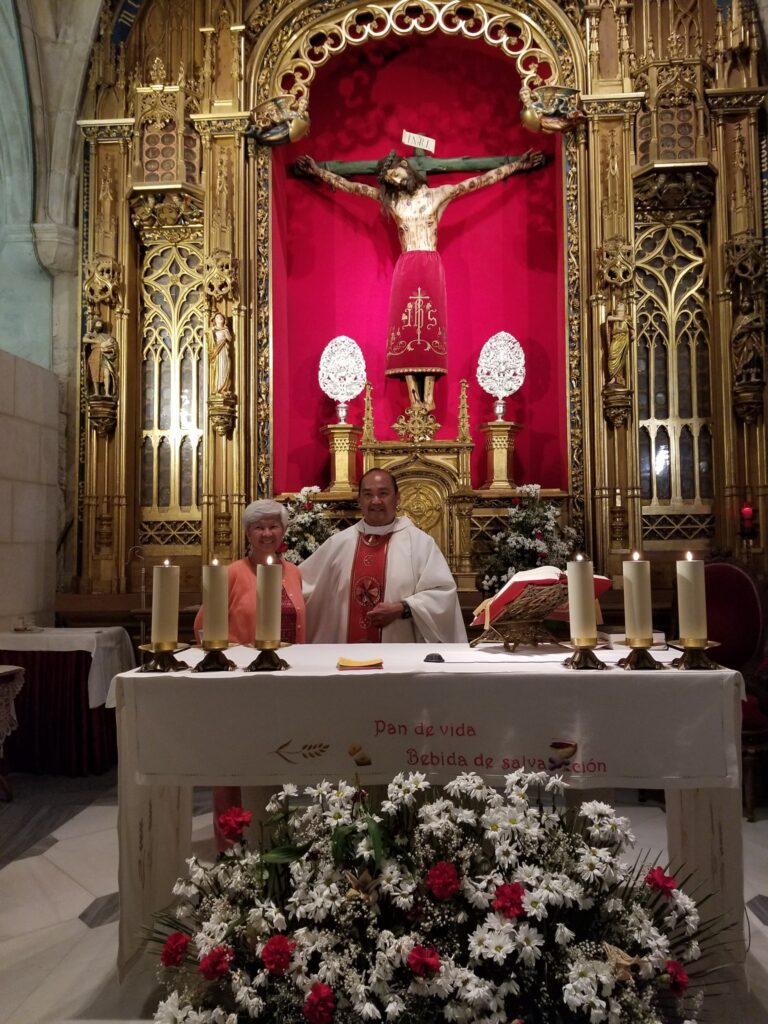
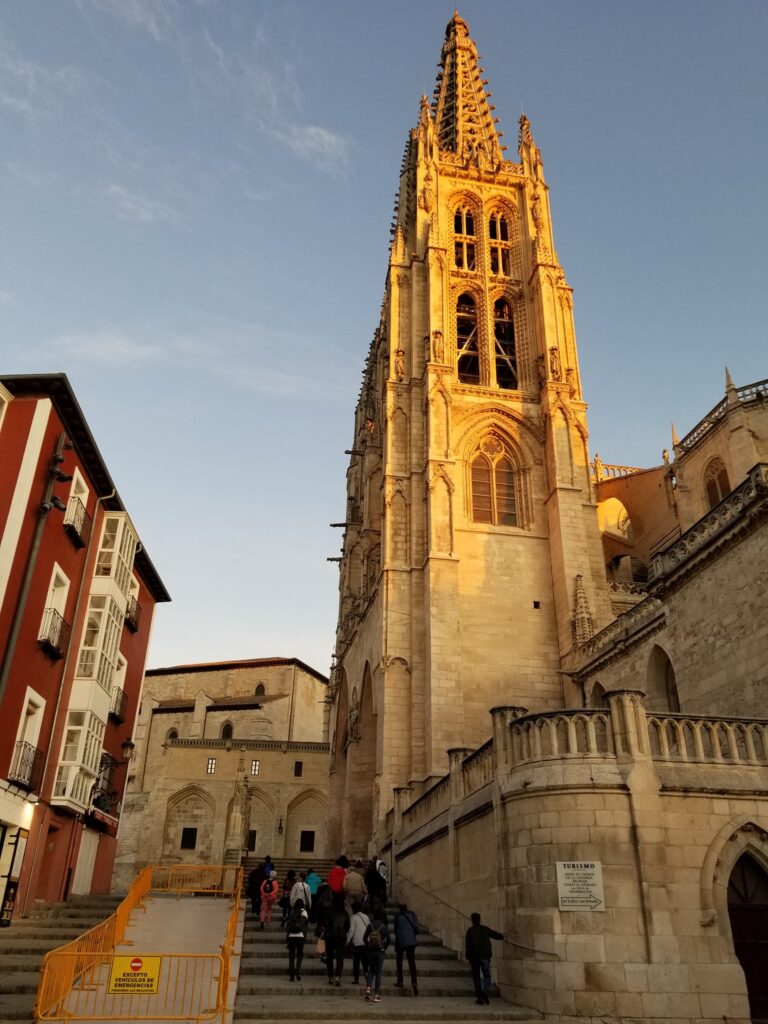
Inside the Cathedral de Burgos is a chapel where we attended a Mass officiated by Fr. Joel Bugas. I consider him a very holy priest given his emphasis on listening, applying God’s word to pilgrims sharing their experiences, without any judgment nor even losing interest of listening to the most mundane of sharing. By his radical listening and full measure of respect, folks are changing to become their better versions: helping another pilgrim, leading folks to sing, and caring. It was quite profound to see positive changes around me that he jokingly called one pilgrim, a version of a Mother Superior.
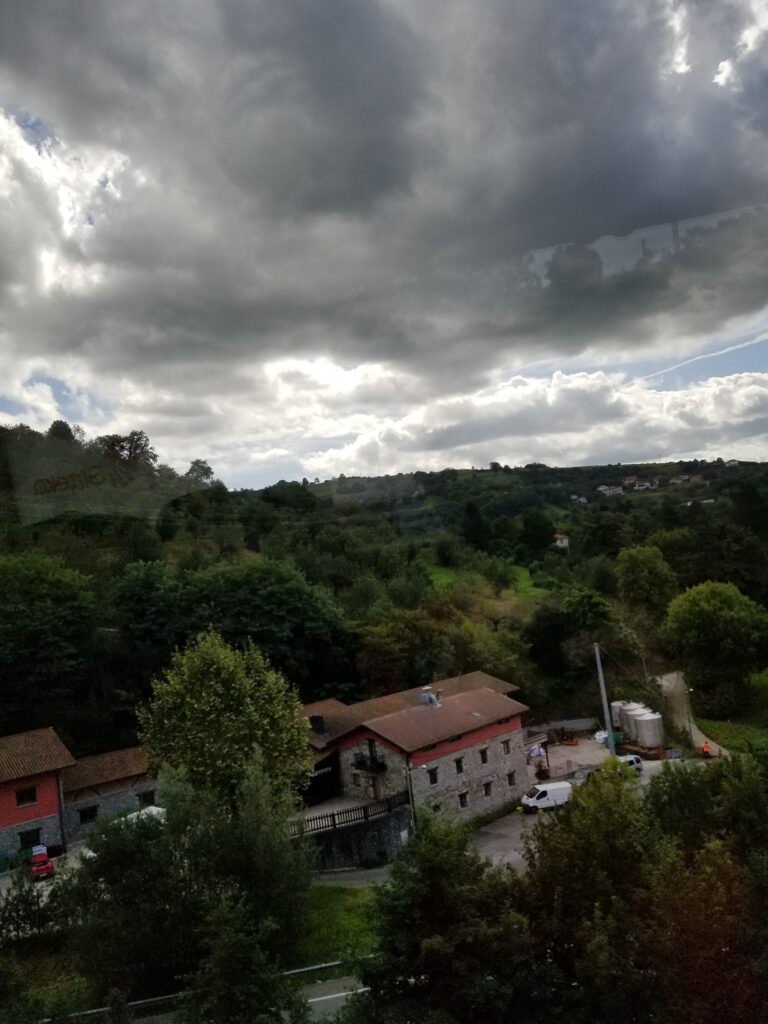
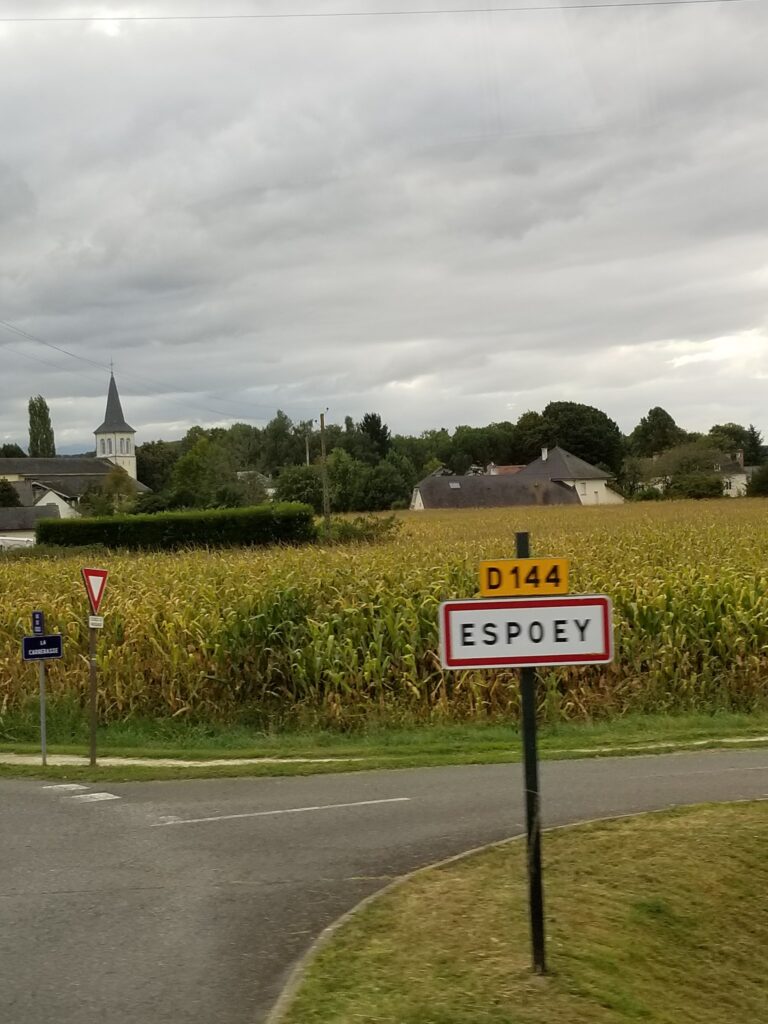
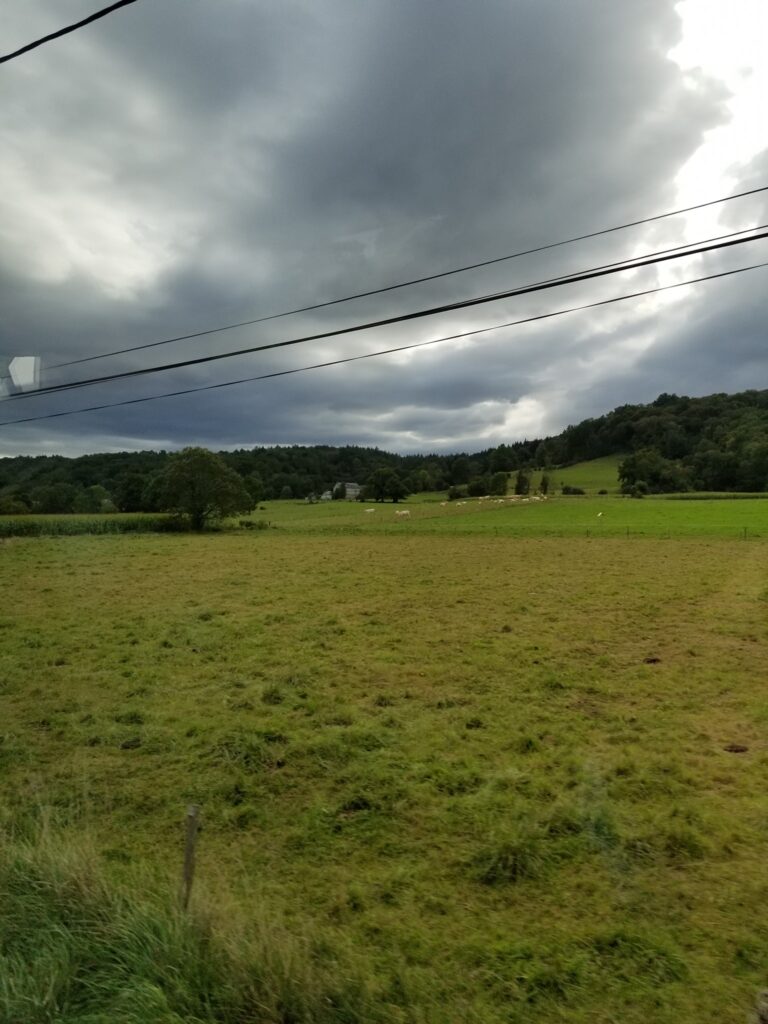
The hours of travel were long, almost a whole day, to get from Burgos to Lourdes. The drive was quite relaxing, but for our fatigue: passing through verdant hills, lots of green fields, yellow green tall corn stalks, blue skies, dark gray and white clouds, simple homes, cows meandering with chickens in some backyards, and nearby rivers. The countryside of France is very beautiful, it is blessed with unspoiled nature and well-run watering holes for tired tourists, serving pate, steak, hamburger, fish with unlimited sides of broccoli, French fries, carrots in two colors, brown gravy, spaghetti and delicious flan.
For the first time, photos of food were not important, as I valued more the conversations: to listen, to observe, to contribute, to become more connected as a pilgrim including the sharing of my dessert.
Back to feeling uncomfortable – how can there be discomfort when we are travelling in a very new van?
Could it be perhaps the condition of our inner selves? We maybe all smiles yet there was some panic in one pilgrim’s experience of using the bathroom. It was dark and not knowing the lights inside bathrooms go off automatically in just a few minutes, she could not get out of the bathroom. She panicked and with her cries of help and Our Father prayer, Lionel, another pilgrim, heard her and rescued her from the dark. Could that be another metaphor for our lives on earth?
That we loudly cry for help for God’s light to illuminate our path and then a kind human being extends a lifeline or conscious help? Conscious as he thought of, why is she taking so long, heard her screams and went down to the bathroom in the lower level. Is that how saints might be assisting us to see the light, as we pray to them, I wonder?
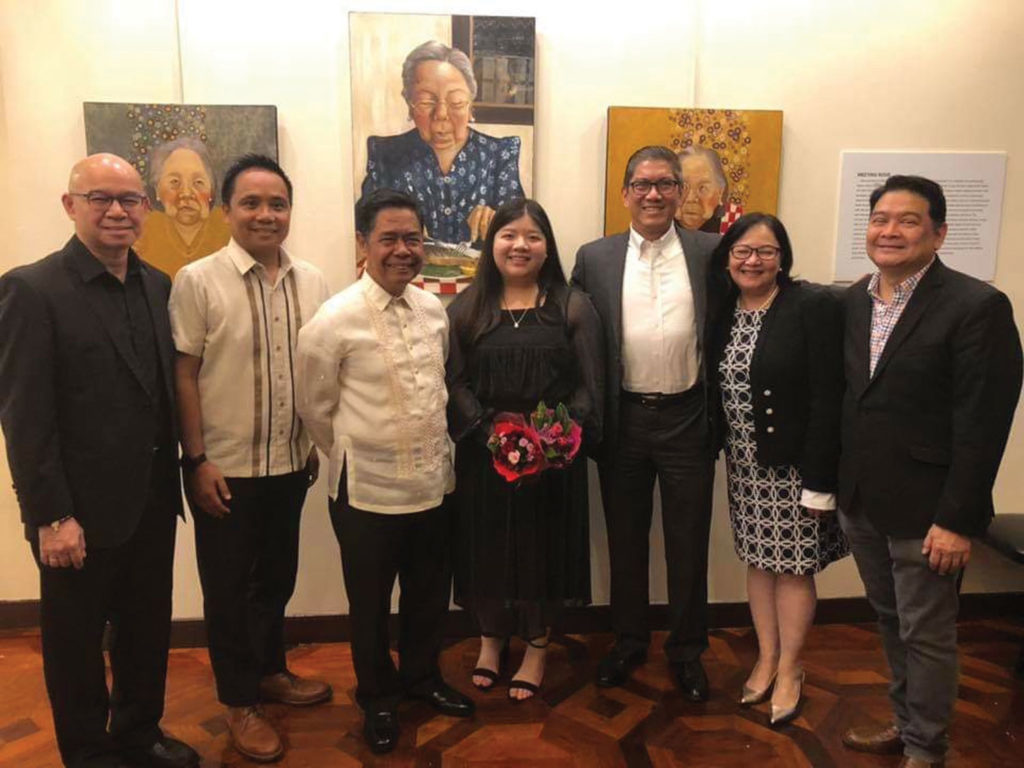
Jerry Sibal, Consul Arman Talbo, Consul General Claro Cristobal, Ysabel Simon, her parents Dodjie Simon and Dr. Elisa Simon and Edwin Josue.
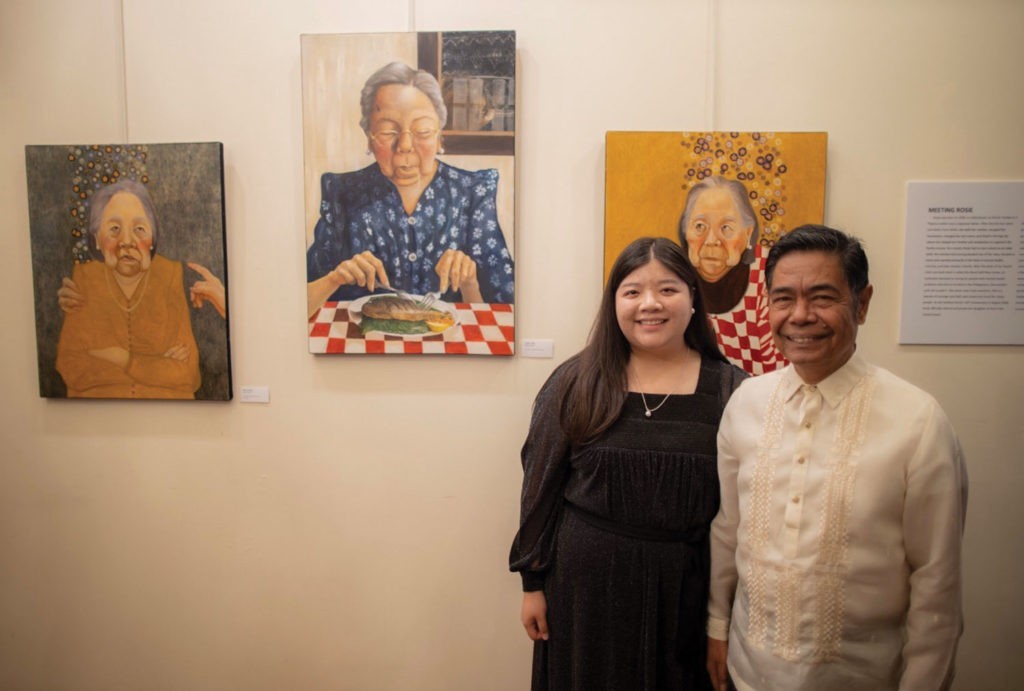
Ysabel Grace Simon opened her first solo art exhibit, “Meeting Rosie,” on Sept. 5 at the Philippine Consulate in New York. It was on exhibit from Sept. 2 to 20.
‘Umuulan ba?’ Is it raining? Rosie would ask Ysabel 10 times each day in August, the hottest month of 2019 in Los Angeles. Temperatures reached the 90s, yet the question persisted from Rosie. Is she recalling her days of looking after Ysabel after school?
When Ysabel was under 10 years old, she spent afternoons at her Grandma Rosie’s house, doing homework. She got picked up from Miriam College (formerly Maryknoll) and her family visited Rosie on Sundays for meals together. When it rained, Rosie and Ysabel would watch the rains in silence, savoring each other’s presence.
Rosie asked and asked again, “Is it raining?” Was her feeble, fragile mind trying to recall her past with Ysabel? “I grew up surrounded by schizophrenia. There was no stigma around mental illness, it can be fixed, like a common cold,” Ysabel stated while she saw those patients regularly and meeting them became a normal part of her childhood.
The exhibit’s theme narrative read: “Rosie was born in 1936, in Cabanatuan, as Rosie Tanaka to a Filipina mother and a Japanese father. After she lost her sister and father during World War II, she with her mother escaped her hometown, changed her last name, and lived in the big city where she helped her mother sell sandwiches to augment their income. Rosie had to start school as an older child. She worked hard, graduated top of her class, and became a nurse in the field of mental health. After the birth of her fourth child, she built a halfway house, first of its kind, to care for people with mental health problems. She worked until she couldn’t. She never even took vacations. After the halfway house’s 50th anniversary, Rosie officially retired in August 2018 and joined her daughter to live in the U.S.”
“Do you know the significance of rains?” I asked Ysabel. Shaking her head for a no, I chimed in: “Rains are God’s blessings to us, a form of undeserved grace. Your name is Ysabel Grace, the middle name is a constant reminder that God is always blessing you.”
“Ysabel’s new series entitled ‘Rosie’ was made under the guidance of the renowned NY-based American artist Howardena Pindell. Howardena’s works are part of the collections of the NYC Museum of Modern Art (MoMA), Harvard’s Fogg Art Museum, Smithsonian Museum of American Art, Yale University Art Gallery, and many more. Howardena was also awarded a Guggenheim Fellowship in painting,” Dodjie Simon said, describing the impressive body of work of his daughter’s mentor.
Artist Ysabel Simon with Consul General Claro S. Cristobal
She is more blessed to keep getting what she wanted. She secured the exhibition space for her first solo exhibit with her dad. When she was training to audition at the Fame High School in La Guardia, she spoke about her mom being supportive and got admitted. Even her brothers are fondly talked about as she got the support she needed from them. Joshua mounted the paintings, while Ely helped in outreach.
“Ysabel Simon’s recent paintings on view at the Philippine Center show the love she has for her grandmother. Isabel is a wonderful painter who can capture the essence of her subject’s spirit through strong drawing and the careful manipulation of paint. I have watched her develop the work over the year. I call her a ‘master of hands.’ Her painting of hands and their expression surpasses anyone I know. The expression on her grandmother‘s face and the gesture of the hands brings the paintings to life. They reveal her deep respect for family and for life,” said Professor Pindell of Stony Brook University.
Child of privilege and propitious future?
When Ysabel graduated in Chatham Middle School in New Jersey, she received an Outstanding Achievement in Fine Arts. That summer of 2012, she enrolled at the Art Students League of New York in Manhattan. She would do figure drawing and paint for four to five hours. After lunch, she took the subway to Queens and at Bridgeview School of Fine Arts, to paint for three to four hours or more.
“I would cook dinner and sleep [on] the living room couch, as my mom was working and she had the bedroom in our apartment. I was given a map and I figured out the trains all by myself. I brought all my stuff, carrying my art box with art pads, portfolio, about 20 pounds, [on] the subway,” she recounted.
I sensed no resentment, just a feeling of accomplishment on her part, “I had no complaints, it did not feel like work, it was fun.”
She prepared for a three-part audition to get into the “The Fame School” (Fiorello H. La Guardia High School). It consisted of Part I: three drawings (live model, still life, composition in cray pas); Part II: written Q and A and an essay; and Part III: art portfolio and academic records. When her mom asked how the audition went, “I don’t know,” was all she said.
A few days later, her dad received a call. Ysabel got wind of how voices quieted down. It was a call informing her dad that she was not accepted. Her choices would then be: Baruch High School or go back to New Jersey for high school. But, her brother was going to New York for college, while her parents would be working there too. She got quiet.
Her dad quickly put the rejection call into perspective, “God has another plan.” Ysabel prayed for God’s plan to manifest in her favor. True enough, her character was tested, as the rejection call later became an acceptance call.
Had Ysabel imbibed this rejection as a deficiency in her identity, what would have happened? Instead, her parents knew how to guide her with: “Leave it to God as God knows!”
Thirty minutes later, the director admitted the mistake and called to inform Ysabel was accepted. She even excelled during the audition for high school admission. Sounds of screams, then a dinner to celebrate.
Her propitious future: ebbs and flows
Ysabel went to New York. She took the train to high school from their apartment. It took her 45 minutes to an hour, one hour and a half to two hours, both ways on the train. She was so driven that she did not mind.
I posed another question to her, “Are you not a child of privilege? How do you feel about that status in life?” Without any hint of being entitled, she wisely responded, “Yes, I am a child of a privileged family. We are blessed with so much. We don’t deserve all these things. I am living from the fruits of the hard work that my parents have done, [and still do] and my dad never lets me forget that part of our Filipino culture: to be humble and God-fearing.”
Ysabel wanted her first solo exhibit to be about mental health awareness and destigmatizing it — it can be managed and it is simply a result of a chemical imbalance in the brains.
She witnessed folks get well under her grandma Rosie’s care, and under the care of her licensed psychiatrist mom’s Elisa, who was then practicing in the Philippines.
Ysabel consented that I share her self-diagnosed depression. It was a result of pursuing three semesters of computer science and devoting zero time to painting while in college. “My mom kept tabs on me, I showed no interest in going to classes, until my Mom and I developed a plan: change majors, change universities, and even go abroad,” she said. “We then talked to my dad.”
“I went to Florence, Italy. Andi Nufer was my teacher. She emphasized to us to lower our threshold for happiness. After the Santa Croce’s bells rung, our class started. She asked that we go to the courtyard, and listen to nature before class. She taught us to appreciate sunshine, birds, flowers, blue skies so that when we encounter a big moment, we would be filled with deeper levels of happiness,” Ysabel learned abroad.
She is now taking multi-disciplinary studies, majoring in business, Asian and Asian American Studies and studio art. She has an interest in languages, studying French, Italian, Japanese and Korean, and is also fluent in Tagalog.
A family of artists
Ysabel is the niece of Ben Cabrera, the National Artist of the Philippines whose paintings are housed at the BenCab Museum in Baguio. Cabrera has been a household name for almost a half-century now. Paul McCartney owns one of his paintings.
Evelyn Mandac, the only Filipina who has sung with the New York Opera, is Ysabel’s aunt.
Her dad Dodjie Simon has composed over 65 songs, music and lyrics, one of which is “Ikaw Lamang,” created for his muse, Elisa (his wife), and popularized by Zsa Zsa Padilla and revived by Janno and Jaya in the Philippines. Dodjie is also an author of “A.I. Hacked,” a book on artificial intelligence that was successfully launched.
Aside from a lineage of artistic and intellectual genes, Ysabel developed her artistic talents and aesthetic sensibilities through arts exposure, sheer hard work, and discipline.
I met her when she was a 17-year-old high school student at Fiorello H. La Guardia High School of Music, Art and Performing Arts. She went with me to interview Ronald Cortez, a seasoned realist painter featured in my book, “Even The Rainbow Has a Body.”
Both seasoned painter and student painter easily shared their portraits, what they have done – portraits and sculptural images stored on their iPhones. They asked questions about these images, what they are trying to achieve and the artistic process.
Ysabel asked how to paint a series. Ronald responded: “Just like the rice painting, I had three to four in a series. It allowed me to change canvasses, to focus on another view. I can’t afford to rest, it prolongs the process so I move to [paint] another canvas.”
She asked about motivation, to which Ronald said, “Let the bees, trees, and the birds teach you to paint.”
I then asked Ysabel during our recent interview if she believed “art is a highly sophisticated storage system for understanding communication with cultures over a period of time and if these Rosie paintings could speak, what would they say?
“It is about sharing of human experiences, an exchange of perceptions. I want the viewer to know more about mental illness. I did these series of paintings from October 2018 to August 2019. I already knew it would be a series. I remember Ronald giving me advice on how to do a series. He helped me,” Ysabel answered.
In 2016, I chose Ysabel to create the artwork for my first book cover. She drew inspiration from my muse, my granddaughter.
Ysabel shared her intentions in completing the book cover: “As legacies are intended to be passed on to the next generation, there is no better image that reflects the promise of new beginnings and hope than a child’s face. Children remind us of the choice to believe in the part of humanity’s innate creativity, resilience, goodness, and beauty in man in the midst of the constant push and pull between mediocrity and excellence, old and new, good and vile. One part of our self is what we inherit, the other is what we make of it, thus only half of the child’s face is shown.”
Shortly after, she drew an oil portrait of her grandmother, called “Tinik,” a fishbone hanging out of her grandma’s mouth while eating her dinner. She entered a citywide competition and won.
Tinik was exhibited at the Metropolitan Museum of Art from June to October 2016. The image of Tinik was e-broadcasted in Times Square for a whole week. Ysabel was asked by her high school to represent them during a Times Square interview. The awards ceremony was held at the Met.
The fragility of life
Her brother Joshua shared his insights and feelings: “Meeting Rosie’s portraits represent how we have seen our grandmother progress, from taking care of us, sharing her experiences, teaching us, to what she has become. We did not see the slow progression of her disease [Alzheimer’s]. When I saw her, it was heavy on me; spending months taking care of her, just as she spent time taking care of us when we were young. Our whole family became caregivers taking care of our grandma, and the heaviest load fell on Ysabel Grace, as both my mom and I were at work. Grandma is now under full-time care, 24/7 with supervision from a trained nurse back in the Philippines.”
Multigenerational aficionados, art collector, filmmakers, doctors, community friends, students and family members, including her Tita Joy and mom Elisa from California, came to see the exhibit.
“This is an amazing art exhibit for a young Filipina American. The consulate and the Philippine Center supports young Fil-Am artists – I want them to know this is their home to reach their potentials and truly, [they can] make this an exhibition space for their artworks,” Vice Consul General Armand Talbo remarked.
Loida Nicolas-Lewis wrote on the exhibit’s souvenir book: “Wow! A prodigy at such a young age of painting! Our Own Renaissance Painter!”
Loida is a NY-based art collector, philanthropist, billionaire, and a community leader in civil rights and empowerment for the Filipino American community. She got a Jack and Jill of America Anniversary Award from the Jack and Jill of America Foundation, dedicated to working on issues affecting African American children and their families.
She elaborated later in an email: “I wrote it [the feedback] because painting or drawing the portrait of a person requires great concentration and particularity. Ysabel’s ability to depict and paint in oil the different moods, expression, and attitude of her Grandma in several stages of her life as a senior citizen is remarkable and awesome.”
Recall that Renaissance Art was a period around the 1400s to 1500s, which paralleled with the developments in philosophy, literature, music and science? Recall that Leonardo da Vinci had painted Mona Lisa roughly around 1503 to 1507, and Michelangelo sculpted the Pieta in 1499.
Ysabel completed nine oil paintings of Rosie and four lithographic prints (made in editions) as part of the Rosie series (only two out of the four lithograph works were showcased in the exhibition) in a year, which were then showcased in Sept. 2019.
“The process of lithographic printmaking requires you to be familiar with the subject. Drawing and printing again and again. I must have worked on Rosie’s face more than 50 times for just one print, “ Ysabel stated.
This writer was blessed with an unsolicited gift of Rosie #1, a lithograph. I cherish this as it has become a topic for conversation in my family.
Ask Ysabel who her favorite painter is and she will point you to Gustav Klimt inside the Neue Gallery near the Met, whose portrait of Adele Bloch-Bauer, “Woman in Gold,” was painted in 1903 to 1907, inspired by 6th Century Byzantine, after Gustav visited the Church of San Vitale in Ravenna, Italy. “It is a painting created without modeling. It reflects the richness, luxury, Japanese lacquer work, an epitome of refinement and nobility, while lavished in gold,” as described by Susanna Partsch in her book, “Gustav Klimt’s Painter of Women.”
Ysabel went for more than the second mile and became integrated into the community of caring folks, the true and beautiful supportive members of a very diverse New York community.
Footnote: Writer’s trip was subsidized by the Delacruz’s family budget, to support this young Renaissance artist, an old soul, in a post-millennial generation.