Few individuals have plumbed the depths of their rage, hatred, terror, jealousy, and despair or the scope of their wisdom and power of their compassion, yet these currents run beneath the surface of #awareness in each of us, like great rivers on the floor of an ocean.
Gary Zukav, Jan.5, 2018
I remember a friend who shared how her husband died, shooting himself in their joint residence. I did not have the words to comfort her, only my living presence. Only to discover that some of my friends are really angels on earth, as one said, “Take her to my concert tonight, it is a benefit for the Suicide Prevention Association.”
I was dumbfounded, as I simply had one question to the heavens – how do I bring comfort to her when I have no idea on how to help her? At the concert, the organizer revealed her angst at having a “permanent shadow” accompany her family at all times.
I remembered Ernest Hemingway and how his surviving families must have felt, carrying that shadow wherever they went.
Only to learn recently that Phil Graham, also committed suicide in his home in Glen Welby. He was the former publisher and president of The Washington Post, who run the paper for 17 years, and who said: “Journalism is the first draft of history” in 1957. How did his wife, Katharine Graham pick up the pieces, to leave behind her rage, and to emerge the person of grace and strength, and one who with a strategic vision for her country, America?
Women Coming of Age
I watched The Post (a movie) and I could not quite adjust my feelings towards how indecisive Katharine Graham (owner/publisher of The Washington Post) was yet, meticulously adept in asking questions of her inner circle, but clueless in realizing that she has the authority to make the final decision. She was depicted as ambivalent and evasive of conflict, which she admits in her personal memoirs.
Until portions of the Pentagon Papers was delivered to Washington Post’s assignment editor and thousands of pages were given by Daniel Ellsberg, to Washington Post!
She made a crucial strategic decision, of publishing the Pentagon Papers, which catapulted the Washington Post into a credible source of news, facts, evidence and true to its mission as a newspaper. The Washington Post became a key resource for national news.
Russ Wiggins wrote a personal note to the staff: “Philip L. Graham has left in our daily care and custody an honest and a conscientious newspaper which I know that all of you are eager to maintain as a daily memorial to his own genius and integrity. And now we must take up the duties he laid upon us, with a heavy heart, but nonetheless with a high hope that we may succeed in doing what he would have us do.”
I am presently reading Katharine’s Pulitzer Prize winning memoirs and how she evolved from being supportive of Pres. Lyndon B. Johnson’s actions in Vietnam and later, developed her personal opposition towards the war, given her eldest son’s personal letters to her, while deployed as a soldier in Vietnam. He wrote about the senseless violence towards an ill-defined cause and really did not quite advance the national security interests of the United States.
The Post continued to report on the Vietnam War, and the 500,000 US soldiers deployed there. It then grew its editorial department in 1966-1969, when Post added 50 positions and its budget grew from $2.25 million to $7 million in 1969.
Katharine is depicted in the film, The Post, as nervously taking a stand to publish the Pentagon Papers and closely monitoring the backlash and at the same time, experienced the solidarity of the newspapers around the US, who followed The Washington Post’s lead and published the “verboten” Pentagon Papers. Katharine rationalized her decision in keeping with the newspaper’s mission and putting the nation’s interests before the papers.
It peeked my curiosity to keep reading about Katharine Graham and how she evolved to strengthen her resolve, her convictions, and even her own stance, amidst being surrounded, influenced, criticized meanly, and strongly pressured by strong men around her, including Pres. Lyndon B. Johnson.
The Impact of a Woman’s Decision: The Washington Post and New York Times’ US Supreme Court Decision
It is a life that she allowed other folks to guide her, but also her own inner convictions to stand by her own decisions. For example, it took tremendous courage for her to set a precedent of publishing the Pentagon Papers, then, joined in a lawsuit with the New York Times, and wait nervously for the US Supreme Court’s decision, 6-3, written by US Supreme Court Justice Black, excerpted here in part:
“In the First Amendment, the Founding Fathers gave the free press the protection it must have to fulfill its essential role in our democracy. The press was to serve the governed, not the governors. The Government’s power to censor the press was abolished so that the press would remain forever free to censure the Government. The press was protected so that it could bare the secrets of government and inform the people. Only a free and unrestrained press can effectively expose deception in government.
“And paramount among the responsibilities of a free press is the duty to prevent any part of the government from deceiving the people and sending them off to distant lands to die of foreign fevers and foreign shot and shell. In my view, far from deserving condemnation for their courageous reporting, the New York Times, the Washington Post, and other newspapers should be commended for serving the purpose that the Founding Fathers saw so clearly. In revealing the workings of government that led to the Vietnam war, the newspapers nobly did precisely that which the Founders hoped and trusted they would do.
“The Government’s case here is based on premises entirely different from those that guided the Framers of the First Amendment. The Solicitor General has carefully and emphatically stated:
“Now, Mr. Justice [BLACK], your construction of . . . [the First Amendment] is well known, and I certainly respect it. You say that no law means no law, and that should be obvious. I can only [p718] say, Mr. Justice, that to me it is equally obvious that “no law” does not mean “no law,” and I would seek to persuade the Court that that is true. . . . [T]here are other parts of the Constitution that grant powers and responsibilities to the Executive, and . . . the First Amendment was not intended to make it impossible for the Executive to function or to protect the security of the United States.[n3]
“And the Government argues in its brief that, in spite of the First Amendment,[t]he authority of the Executive Department to protect the nation against publication of information whose disclosure would endanger the national security stems from two interrelated sources: the constitutional power of the President over the conduct of foreign affairs and his authority as Commander-in-Chief.[n4]
“In other words, we are asked to hold that, despite the First Amendment’s emphatic command, the Executive Branch, the Congress, and the Judiciary can make laws enjoining publication of current news and abridging freedom of the press in the name of “national security.” The Government does not even attempt to rely on any act of Congress. Instead, it makes the bold and dangerously far-reaching contention that the courts should take it upon themselves to “make” a law abridging freedom of the press in the name of equity, presidential power and national security, even when the representatives of the people in Congress have adhered to the command of the First Amendment and refused to make such a law.[n5]See concurring opinion of MR. JUSTICE DOUGLAS, [p719]post at 721-722. To find that the President has “inherent power” to halt the publication of news by resort to the courts would wipe out the First Amendment and destroy the fundamental liberty and security of the very people the Government hopes to make “secure.” No one can read the history of the adoption of the First Amendment without being convinced beyond any doubt that it was injunctions like those sought here that Madison and his collaborators intended to outlaw in this Nation for all time.
“The word “security” is a broad, vague generality whose contours should not be invoked to abrogate the fundamental law embodied in the First Amendment. The guarding of military and diplomatic secrets at the expense of informed representative government provides no real security for our Republic. The Framers of the First Amendment, fully aware of both the need to defend a new nation and the abuses of the English and Colonial governments, sought to give this new society strength and security by providing that freedom of speech, press, religion, and assembly should not be abridged. This thought was eloquently expressed in 1937 by Mr. Chief Justice Hughes — great man and great Chief Justice that he was — when the Court held a man could not be punished for attending a meeting run by Communists.”
“The greater the importance of safeguarding the community from incitements to the overthrow of our institutions by force and violence, the more imperative is the need to preserve inviolate the constitutional rights of free speech, free press and free [p720] assembly in order to maintain the opportunity for free political discussion, to the end that government may be responsive to the will of the people and that changes, if desired, may be obtained by peaceful means. Therein lies the security of the Republic, the very foundation of constitutional government.[n6]“
Would you, as sworn US citizens, register and vote, and guide by your votes, our elected leaders to sustain its adherence to truth, uncensored news publications, and responsible use of power at any levels (executive, legislative, judicial) or would you blindly succumb to protecting your perceived economic station in life and by your vote, improperly believe to protect that status? How would you act as guardians of this US-based democracy with integrity and adherence to truth and social justice?
Katharine Graham was not trained to be a CEO nor trained to be a publisher. She watched from the sidelines, and did not have an opportunity to hold a fulltime job, until her husband died.
Yet she made the most visible, credibility-sustaining decisions for her newspaper, The Washington Post, displaying her personal courage, “the scope of her wisdom and power of compassion,” love for this country’s democratic freedoms, and by that national exposé, initiated a national debate to purge our nation from its involvement in an unjust war in Vietnam, which to the end, had 58,220 US military fatal casualties, between 200,000 to 250,000 South Vietnamese soldiers dead and 1.1 million North Vietnamese and Viet Cong casualties. By far, the most casualties were incurred in World War II, battle deaths and civilians of all countries to have been 56.4 million. (Source: Britannica.com)
In examining your own lives, have you faced choices where you placed truth above lies, love of country first over your pocketbook, harmony over personal grudges and deep anger?
What legacy are we building by our personal actions?
To this day, Katharine Graham’s personal decision of courage and commitment to mission of truthful news information inspire me and I dare say, a multitude of women on how to use feminine power in the workplace – to uplift truth!
“But that is the way God gives. His gifts are never quite what we expect, but always something better than we hoped for. We can only dream of things too good to be true; God has a habit of giving things too true to be false. That is why our faith is a faith of the unexpected, a religion of surprise. Now, more than ever, living in times so troubled, facing a future so uncertain, we need such faith. We need it for ourselves, and we need to give it to others. We must remind the world that if Christmas comes in the depths of winter, it is that there may be an Easter in the spring.” – Fr. Horacio de la Costa, Ph.D, a Jesuit
While going over 52 Rhizomes articles for 2017, these are some of the reflections I gathered from different subjects, which could be teaching moments and lessons that we can all learn from, to empower us in 2018.
A. Give all of yourself to your art, your mission at hand, at that given moment of creative self-expressions. Say no to all that will distract you from creating and achieving.
“Picture this, the singers now have our hearts in their hands, as they alternately do solos, ensemble, and then, together: ‘And the world will be better for this/That one man, scorned and covered with scars/Still strove with his last ounce of courage/To reach the unreachable star,’ while Celine Fabie sang verses of Ang Bayan Ko, ‘Pilipinas kong minumutya/Pugad ng luha at dalita/Aking adhika/Makita kang Sakdal Laya.’ Her soprano voice lingered, as if a dream unfulfilled and a love unrequited.
“What happens next? The last verse Makita Kang Sakdal Laya (To Witness your True Freedom) converged with To Reach the Unreachable Star, in a haunting soprano voice, which extracted a primal longing, a feeling for our birth country to be truly free, from all vestiges of bondage, to misguided measures of success, to incorrect principles of governance, from an unreachable space of creativity and musicality in music, to now genius manifested, and the crowd leaped to standing ovation, literally, shouting bravos.”
I wrote above on Dec. 19, 2016. Yet, by Dec. 27, 2017, their masterful pianist, conductor and composer, Ryan Cayabyab, endearingly referred to as Mr. C, was recognized with the Best Musical Score, as part of “Larawan,” a movie musical’s 6 wins at the 2017 Metro Manila Film Festival, including Best Picture and Best Actress.
The adage goes that it takes a master to extract masterful performances from other artists and that is true for Mr. C, as with his Ryan Cayabyab Singers, which performed in two nationwide tours in 2017, throughout the U.S.
B. As much as we are part of the tree of life, we are also part of the tree of rise. We must embrace the responsibility of going through the seeming chaos of our personal challenges, in order to resolve the issue offered by these challenges and consequently, achieve a zone of peace.
Why — in going through that narrow gate, we are blessed with the innate wisdom on what we need to form within ourselves to elevate our character and thereby, a much closer connection with the Divine.
Recall the film “Hidden Figures” and even reading the book? Recall what Margot Lee Shetterly wrote: “My investigation became more like an obsession; I would walk any trail if it meant finding a trace of one of the computers at its end. I was determined to prove their existence and their talent in a way that meant they would never be lost to history. As the photos and memos and equations and family stories became real people, as the women became my companions and returned to youth or returned to life, I started to want something more for them than just putting them on the record. What I wanted was for them to have the grand, sweeping narrative that they deserved, the kind of American history that belongs to the Wright Brothers and the astronauts, to Alexander Hamilton and Martin Luther King Jr. Not told as a separate history, bust as part of the story we all know. Not at the margins, but at the very center, the protagonists of the drama. And not just because they are black, or because they are women, but because they are part of the American epic.”
The author found through her archival research how these women embraced discrimination and inequality challenges during their time, and used those challenges as opportunities to improve themselves and thereby, their chances of getting their much-deserved promotions in NASA.
C. To be citizens of America means we have a duty to be guardians of its democracy. We must insist on standards of truth, fairness, evidence gathering and justice. Justice cannot be achieved by fantasy or fiction.
In the United Kingdom, the police were bribed to look the other way, to not enforce the laws, while hacking was in progress (starting with an audacious bid of News of the World by Rupert Murdoch in 1981) and gag monies provided to those who complained. This dark culture of wrongdoings took years to be stopped and perpetrators brought to justice decades later with Rebekah Brooks arrested by British police on July 17, 2011 for hacking violations.
Free speech has boundaries; that is, speech must not do any harm. We cannot allow a president to make policies and executive orders based on zero evidence. With no evidence that terrorists came from these seven countries (Muslim-dominated nations of Iran, Iraq, Syria, Sudan, Libya, Yemen and Somalia) that President Donald Trump identified, his executive order is highly prejudicial, capricious and unsound. As such, the judge reasonably blocked this order.
In turn, we, the citizens of this republic, must take a stand that we believe in our norms. As Benjamin Wittes, a Brookings Institution expert on legal affairs, told The Atlantic’s Jonathan Rauch, “The first thing you’re going to blow through is not the laws, it’s the norms.
“By ‘norms,’ he means such political and social customs as respecting the law, accepting the legitimacy of your political opponents, tolerating speech you disagree with, performing civic duties like voting and staying informed, treating public office with dignity, and not lying. Fervently and frequently, the Founders warned that the Constitution would stand or fall on the public’s commitment to high standards of behavior—what they called republican virtue. James Madison said “parchment barriers” could not withstand the corruption of democratic norms.”
D. To practice good health and wellness, we must first be healthy, whether as ordinary citizens, professionals, acupuncturists, nurses or doctors. We gain credibility while involved in a professionally organized medical mission, only if we ourselves practice what we preach.
Part of the habit of ‘fortifying the immune system’ includes cooking meals with mostly organic produce or preparing salads from homegrown, pesticide-free, organic lettuce and tomatoes. I discovered that drinking organic milk no longer creates lactose intolerance, unlike regular milk.
Studies show that 80 percent of the immune system lines the gastrointestinal tract. This means, if you control the gut, you control the health of your body. Christine Gonzalez, N.D., Ph.D. introduced the role of healthy nutrition in preventing diseases and cancers. In her book, “Yes You Can Prevent & Control Cancer,” she stresses that the “wrong food is the most important factor in the promotion of disease.” She wrote about some of the anti-cancer superfoods, the right foods one must have as part of healthy living and preventing diseases.
Research has shown that “cruciferous vegetables provide protection against certain cancers, such as broccoli, Brussel sprouts, cabbage, and cauliflower. These vegetables stimulate the production of enzymes that detoxify carcinogens.”
She cites the research studies done at John Hopkins University where laboratory animals were fed cruciferous vegetables and exposed to a dangerous carcinogen, aflatoxin, a type of mold found in peanuts. These animals had 90 percent reduction in their cancer rate.
Why? The vegetables increase these animals’ productions of glutathione peroxidase, one of the most important protective enzyme systems in the body.
Dr. Maria Araceli De Guzman (a volunteer of Philippine Medical Association – Northern California) is married to Joe De Guzman, and both were part of the medical mission in Dumaguete in Jan. 2017. Dr. Joe obtained his bachelor of science in chemistry at UCLA, masters in arts and dance at SF State, masters in Kinesiology, and a Ph.D. in applied physiology at Columbia University and a post-doctorate in the biochemistry of muscle metabolism in UC Berkeley. He works as an exercise physiologist, trainer, and consultant in the fitness industry. He taught wellness classes as part of the medical mission.
He described how the Filipino diet has excess salt (i.e. bagoong, patis), which can cause hypertension; the kakanin (rice cakes, pastillas, biko, suman) that has excessive sugar and our dishes that have excessive fat (like lechon).
Yet, he laments that the Philippines has the most nutritious fruits and vegetables with plenty of antioxidants (cabbage, ampalaya, sweet potato, malunggay and more) and those do not need additional butter and fat. He stressed the need to drink coconut water, instead of Coke with nine teaspoons of added sugar.
“I feel sorry for the people’s nutrition and lack of good physical activity. We are designed to move. We must move. We are all [descended] from Africa and we are designed to do hard, physical work. There are enough good things in the Philippines to have a good life,“ he said.
E. “One’s mind, once stretched by a new idea, never regains its original dimensions.” – Oliver Wendell Holmes
Edward Gero was Supreme Court Justice Antonin Scalia in the play, “The Originalist.” The civil discourses between Justice Scalia and Cat, the law clerk, showed high levels of respect, that it was much more than a display of theatrics.
When the play was first shown on the East Coast in 2015, the New York Times and the Washington Post gave high marks to “The Originalist,” a generous interpretation of Justice Scalia, the character. Bethesda Magazine wrote that 19,000 folks saw the play. The rapt audience listened to every word, hoping to “read the tea leaves,” and to gain an insight into the Supreme Court’s upcoming judgment.
That year, 2015, Washington was into any conversation about politics, as it was a year before the presidential elections. The play was performed to a “hot room temperature” audience.
Gero refers to this “high art” play as “one that is not purely entertainment, but has a teaching moment, an invitation to reconsider what is true, an invitation for transformation, to suspend our own, to perhaps go outside our own box, to listen. The court is a great Socratic classroom, the best synthesis of arguments on both sides, let me consider this argument, then a counter-argument, and with the thesis and the anti-thesis, the synthesis, resulting in not a “No, but,” instead, “Yes, and. We are more than our belief systems,” Gero emphasized. Gero prepared for this play for a year, reading federalist papers, and listened to the oral arguments of Obergefell vs. Hodges during the day. He attended lunch at Scalia’s chambers that day, and after their meal, he encountered a fortune cookie message, which read: “One’s mind, once stretched by a new idea, never regains its original dimensions.” – Oliver Wendell Holmes.
My three year old granddaughter, Princess, likes to say: “I did it! I did it!” and after, she claps her hands. Can we perhaps have more moments to cheer creative self-expressions? Of involvement? Of participation? Of responsible citizenship? And maybe declare a Happy New Year with a faith that expects daily miracles to happen?
Des Rêves: Cinematic motifs resonate at album’s Southern California launch
By Prosy Abarquez-Delacruz, J.D.
“The task of [a] composer belongs to the realm of the acoustical world. We often forget that this world is composed of silence, as well as sounds, and that the former are sometimes more important than sound itself. Silence, for me, is a space between two sounds, and in order to give this space its utmost importance, we must create the adequate framework in which to perceive it in time. The real task, the most difficult and perhaps the most important one in musical creation, is to put in order sounds that succeed each other in time in order to reveal the value of silence. The characteristic silence at the beginning of Beethoven’s Fifth Symphony, which contains all the expressive charge of the entire work, is a clear example of what I mean.” — Cristobal Halffter, Spanish Classical Composer and Orchestra Director, Villafranca, June 2000.
Man is said to be a bundle of possibilities, writes Eric Butterworth, “and his only business in life is the “express business” – or the business of expressing his inner self.” At the Village Recording Studio in Westwood, many artists have revealed their inner selves, as Elzar “Dodjie” Simon during the launch of his first CD in America.
In this recording studio, on the way up to the Moroccan Room, Barbra Streisand’s and Rolling Stones’ photos with their framed vinyl caught my attention. It made me wonder: “Can a Filipino’s work hang on these walls someday?” Perhaps not as vinyl records, as the 21st century has migrated into CDs, iTunes, Spotify and streaming music via cable.
I got inside the Moroccan Room, where the smells from single spoons of palabok, lumpiang sariwa, rice with lechon, and hors d’oeuvres wafted through the room, catered by LA Rose Cafe’s Lem Balagot and Rye Mendocillo.
Amongst the 60+ who attended, musicians/professional orchestrators Annie and Ed Nepomuceno, Mon David, Louie Reyes, Cesar de la Fuente, Louie Ramos, and orchestra conductor Robert Shroder, with filmmakers, doctors, retired professor, and family members came.
Why would a man, at the peak of his life, who journeyed from a BS degree in industrial engineering, to jobs in different parts of the world, to now Vice President and Global Data Infrastructure Lead for American International Group (AIG) — a Fortune 500 company, with $5 billion revenue, and a valuation at $64 billion — take a risk in launching his first CD of orchestral, classical music at this time?
Google Elzar Simon and he is a prolific songwriter, who has won international songwriting competitions, and a member of the American Society of Composers, Authors, and Publishers (ASCAP).
Sounds of Manila described him as: “He won the Grand Prize at the 1999 Metropop Music Festival with his song, ‘Can’t Stop Loving You,’ sung by Lani Misalucha. His other awards include the Grand Prize at the Asia Song Festival with ‘You Lift Me Up,’ sung by Jaya, and second place at the Manila International Song Festival with ‘One More Time,’ also sung by Lani Misalucha.”
He has a robust compendium of 100+ originally composed songs, in genres of country music, opera, contemporary Christian: Gamitin Mo Ang Buhay,” (Use My Life), “Tanging Musika,” (My Only Music), “Magiging Kagalakan ang Kalungkutan,” (You Turn My Sorrow into Joy), popularized by Filipino celebrities: Zsa Zsa Padilla, Lani Misalucha, Gary Valenciano, Angeline Quinto and others.
One might ask – so how did Simon get introduced into the world of music? When he was 11 years old, his uncle Lem, paid him a visit. When asked why he looked sad, Simon said he really wanted to play the piano but could not. Since a single working mom was raising him, and was too poor to afford one, having a piano was but a dream. Lem opened the door of music for him, as the next day, he gave him a keyboard. Music since then became a faithful companion, a trusted vehicle for him to move through and express his inner feelings.
CD launch experience unlike any other
Des Rêves is French for “of dreams,” Simon said, “it is my 25th-anniversary gift for my wife, Elisa.” Elisa is a licensed psychiatrist practicing in Florida and is the mother of Elisha, Joshua and Ysabel Simon.
“The album is based on pure fictional stories I created in my mind. Producing an album of orchestra music is also my personal dream legacy project. Soundtrack music is usually made or selected, and synchronized while video footages are edited. In this album, we reversed the process — we provided the storyline, illustration/storyboard, and music — the motion picture is played in the listener’s mind,” he said.
The CD has 24 pages of notes, with the narratives for each soundtrack, written by Henry Garcia, with illustrations done by Ysabel Grace Simon (daughter of Elzar and Elisa Simon). The music motifs were conceptualized by their two sons (Joshua and Elisha), as well as Elzar, the father/composer, who collaborated with Rush Garcia, the son of Henry Garcia. Rush is a junior student at Oberlin College and Conservatory. Artistry has come to a full circle in these two families.
Simon described his collaboration with Rush. “I made a sound recording of the motif for musical arrangement to Rush. Along with the recording, I provided the storyline and specific instructions like the ‘feel’ of the song (romantic, light and bright, the atmosphere must be ‘Frenchy’), specific instruments (the lead instrument that will play the motif should be an accordion) for L’Amour de Ma Vie, and a six-minute music track,” he said.
After a draft is received, he gives him more revisions, e.g. “I asked Rush to add a mandolin to enhance the “French feel” of the theme. One special feature of the song L’Amour de Ma Vie is that Rush’s father, Henry Garcia, played the piano tracks for the song. (Note: Henry arranged some of my hit songs in the Philippines in the 80s and 90s). I know that we’ve arrived at a final version if when I listen to the music with my eyes closed; I not only see the motion picture in my mind but also experience the smell, the sounds, the sights and most importantly, the feelings evoked by the music. As Rush and I believe, the music by itself should be able to tell the story.”
“Ysabel” is a music track named after Ysabel Grace Simon, a gifted sculptor, painter, and currently a college freshman, whose painting of her grandmother eating fish, with a single fishbone hanging out of her mouth, was exhibited at the Metropolitan Museum of New York in Summer 2016 during her senior year in high school.
Ysabel’s drawing of Elisa (her mom) is a treasured cameo, inside of which is a portrait of a beautiful woman with long hair, wearing a pearl necklace. The cameo resembled a wedding ring, surrounded by 25 gemstones, with each stone for each year of her marriage to Elzar.
“Ysabel” is played by a symphony of musical instruments, played in succession, or in harmony: two flutes, two clarinets in B flat, two horns in F, two trumpets in B flat, two trombones, timpani, percussions suspended cymbal and tam-tam and strings of the violoncello.
As the narrative was read, the sound played with the projected image of the cameo. It created an emotional impact on jazz singer/music arranger Mon David, who said, “it stood out for me as it felt aligned when the sketch, music and narrative came together.” Mon had his own movie sketch in mind, just as the composer intended for its audience to discover, as they listen to this CD.
To Rye Mendocillo, Lem’s business partner, an artist who sings and plays the piano as his hobby, astutely described the CD effect on him: “when you are listening to it, the music enters your ears but, really something is happening within you.”
Lem shared being affected by the sounds of “Ysabel” and “L’Amour de Ma Vie,” as he is a romantic at heart.
Ed Nepomuceno (a professional orchestrator, music arranger, singer, guitarist, Harana Men’s Chorus’ musical director, and a human resource manager) described “Winds and Wishes,” as “cinematic.”
It has rich sounds of the flute, bagpipe, two horns in F, two trumpets in B flat, trombones, timpani, percussion one of three toms (high, mid and low), percussion two of three toms (high, mid and low), and percussion three of bass drum and strings of violoncello.
For this writer, “Winds and Wishes” appealed to my immigrant heart, whose yearning is never assuaged for my birthplace, Philippines. When this part of the narrative was read: “It is an unforgiving journey to distant and unknown shores, and the ships are battered by the winds and waves, unrelenting in violence and viciousness,” I cried. The words described with vividness what immigrants are struggling with at present, uncertain of their status in America, and even if with waivers, as the Haitians, their statuses are in limbo.
One could feel perhaps the convergence of the words, narrated by Andrew Eisenman, that as a wooden ship and its proud sails, move unrelenting, despite the violence and viciousness of the winds and waves: “Their resolve is steel, but they wonder if their feet will ever touch solid ground again. And then as if a switch had been thrown, calm, as the light of countless stars sputter and twinkle in the night sky.”
I want to open my eyes to see the light, or even the light of this music composer, as he generously shares the process of creating his art daily, despite his hectic, corporate-demanding life.
The artistic process of the composer
Here is what Simon shared, in an email:
“Below is the process we went through for the song L’Amour de ma Vie (The Love of my Life).
“Step 1: Decide on a theme. I decided to write a love song to celebrate our 25th wedding anniversary. I haven’t decided on a title yet.
“Step 2: The storyline. I created a story in my mind (this is the ‘dream’ process) of two teenagers (Ellis and I) who met for the first time in Paris – on the bridge where lovers place lovelocks to symbolize their eternal love for each other. While I haven’t been to Paris at the time that I wrote this song, Ellis has been relating stories of her trip to Paris and how fascinated she was when she toured the city, Giverny, and Versailles. As part of our year-long celebration of our 25th wedding anniversary (we got married on January 3, 1992), I booked a surprise trip to Paris for Ellis and [me] in September 2017.
“Step 3: Create the main melody/ motif. This involves creating the melody in my head or on the piano. It may happen while I am between conference calls, while I am driving, eating, while waiting to fall asleep or upon waking up. I make countless revisions considering critique from my family. Of note, creating these motifs is very different from writing pop songs. As I think of the musical theme, I am already hearing the orchestra, which instrument will play which part, how I wish it would build towards the middle and to the end, all the while imagining the visuals.
“Mixing an orchestra piece requires a good understanding of how orchestra instrument players are positioned in a concert hall. I had to make sure that the sounds are balanced and each instrument can be heard from the right position of the ‘stage,'” Simon added.
Enrique Delacruz, Ph.D., a retired professor and a music enthusiast, stood up to ask the composer: “What inspired you to create diverse Western and love themes, reminding me of the likes of John Williams and Ennio and Andrea Morricone?”
The composer responded, “When you get to my age, you think of a legacy project. I thought of the orchestral and classical music. It is an enduring music, to pass onto the next generation. After all, 300 years later, we are still playing Bach. It is also a gift to my wife, Elisa for our 25th wedding anniversary.”
Much like the countless stars that are referred to in Winds and Wishes, Des Rêves “of dreams” perhaps is headed north towards the sky, towards its North Star success.
It seems to have made an authentic journey from the composer’s heart to his mind, to sounds of music that he hears, while driving to work and which he collaborated with his colleagues, Rush Garcia, a gifted college student of music and son of Henry Garcia, who wrote the narratives, and Elzar and Elisa Simon’s three children (Ysabel, Joshua and Elisha).
Silence, to emphasize the brilliance, followed by an enduring applause!
“When you are seasoned with the salt of Truth, your own body of knowledge suddenly reveals a new dimension. The principle of relativity is mad practical in a new concept of unitivity. You will come to see that even as the subatomic particle has no existence outside of the electromagnetic field that holds the atom together, but is the field expressing as a particle, so man has no existence outside of God, but is the activity of God expressing as man. All your scientific facts suddenly come alive, they become dynamic potencies. And with this keener insight, you become a seasoning influence in the world. You become a peacemaker.” —Eric Butterworth, Discover the Power Within You, 1989.
31 days of camping, juicing, of cooking nutritious meals. What did I cook today – salmon in tomato broth, oregano, basil, and olive bread with garlic and sautéed mushrooms in butter – all tasted good but weariness is all I could taste. Even the bees sensed my restlessness, they hovered around me, buzzing, teasing me as if to bite me, yet, I managed to calm myself down.
I do not sleep like a log – I move about and when there’s skimpy space to move inside the van, I wake up and I wake up my husband as well. Then, it is about falling asleep again, which as one ages, grows more gray hair, is not as easy to do.
But as difficult and taxing it is to my physical body, the rewards are priceless – seeing the sunset – a blue line, a gold line, intersecting with white clouds, and then receding golden sun’s rays; a deep blue lake from a mountain that blew its top – a metaphor for blowing one’s top off, releasing all one’s toxic energies accumulated from past hurts/trauma to reveal a magnificent purity within, where good energies can be channeled back and forth and not stopped.
I call it an open heart, allowing others to influence you, to persuade you, to see it from their perspective, not just my own. My husband calls it a deeply rooted tree without rocks to stop the inflow of nutrients from the soil, after watering.
And just when I am about to give up camping, my husband hurries us both to see Watchman lookout at sunset. How gorgeous it is – blue, gray, gold, white bands, and then a blue backdrop – and my weariness evaporates with the howling music of the winds. Howling, haunting, but also soothing, and liberating for one’s spirit to join with the winds.
Seeing my husband so happy, so relaxed, so comfortable is enough to know he found his bliss. As to me, rustling of the winds, leaves of trees and violin music with a good sleep and hot showers at the camp store energize me, a new being no longer remembering the 31 days with only 4 days of hotel nights to break the routine, or to politely say, to restore my civilized ways of using the bathroom.
How do we exactly use the bathroom, as any other campers do. Ask them the next time you meet them, we all have devised our ways of dealing outdoor life. Ask middle school girls and they are more upfront, “After three days, you start not caring anymore. You start enjoying nature and what it can offer. Then, you just look around.” They have more uncommon sense than this writer.
As we walked up the Watchman trail, this uphill climb is for strenuous serious climbers, whose calves have been pre-conditioned to take the wear and tear of climbing and walking. As we climbed, I was huffing and puffing, catching my breath. I wish I were home. But not quite, as it is described as “the Watchman Peak Trail in Crater Lake National Park, Oregon is a moderately steep 1.6 mile out and back climb to a 360 degree view on the west side above Crater Lake from a historic fire lookout. This key vantage point offers spectacular views of the lake and Wizard Island, especially in the afternoon. Also night hikes with a ranger are available for some awesome star gazing,”AllTrails.com wrote.
But as the sunset glow disappeared, a canopy of twinkling stars appeared. With a roaring fire, a glass of red wine, the crackling sounds coupled with fragrant smell of cedar logs gave a balm to my tired spirit, my weariness became contentment and happiness that we, seniors, are still able to do this.
The canopy shrouded the trees as if Christmas lights, which instantly brought me joy: Jupiter, Mars, Procyon, Rigel.
I reflected on the lessons I learned:
1. Convenience is not the easy route. Taking a short cut on the trails can prolong your walk and can take you to the mountains that you must climb to get you back. Nature is meant to be enjoyed at a leisurely pace, to be still, to absorb what it brings, and not to hurry to reach the end of the trail.
2. Struggle through your inner demons. In doing so, you find your characteristic strength and somehow you realize you have acquired endurance.
3. Gourmet cooking of nutritious meals is so doable, so is juicing. Planning is key and when unplanned, creativity makes you develop new recipes. Like I did not have meat to go with my okra, eggplant and bittermelon, so I made my soul dish, pinakbet using mushrooms, as if meat. Husband raved about the dish as he likes to eat mostly vegetables.
4. Essential sanitizing and personal grooming can be sustained by creative means – the essential tabo, a makeshift shower stall, and taking your shower at 2pm, the peak of the afternoon, allowing your water basin to heat the water the natural solar way. The key is to respect your present capacity to endure nature’s burdens and rewards. The rewards are to be appreciated and the burdens are to be endured without complaints, but with creativity.
5. Remember to pray, start your day with prayers, keep praying all the time, as in prayers, you are connected with the Divine, and surprise miracles come your way. Like meeting good folks, fellow campers, who live in Washington and share their secrets of going to Mount Rainier, bypassing the 2 mile long traffic and getting the last camping space. That is when you know God is reserving that spot for you, a miracle for that season.
6. Listen to your instincts. Road guides are good, but smarts and instincts are much better than google maps. My husband has saved us being lost by following his radar about direction. On the other hand, google maps located repair shops and hotels for us.
7. Connect with praying to the spirits of the place for eternal protection and guidance, it is always there for the asking, whatever country you find yourself in. It protects you and it guides you to meet positive adventurous folks.
8. Cultivate your friendship circles, they are your safety net, ones you text to while on the road, they provide you easy routes known only to locals, they steer you away from long waits that tourists go through, and they give you local tidbit of news that you could not get from newsletters, books or newspapers.
9. Trust your common sense, your uncommon wisdom that you have derived all these decades.
10.Teamwork is essential. We got tested in our patience with one another only once. I quickly behaved as I wanted my showers, he behaved too as he wanted his hot meals. Camping in the outdoors can make you rely on one another.
11.Strange, spontaneous norms of locals is okay – honey bucket for toilets, road names, beach numbers and forest service roads. Learn the culture of the place and you will be accommodated well.
12.Accept kindness and be kind to others as well. Karma is a full circle. Plant honesty and later, you harvest honesty. I received a book of poetry written by a woman survivor of cancer and I excerpted a quote from her book and sent the essay to her by email. I also took a picture of soldiers climbing Mount Rainier, summitting it as antidote to suicides. I learned that soldiers after duty service in war zones suffer post traumatic distress. Without their soldier buddies, recovering is difficult and they resort to suicide. Now, psychological services are available to them and folks stay connected and do summit trails together.
You can be the tree that shoots upward, breaking a wedge on the limestone, growing upright to the sky. All you need is patience to receive God’s miracles, resilience, openness to the challenges and accepting them as lessons to be learned and guidance from divine teachers you meet, in the form of strangers.
Thanks be to the core
For you helped me
Be in touch with my inner core
And to hear my husband say
Prosy, you found your rhyme within
To get a big hug from my 20yo
Daughter
Mom, you entered our world
To have the space to write
To have the space to be
Thanks be to the core
You helped me grow myself once more!
Happy Thanksgiving to you all! My profound gratitude to Asian Journal’s readers for your letters and dialogues on facebook and reading Rhizomes. A profound thanks to Christina (my editor) who inspires me, and to Roger and Cora for trusting me with this column space, now on its 10th year. My profound thanks to my husband, Enrique who drove us one summer, from LA to British Columbia, for 31 days, August to Sept. 2013.
“The greatest gift that our founders gave to us is the freedom to chase our individual dreams through our sweat and toil and imagination, and the imperative to strive together, as well, to achieve a common good, a greater good. For 240 years, our nation’s call to citizenship has given work and purpose to each new generation. It’s what led patriots to choose republic over tyranny, pioneers to trek west, slaves to brave that makeshift railroad to freedom. It’s what pulled immigrants and refugees across oceans and the Rio Grande. It’s what pushed women to reach for the ballot. It’s what powered workers to organize. It’s why GIs gave their lives at Omaha Beach and Iwo Jima, Iraq and Afghanistan. And why men and women from Selma to Stonewall were prepared to give theirs, as well. So that’s what we mean when we say America is exceptional—not that our nation has been flawless from the start, but that we have shown the capacity to change and make life better for those who follow. Yes, our progress has been uneven. The work of democracy has always been hard. It’s always been contentious. Sometimes it’s been bloody. For every two steps forward, it often feels we take one step back. But the long sweep of America has been defined by forward motion, a constant widening of our founding creed to embrace all and not just some.” – Pres. Barack Obama’s farewell speech excerpt.
Headlines of October 31, 2017, Halloween, read: ”Former Trump aides charged as prosecutors reveal new campaign ties with Russia”(New York Times), “Ex-Trump adviser pleads guilty to making false statement”(CNN), “In Russia probe, Mueller’s first charges a show of force” (US News World & Report), “Trump finds Russia investigation ‘very distracting’, says John Kelly (The Guardian), “Forget Paul Manafort – these are the men who are cooperating with the FBI who Trump should be really afraid of.”
Three days later, the headlines were: “Paul Manafort has three passports, is a ‘serious’ flight risk, Robert Mueller says,” (Independent), “Ex-Trump campaign chief Paul Manafort, deputy indicted on 12 charges in Russia probe” (Chicago channel 5).
Further, Chicago Channel 5 reported that Manafort and Gates pleaded not guilty in federal court in Washington Monday to accusations.
Both men funneled more than $75 million in payments through foreign companies and bank accounts, with Manafort laundering more than $18 million and Gates transferring more than $3 million from the accounts to ones he controlled. “Manafort used his hidden overseas wealth to enjoy a lavish lifestyle in the United States, without paying taxes on that income,” Mueller alleges in the indictment. These are serious charges, which were reviewed by a grand jury panel, and the charges were affirmed.
Paul Manafort was granted bail at $10 million. Readers, would you happen to have ten homes to your name, worth $1 million each, or two mansions worth $5 million each? There lies the inequality gap, as this alleged defendant would enjoy the comfort of his own home, while someone from the working class, if similarly situated, will be in jail. Just imagine what it took to have $10 million to afford this privilege of a house arrest?
To pro-Trump supporters, they dismissed it as fake news and called on their fellow colleagues to read Rush Limbaugh and deflect the blame to Hillary Clinton. Except, she did not run Trump’s campaign, nor was she elected President, and was disfavored by the hackers in Russia.
Trump’s foreign policy adviser, George Papadopoulos, secretly pleaded guilty. His settlement was unsealed, charging him with lying to the FBI about his contacts with the Russian, during the 2016 presidential campaign, as reported by Vox’s Ella Nilsen on October 30, 2017.
Mueller’s team unsealed the documents. It remained sealed for about three weeks, as there was a concern that Papadopoulos who agreed to be a “proactive cooperator” meaning, wired in his conversations, might be hampered.
Nada Bakos, a former CIA analyst interviewed on CNN, whose former assignment was to cultivate targets, informed the television audience about her agency’s practice of identifying targets, with traits of malleability. She said that Manafort is a perfect target, given his contacts, so was Papadopoulos, who was malleable.
According to the prosecutor’s statement of facts, Papadopoulos met with a Kremlin-linked professor in London and introduced him to a woman possibly close to Russian President Vladimir Putin. He continued to meet with Russian operatives and Papadopoulos aggressively sought meetings for Kremlin with the Trump administration, including an admonition from Manafort that Donald Trump be spared from the meeting, so as not to create “signals.” Papadopoulos’ supervisor supposedly complimented him in his efforts. News sources are now reporting that Papadopoulos’ supervisor is Jeff Sessions, the current US Attorney General, who recused himself from the investigation.
Steve Hall, a CNN’s panelist, offered a likely cover response from the Trump’s circle, to provide deniability: perhaps to downplay the indictments, and to categorize George Papadopoulos as a volunteer campaign staffer.
Predictably, Sarah Huckabee Sanders, Press Secretary of the White House, described Papadopoulos as an unpaid volunteer to the campaign. News sources disputed her claim by showing a photo of a March meeting attended by Jeff Sessions, George Papadopoulos, and Donald Trump.
As these events unfold, Gallup presidential approval poll, based on interviews with 1,500 individuals, registered the disapproval rating of President Donald Trump from 47% on January 9, 2017, to now at 60%, after 282 days in office. Other news sources put it at 65%, since the indictments were announced.
Comparatively, Richard Nixon had a 5% disapproval rating on January 23, 1969 and 66% on August 2, 1974, when he resigned from the presidency. Trump’s disapproval rating is inching towards Nixon’s at the time of his resignation.
And as to Barack Obama, whose quotes I cited above, his disapproval rating was at 13% on January 19, 2009 and after the end of his term of 8 years, it was at 37% on January 16, 2017.
As to how this process will fare out, it will now be up to our American justice system and its process of enforcement.
This justice system, I believe, is currently staffed by enforcement and judicial professionals who swore to uphold the US constitution and who serve the public, cognizant of the rule of law and the need to establish what is true, what is fair, using credible evidence. They, I believe, will ultimately be the guardians of US democracy.
The last time America self-corrected its democracy, which was tainted by the White House’s Watergate activities, Pres. Richard Nixon resigned from his office.
When the truth of the 2016 Presidential elections is fully revealed, we will move two steps forward, even if our nation had been taken several steps backwards, with these indictments of the Presidents’ men, and with fake news from Russian sources, affecting 120 million people according to Facebook, close to half of America’s population.
May our Congress and Senate have the political will to right what’s wrong, including convening another Presidential Elections if need be, to reflect the genuine will of the American voters. This, I believe, will constitute another form of guardianship over America’s democracy. May God bless America and may this be the beginning of a new chapter based on truth, justice and righteousness!
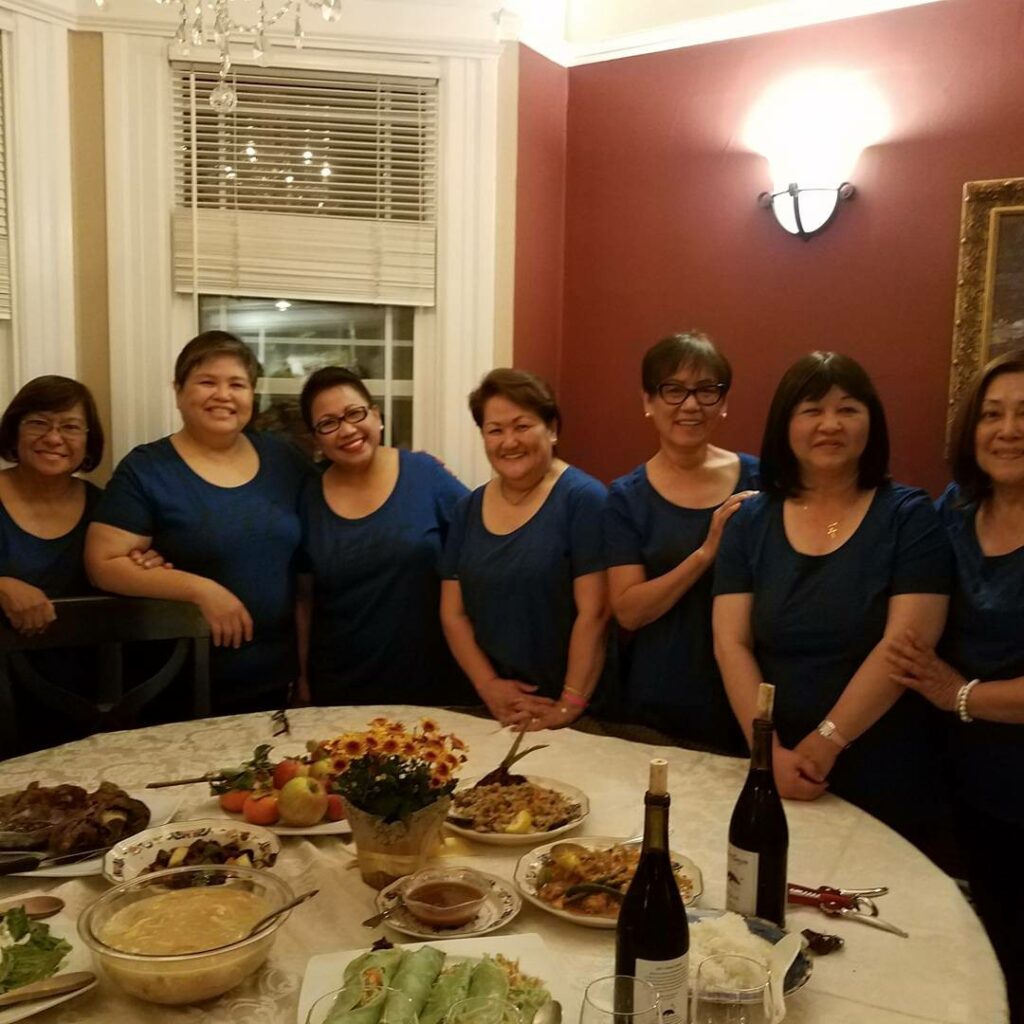
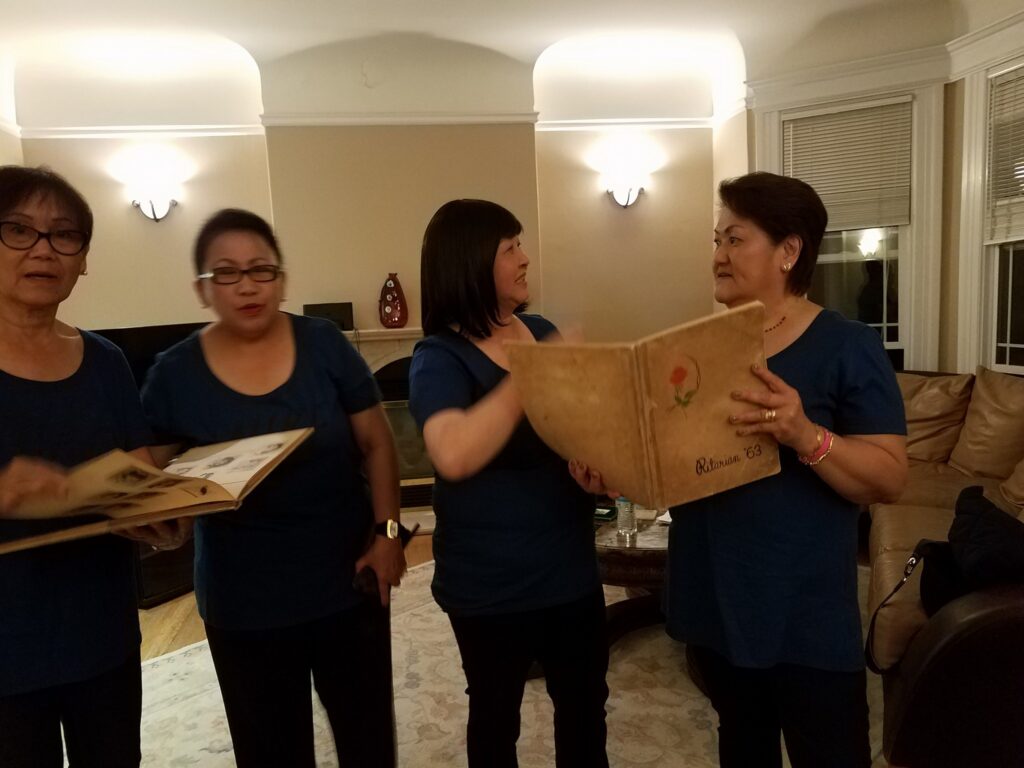
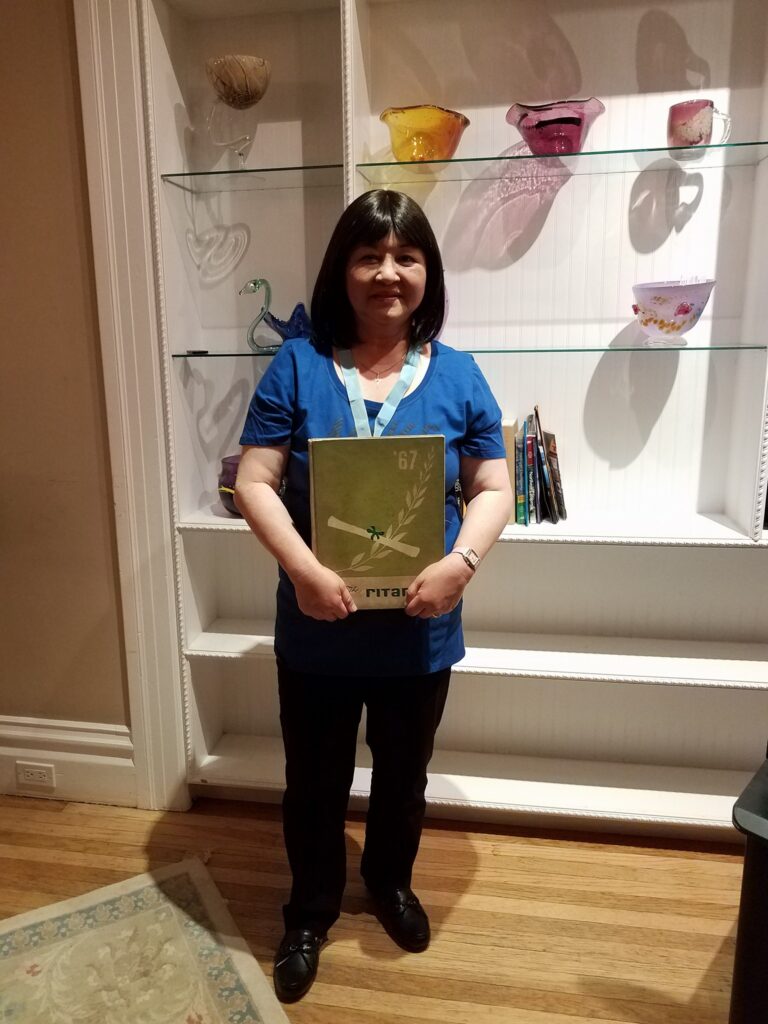
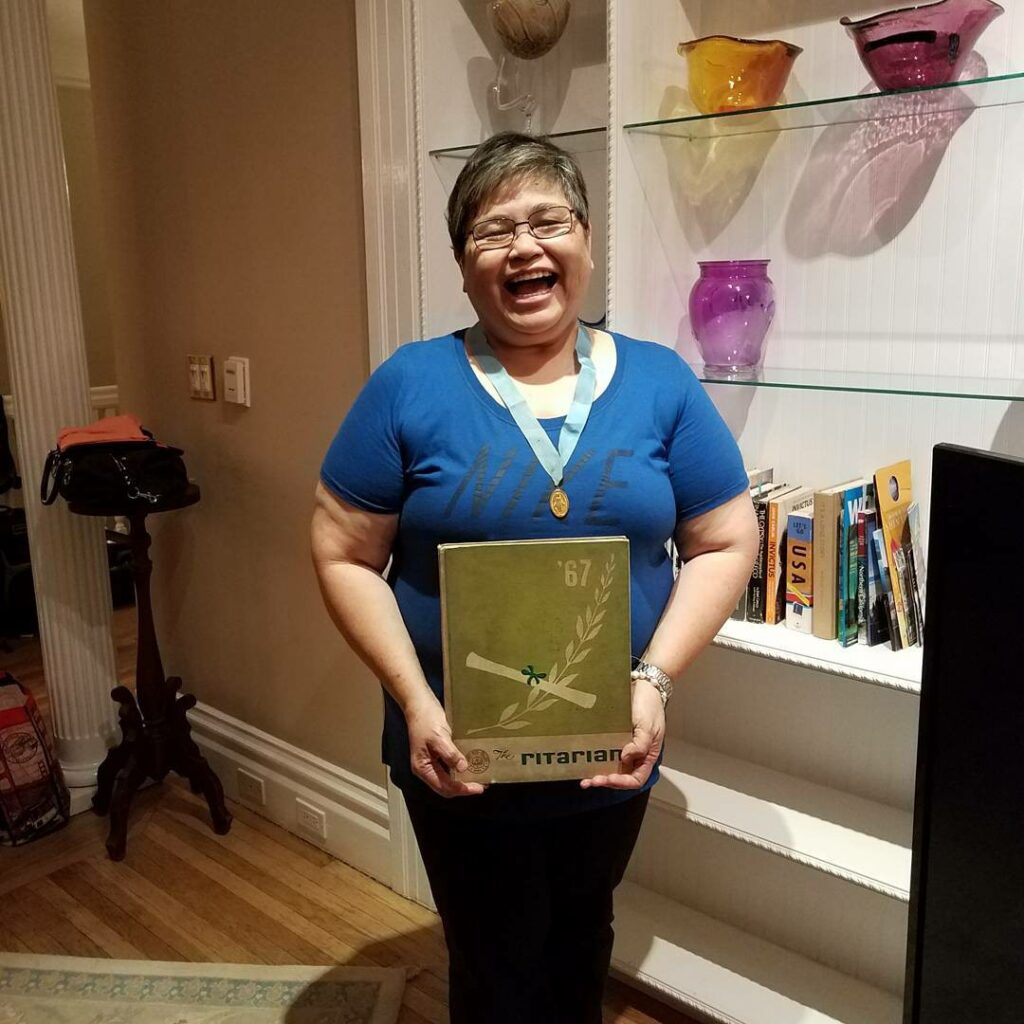
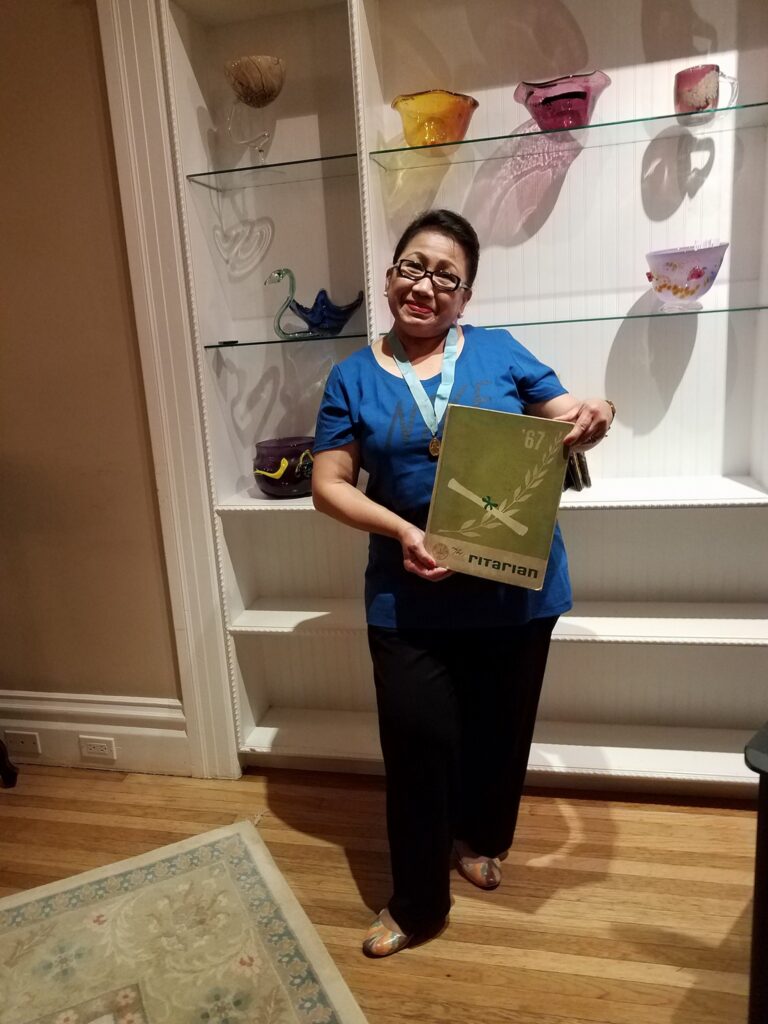
We were blessed by the presence of Fr. Aris Martin, Society of Divine Word, whose blessings touched our hearts; some of us cried as we prayed during the 2017 Seafarers Reunion, our Golden Anniversary!! What a loving group of Ritarians!
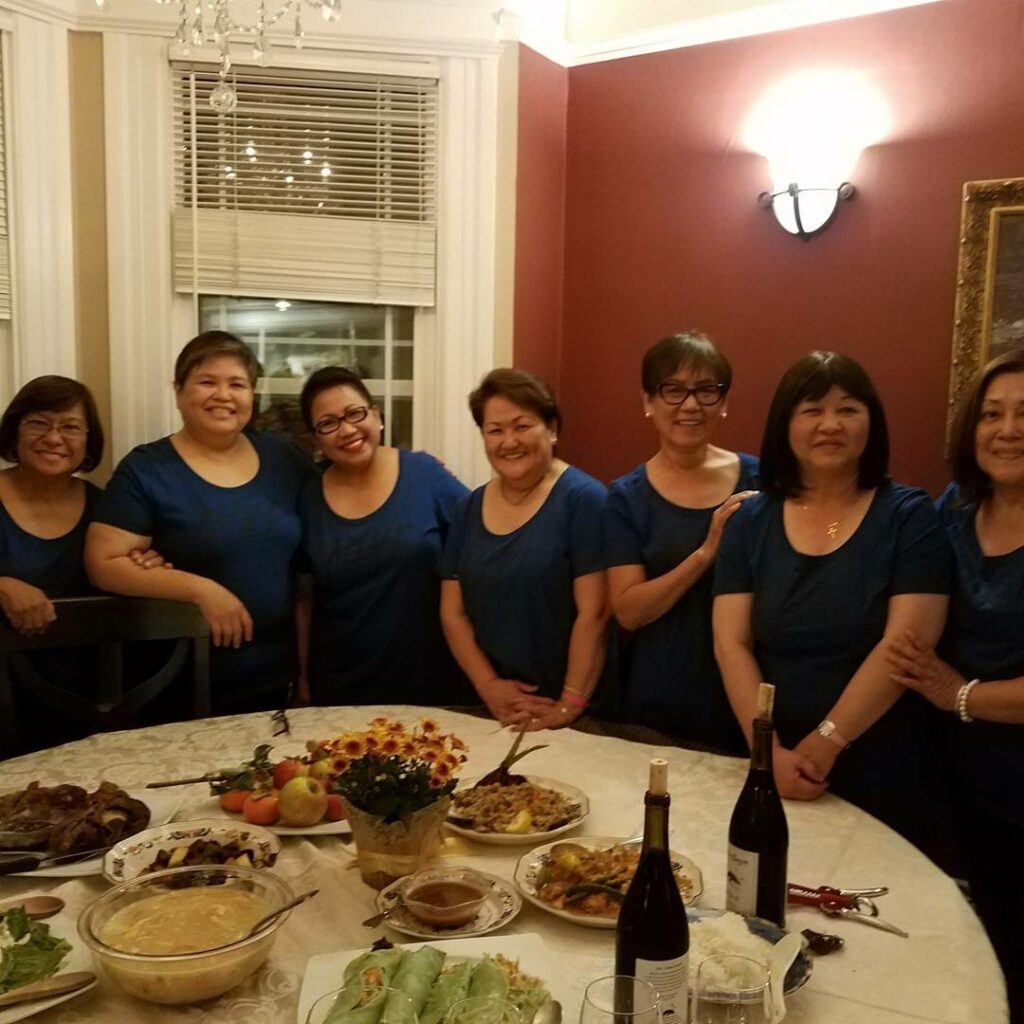
We were blessed by the Ritarians of San Francisco: Carol Carlos Arcelo, Rosario Nunez, Lolita Ortua, who poured their love on us. We were overwhelmed by their immense generosity. The dishes were from Via Mare of America. Desserts by Sweet Dreams Bakery and Binka Bites. Thank you very very much!!