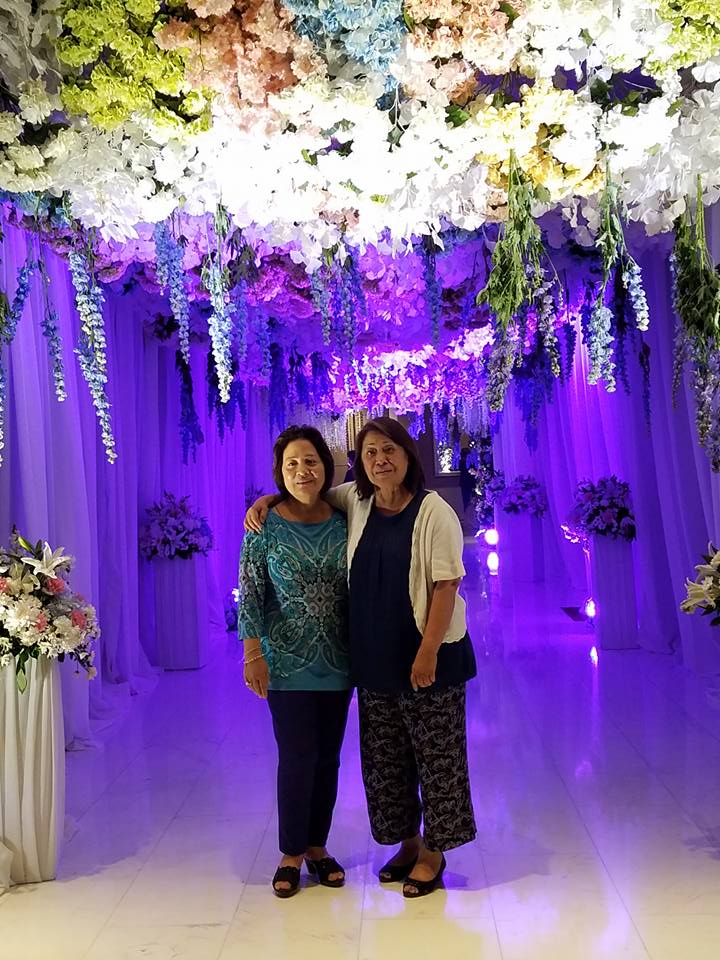
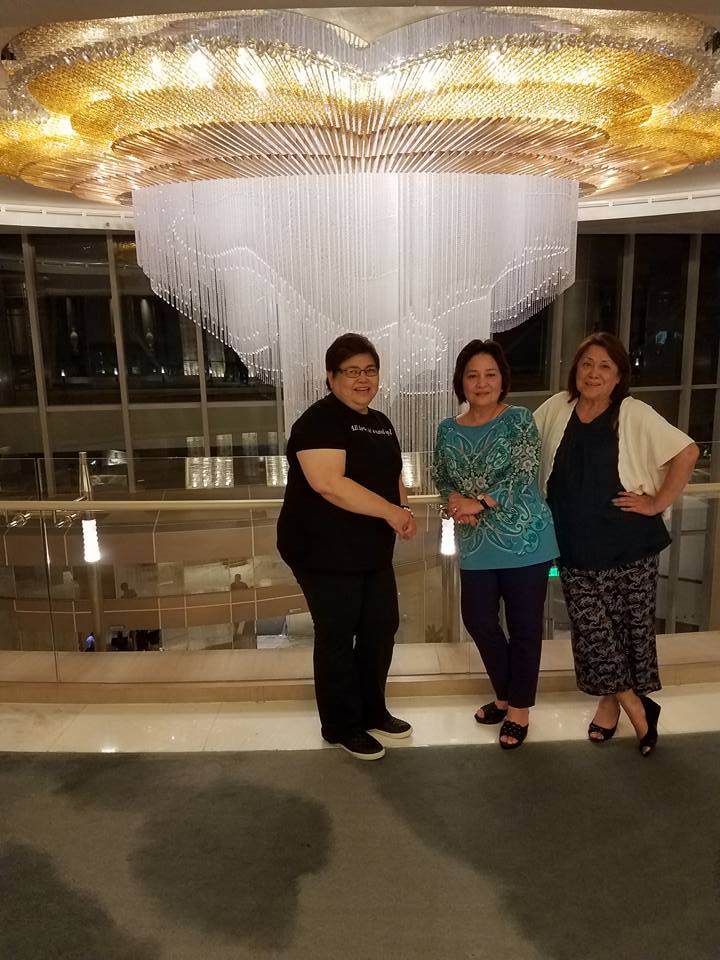
I did not expect this kind of intimacy, story telling, sharing of life stories, miracles witnessed by our collective faith in God.
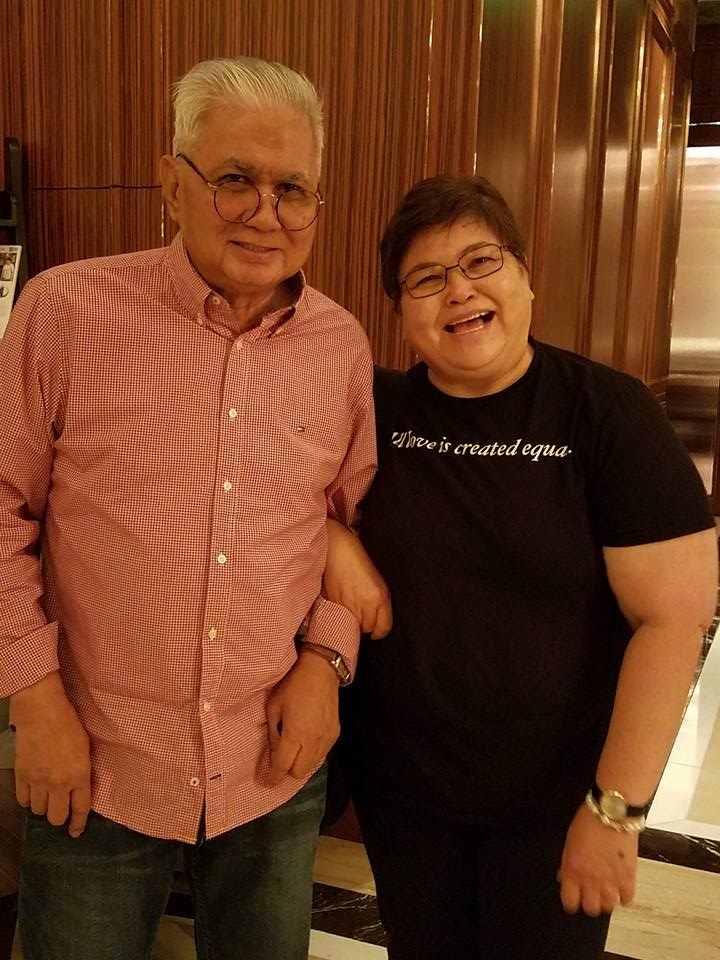
Oh my, and I ran into one of my favorite former editors, Lito Cruz who managed to bring out the best in me and who I sensed believed in my potential as a writer. Thank you Sir!
And through our collective persistence, we connected to another classmate from Chicago. We just laughed and laughed some more and cried also.
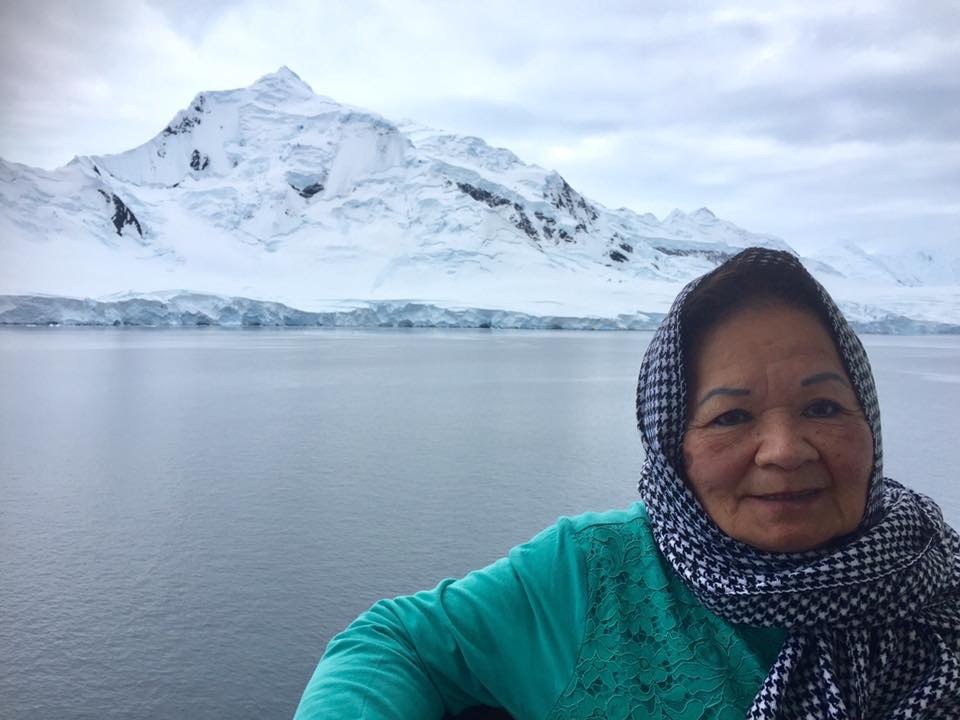
Glaciers – Felicitas poses with a glacier in Antarctica.
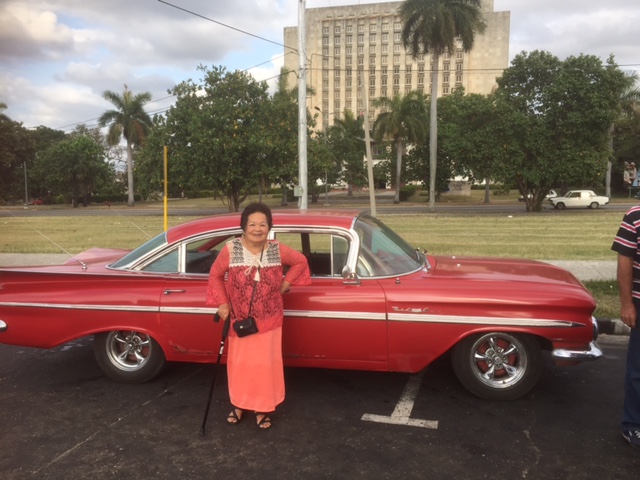
ClassicCars – The 78-year-old recently traveled to Havana, Cuba.
“The use of traveling is to regulate imagination with reality, and instead of thinking of how things may be, see them as they are.” – Samuel Johnson
“The world is a book, and those who do not travel read only one page.” – Saint Augustine
Felicitas de Vera is almost 80 years old, yet her zest for life would make her pass for much younger. She lives in Oxnard, California.
Would you believe that she just joined a bandurria group at 78 years old, and with her visible joy, encouraged others to pick up an instrument?
Punctuated by a heart-shaped pigment on her right cheek, she greets you with warmth and simple elegance. Not the flamboyant type, but an innate elegance of the yesteryears wearing her royal blue kimona, a Filipina casual terno, and eating one of her favorites, halo-halo.
“I eat whatever I want to,“ she said, “at my age, I am free to do what I want,” and finished it.
Halo-halo is shaved ice adorned with purple yam halaya, leche flan, ube and black walnut ice cream with sweetened fruits and rice crispies.
7 continents and Asian Journal’s travel ad
Halo-halo travel is the metaphor we will use, as she has connected with diverse cultures, multiple ages, different personalities, and multiple languages, exposed to different foods, fruits, produce, in her travels to seven continents around the world.
Would you believe that even her grandsons spent a day with her in Disneyland, exploring rides? That she has actually gone to the Disneylands in Paris and Hong Kong?
Her latest trip took her for a month cruise to Antarctica with Crystal Serenity. She recalls seeing glaciers, mountains of ice, spanning for miles, and passing through Elephant Island, described as “an ice-covered mountainous island off the coast of Antarctica in the outer reaches of the South Shetland Islands, in the Southern Ocean. We were told that Vera and I were the only Filipino guests on the cruise (the majority of the crew is Filipino).
In Egypt, she saw the Sphinx and rode a camel. At first, she was afraid, but then, overcame her fear, sat on the saddle and held onto the wood posts. While the camel moved, she kept thinking she might fall, but instead, she shouldered on.
In Australia, she saw the Sydney Opera House and loved their “malalaking hipon” (large shrimps).
In one of her travels, she was with a group, the youngest was 37 years old, who came up to her and said, “You inspire us as you do not complain even as we walked on cobblestones.”
Her secret: “I do not want to be a hindrance to the group.”
How did the travel bug bit you, I asked? “It all started when Vera, her third child, joined an essay contest and won a trip to Japan. “I like to go. I told her. My first daughter, Susan, had just given birth,
wanted to go. But I told her she’s still young and has plenty of time to travel in the future so I should be the one to go because I’m already old and should take advantage of going with Vera to Japan.”
In Japan, she was thrilled to see that their homes were more than the shoji paper walls depicted in the movies.
“Their houses were made of tiles, wood, clay and more. Every time the young people [would] go out, I went with them. I just like to meet people,” she said.
One day, she read ads in the Asian Journal about travel to Europe. She took the trip with Prima (her youngest) to eight countries: Italy, Germany, France, Spain, Denmark, Belgium, Holland, and Netherlands. She was quite impressed by their architecture, but “food not as much,” and she noted pizza and spaghetti taste
much better in Los Angeles. She loved the frescoes and the Sistine Chapel in Rome, but mostly, folks were kind.
Now a widow, she appreciates traveling with her children, “as they are seeing what I am seeing.” She singled out Vera (known to this writer from volunteer years with non-profits), as the one who checks on her daily, wherever her travels may take her.
For the last two decades, Felicitas visited all seven continents (Asia, Australia, Africa, Antartica, North America, South America and Europe), 4 territories (Puerto Rico, Guam, Wake Island and Falkland Islands for the U.K.).
In North America, she has been to 30 states out of 50, and 30 countries around the world and multiple times to the Philippines.
Recently, she went to Cuba. “Cuba is nice, it is different from what I heard, communist and poor. It was so impressive with palaces, mansions, cultural buildings. Instead of the tour bus, one evening, the tour guide rented four classic American cars and our group took turns riding in each car.”
She made new friends, listened to music in the nightclubs, accompanied by her three children, “who were happy to be with me, they saw what I saw, and we celebrated Prima’s birthday.”
When the waiter asked her how many cigars she would like to have as souvenirs, she said “three, one for each of my boyfriends,” eliciting a laugh from the group she was with.
She affirmed herself, “It is true I still have it,” to which she explains, “I believe I still have “it” ‘coz at my age, I noticed men still get attracted to me.”
Her reflections about life and worldwide travel:
1. “Enjoy as a pilgrim to Holy Land, not as a tourist. In every country, behave and be considerate of others, as part of a group. In Russia, I realized how lucky I am to live in the US where there is “freedom of everything,” e.g., freedom of speech, and quality of life is better than any country I went to.”
2. “Follow the regulations at the airport, do not bring overweight luggage.”
3. “Enjoy all the amenities [on] the cruise ship, in the last cruise Crystal Serenity, I went to a show every night. I saved to do this cruise. I was with Vera and we were the only two Filipinos in this cruise and they treated us like a queen.”
4. “There’s so much to be learned: Spanish classes, U.S. Presidents, Antarctica history.”
5. “Don’t worry — whether you worry or not, it will still be the same.”
6. “Don’t smoke.”
7. “Walk at the nearby park every morning. Three men showed interest and tried to befriend me but I told them, I only walk for health and medical reasons and not to find a boyfriend.”
8. “Once or twice a week, I sing karaoke with some friends. I love life. Last year, I took bandurria lessons and soon became a member of the bandurria group in Oxnard. I also like to dance the cha-cha and tango.”
9. “I like to be happy. I have a hat that says, “Don’t marry, be happy.”
10. “As a grandma and a mom, I respect the privacy of my children. I don’t tell them what to do.”
Her name means happiness and her children attest as to how her identity is informed by her state of mind, i.e., embracing life’s goodness, and with that, choosing to be happy.
She counts her blessings as her children: Susan, a physical therapist; Don, a casino dealer; Vera, a retired foundation staffer with a law degree; and Prima, a massage therapist with a nursing degree, and her grandsons, Erik who is graduating from UC Irvine this June while Ryan is taking environmental engineering at UC San Diego.
She was married for 48 years to Vicente de Vera, who took good care of the family and especially her grandchildren, while she was still working as the department head’s Office Manager at Pt. Mugu Naval Air Station. She later retired after 17 years of service. Prior to that civil service, she worked for 12 years at Becton and Dickinson (Falcon Plastics).
If Felicitas were a book, it would have numerous pages about seven continents, four territories, 30 states in the U.S.A, and 30 countries around the world.
Instead of relying on her imagination, she designed her retired life on experiencing the actual lives of folks, immersing in their realities.
Would you invest in knowing the real world, like Felicitas has done at her ripe age of 79 years old? Or would you be content to simply watch the news on CNN, ABS-CBN, MSNBC, and telenovelas?
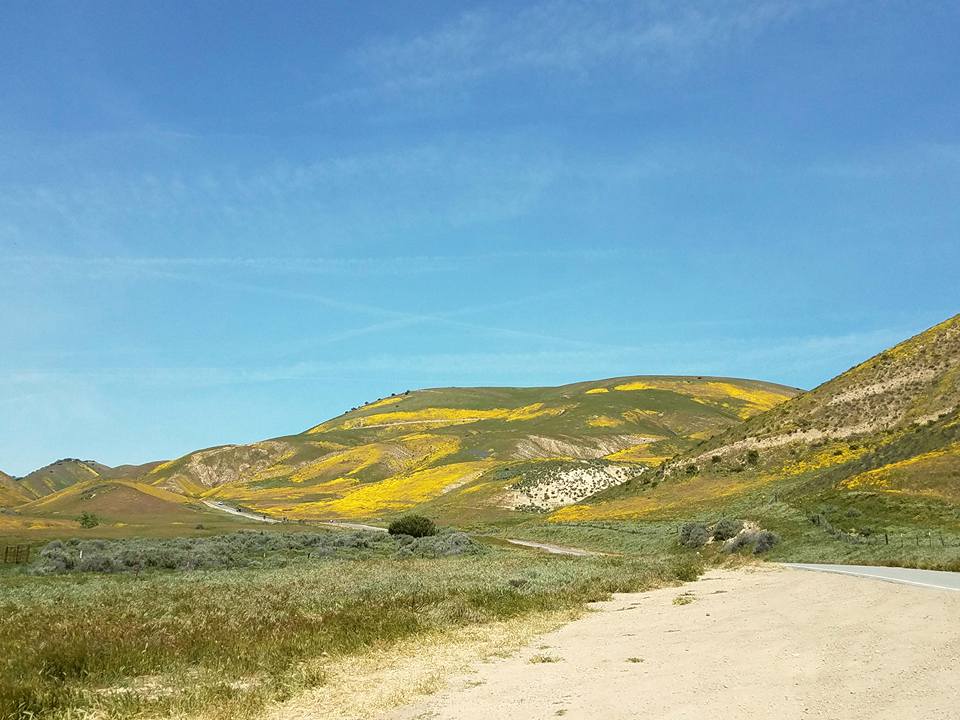
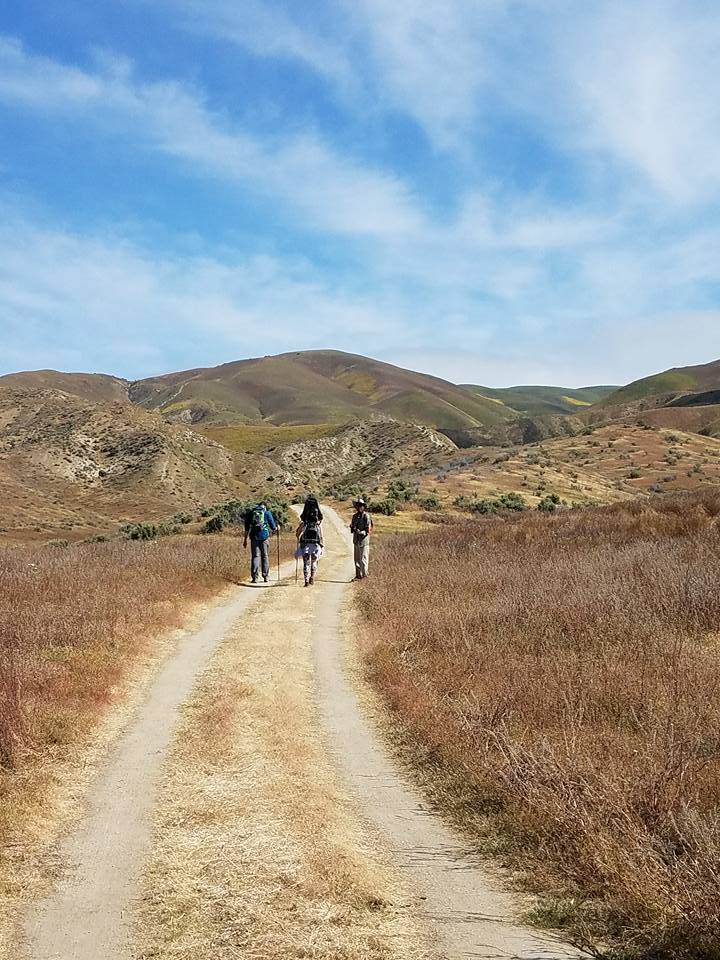
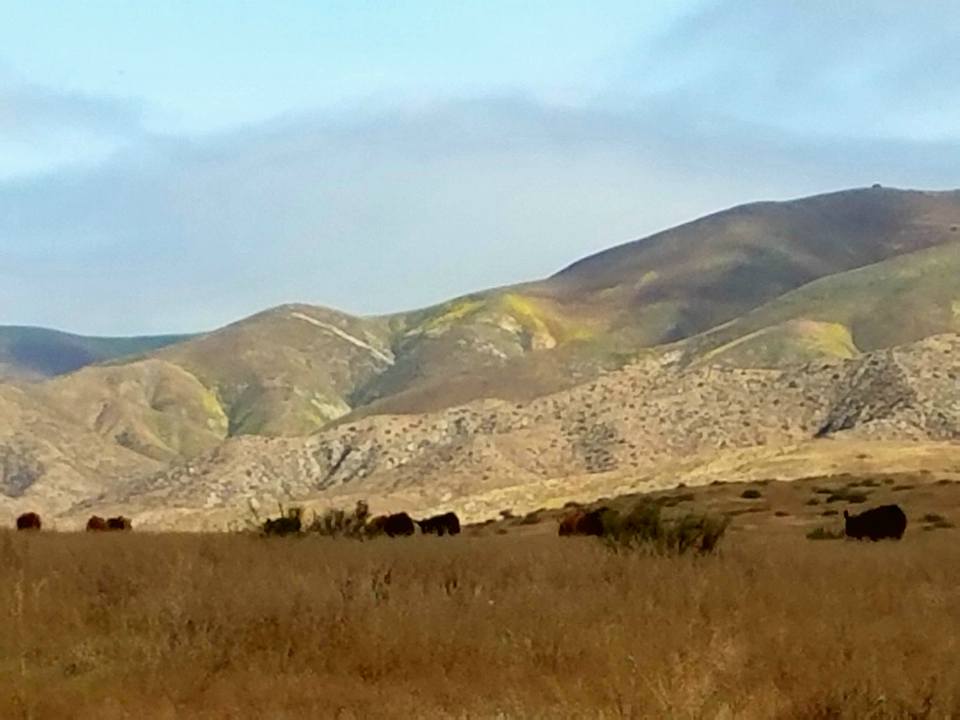
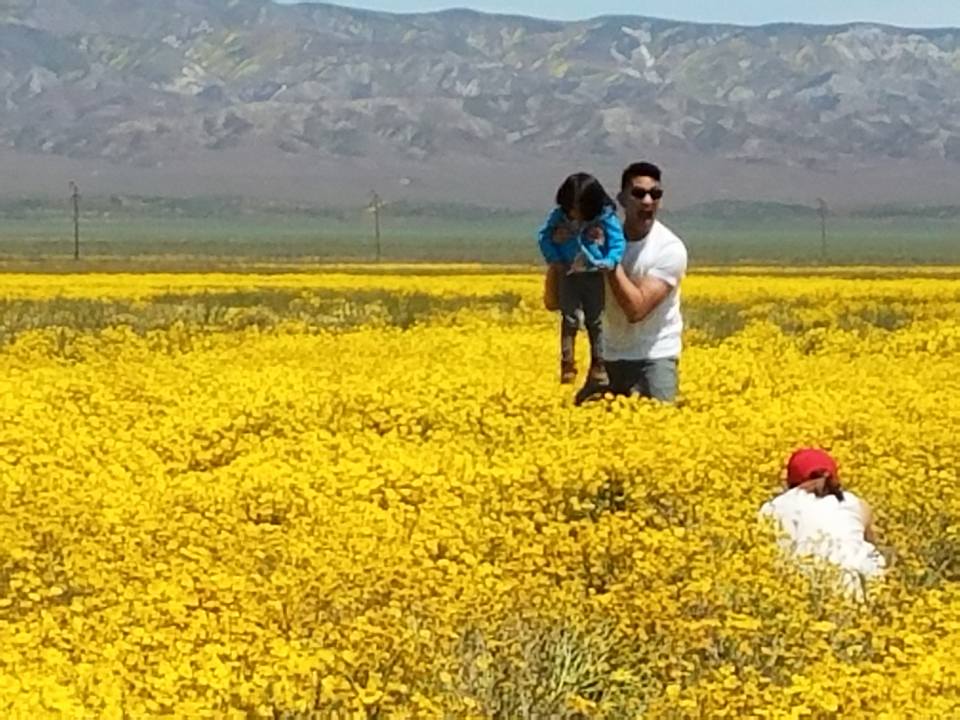
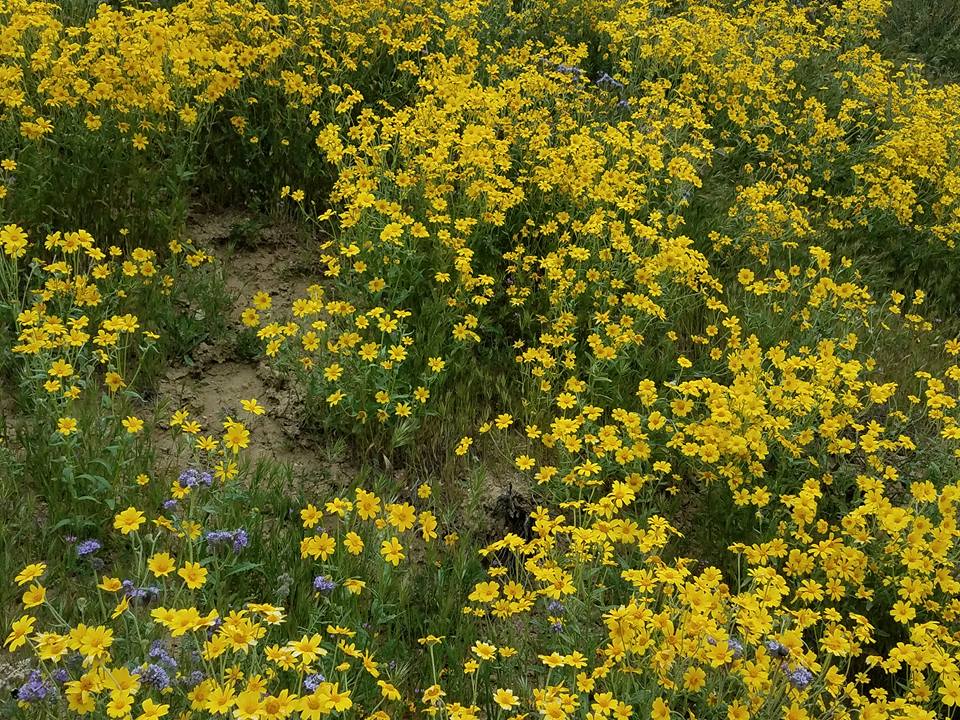
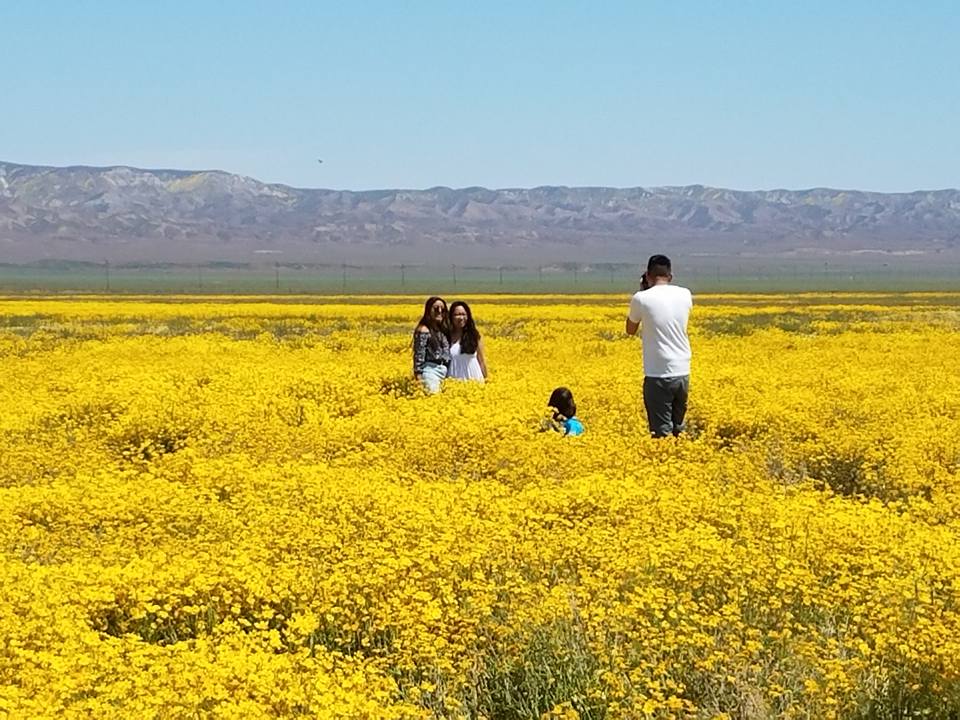
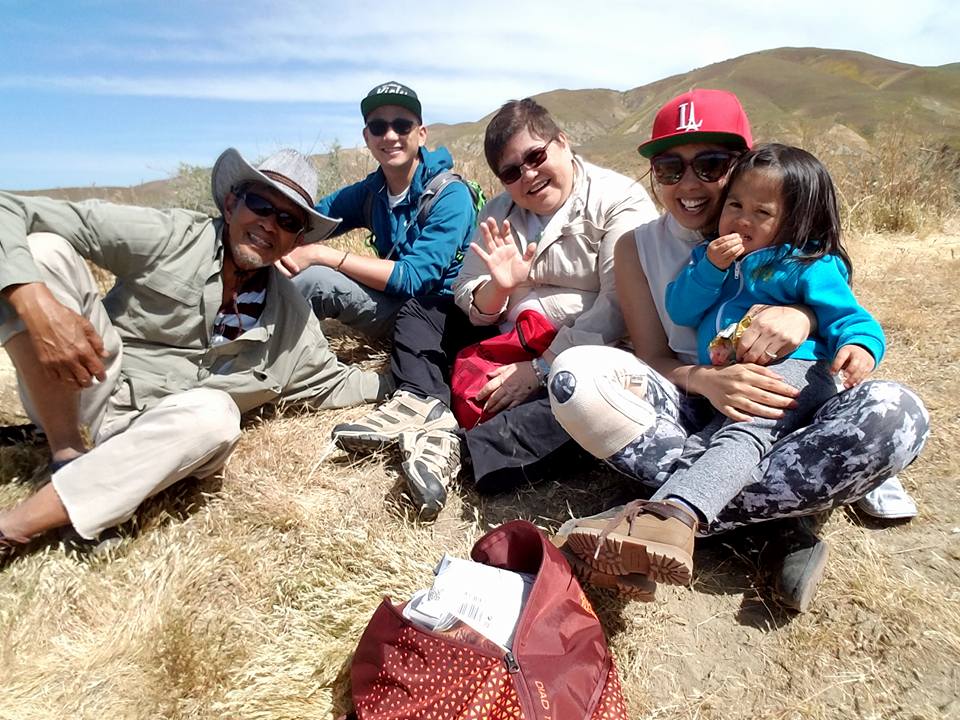
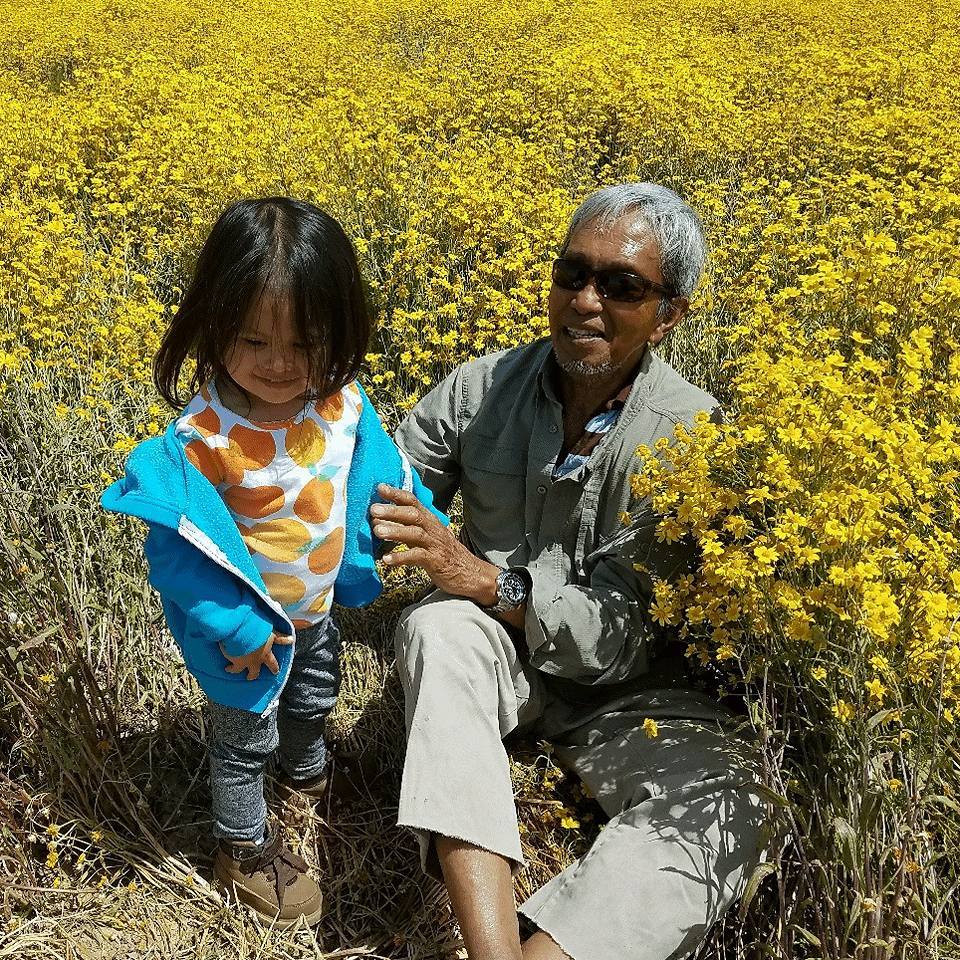
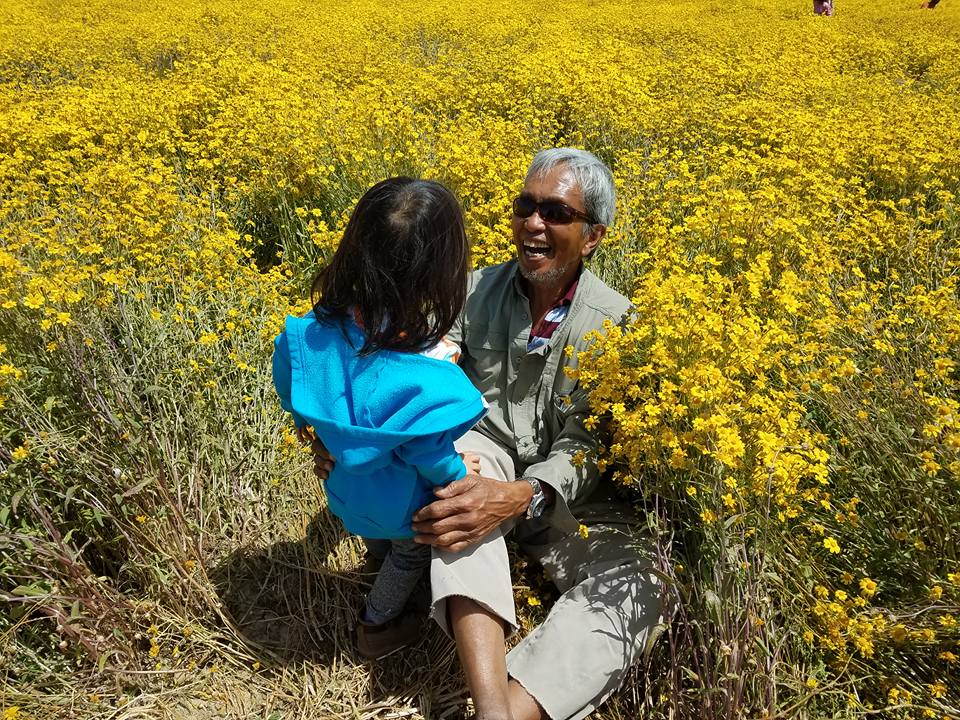
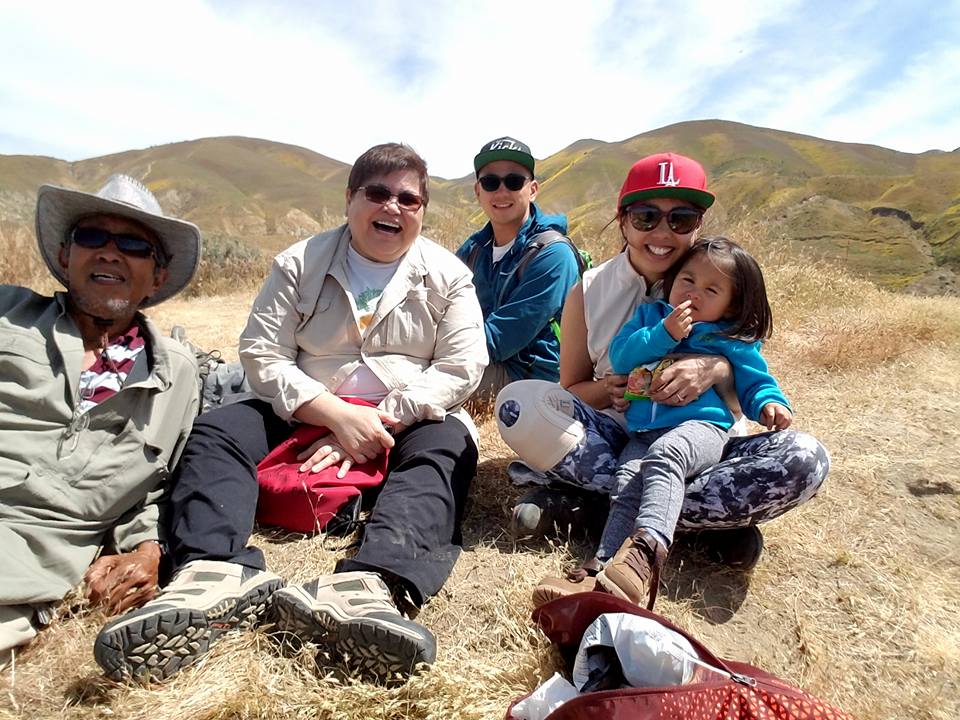
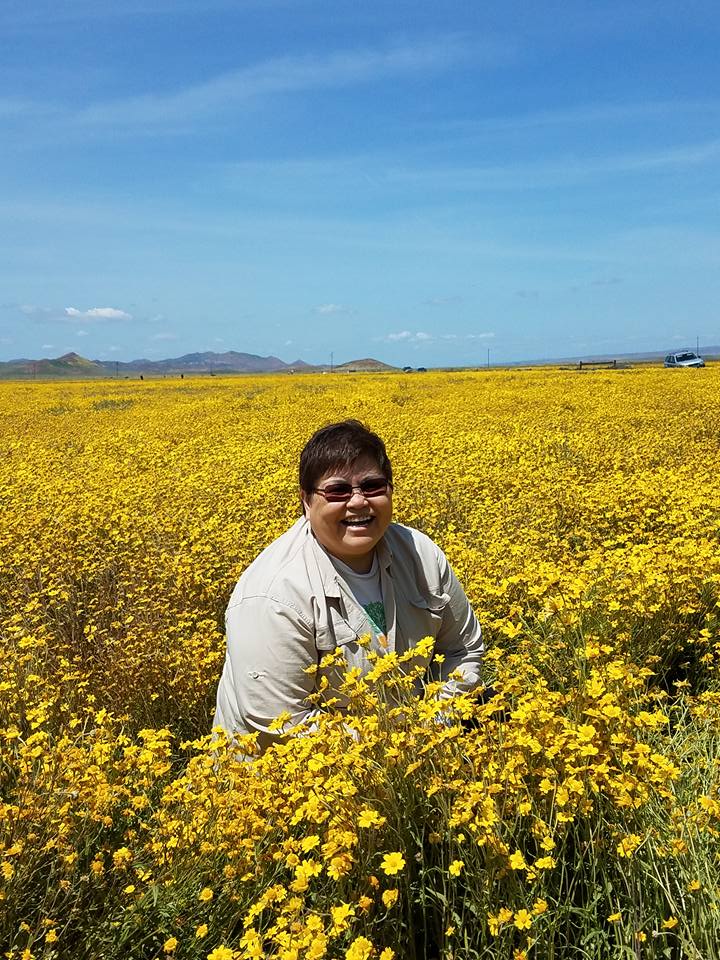
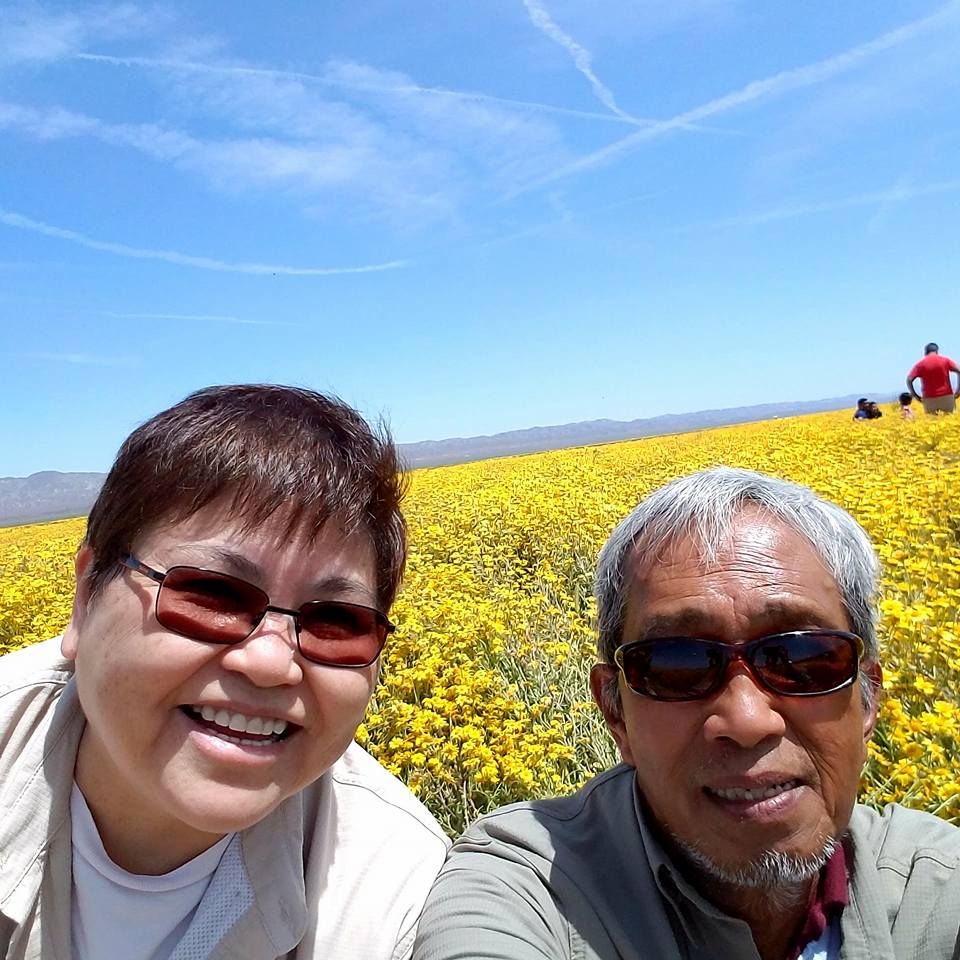
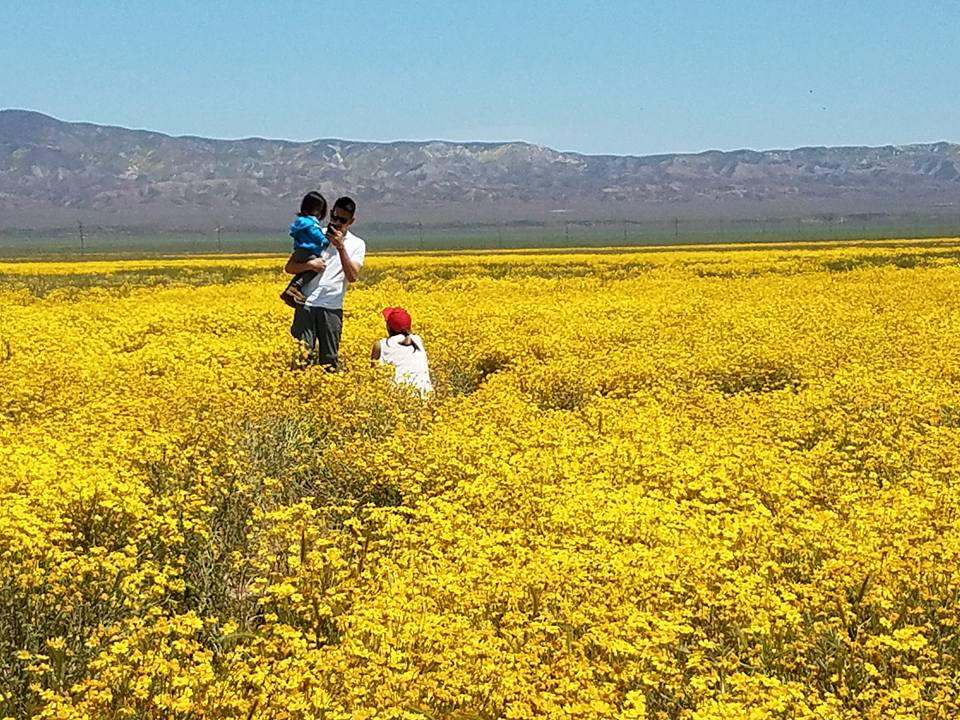
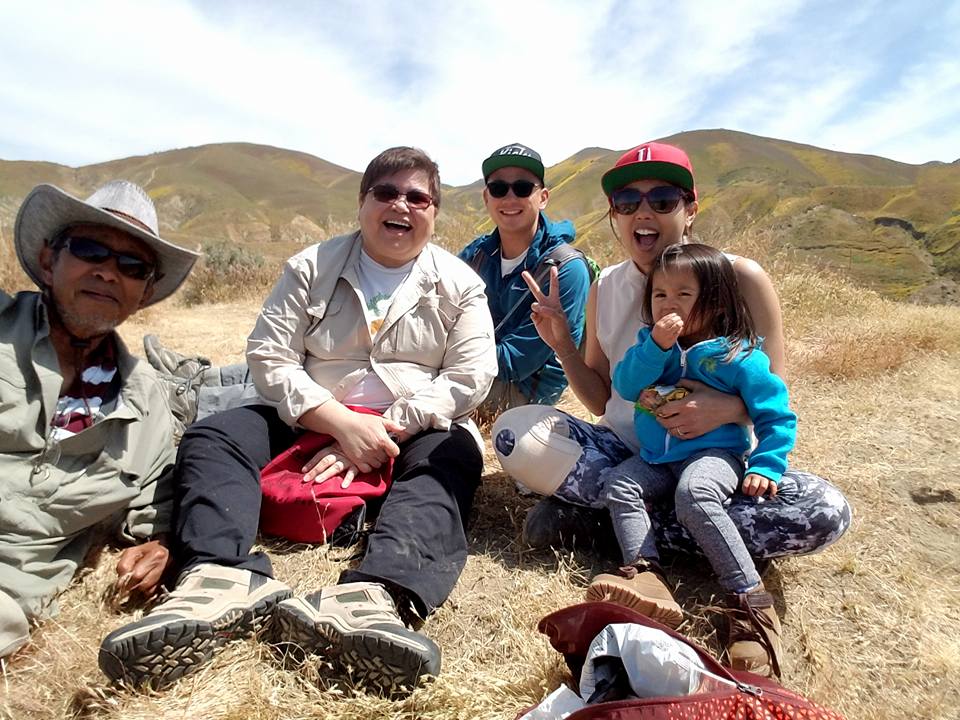
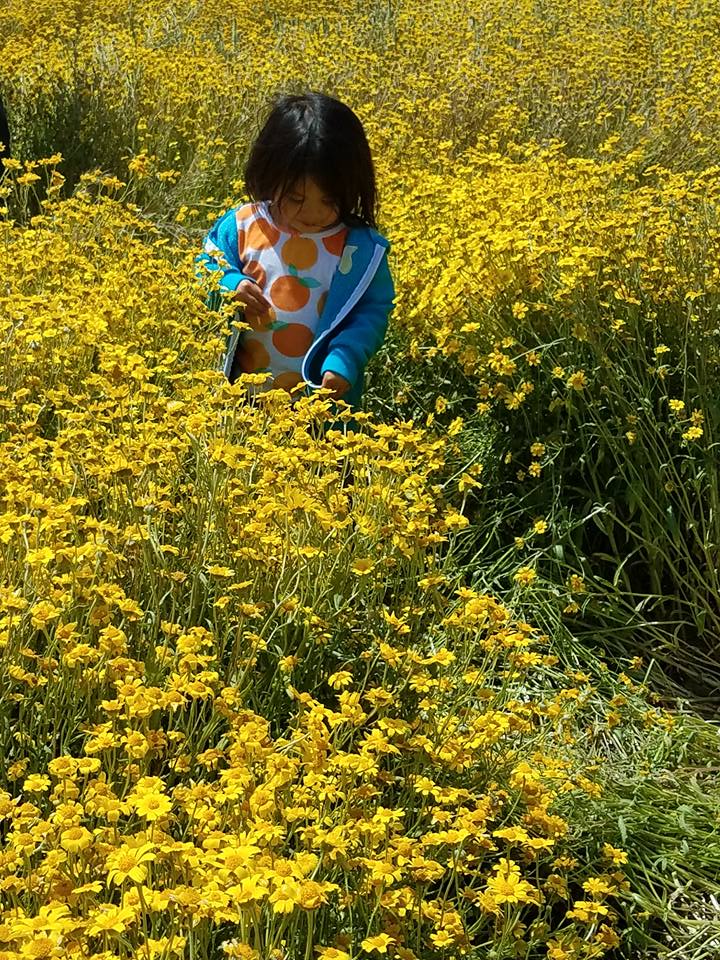
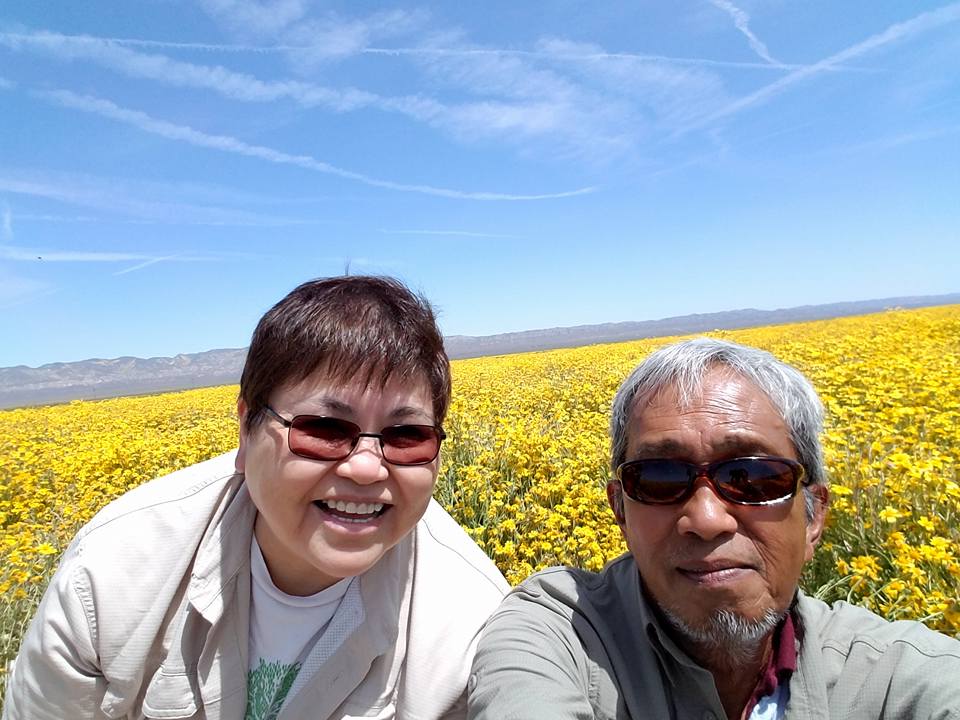
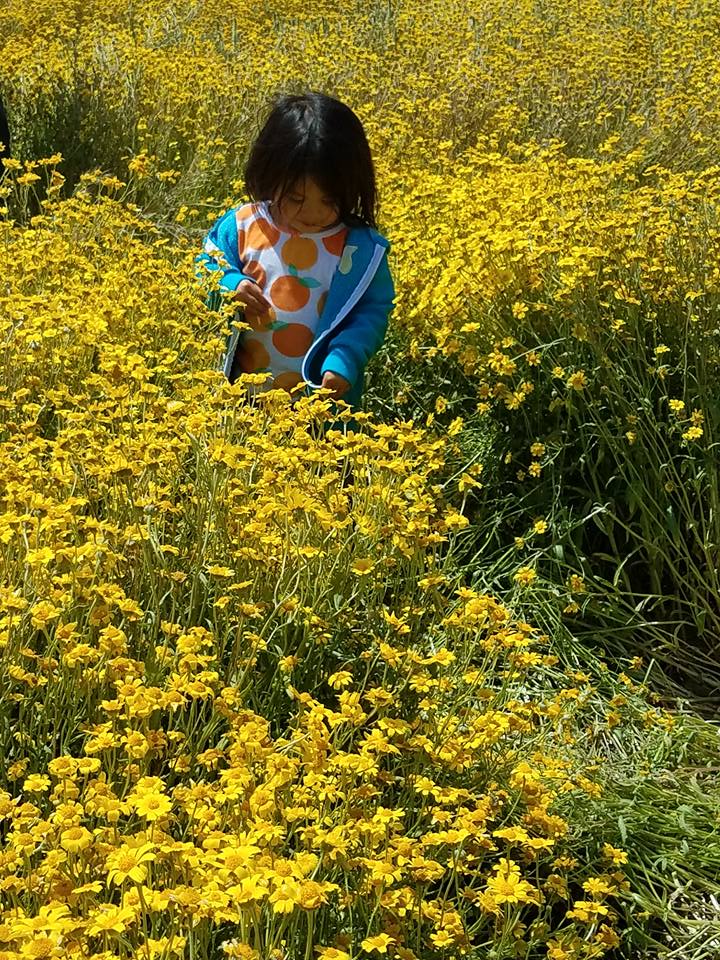
The rains in the beginning of 2017 put an end to California’s drought but also, the surge of wildflowers blooming in the hills. The once verdant hills became palette of artist’s colors. It was breathtaking, stunning, beautiful. I felt God’s grace walking the steep uphill and downhill trails, close to 1.5 miles. Hard to believe as we walked the trails in the heat of the sunlit morning, accompanied by cold winds. We had fun!
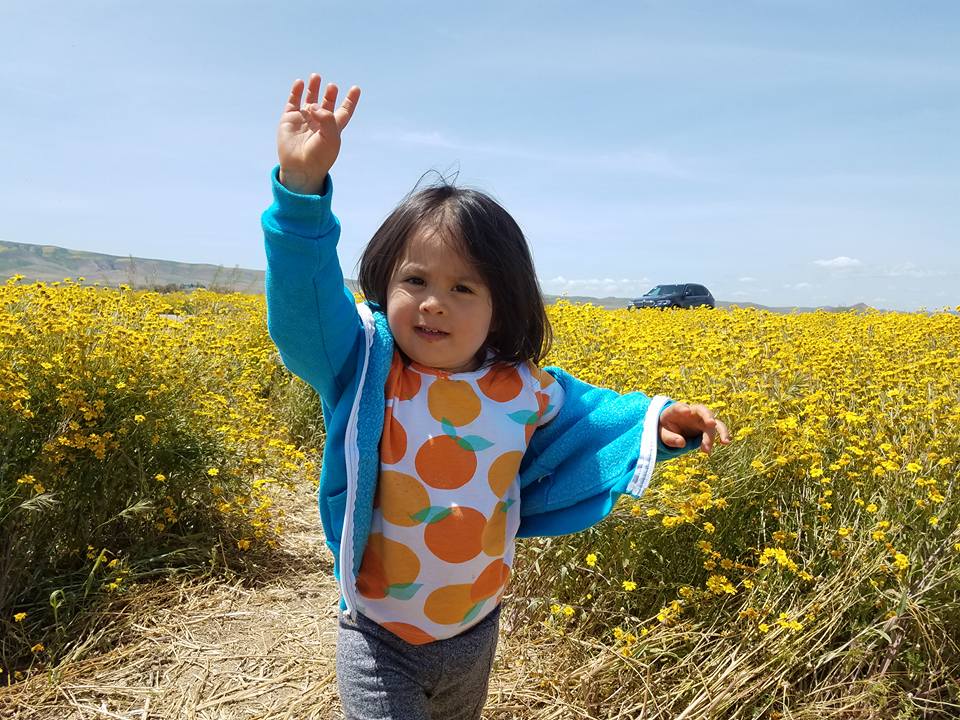
After lining the cupcake pan all by herself, she said, “I did it.” She is so empowered but also celebrates her own achievement. While we ate, she handed me a piece of seaweed while she had one, too. I am learning lessons of positive self care and being considerate of others from her.
STAGNATIONS are like potential energy. They are just “stuck.” Stagnations can lead to disharmony. Acupuncture can break up stagnations, getting the Qi and Blood moving and promote homeostasis [a state of equilibrium or balance]. Acupuncture can turn that ‘potential energy’ into ‘kinetic energy’. If you are tired of feeling stuck, let acupuncture give you that push over the hill to start feeling great.
R. Antonio Whiteley, L.Ac., 2017
Acupuncture is the practice of inserting sterile needles to specific points on the body through the skin. When applied properly by licensed acupuncturists – like R. Antonio Whiteley, L.Ac. – it provides relief for pain maladies.
Do you recall the purple circle marks on Michael Phelps’ back while he swam in the 2016 Olympics in Brazil? He got cupping treatments aka ventosa to give him relief from his aches and pains. Mark Perido, an educator with the International Cupping Therapy Association, said in Men’s Health magazine,”when an acupuncturist soaks a cotton ball in alcohol and lights it on fire inside a glass cup, he or she removes the flame, and quickly places the cup on a patient’s skin, creating a vacuum that draws up the skin tissue.”
“Blood flow is the body’s way of naturally healing,” says Houman Danesh, M.D., an assistant professor of anesthesiology and rehabilitation medicine at Mount Sinai Hospital, who frequently combines cupping with mainstream pain therapy techniques. “Increased blood flow can be beneficial to jumpstart or restart a blunted healing response.”
It is not surprising to see acupuncture grow in popularity in the United States. In 1992, the Congress created the Office of Alternative Medicine. In 1997, the National Institute of Health (NIH) declared support for acupuncture for some conditions. It then became “the most popular alternative medicine in the US,” NIH reported in 2009.
In California, acupuncture practitioners are required to take 3,000 hours of study in pertinent curriculum of acupuncture from an accredited school, including 50 hours of continuing education every two years, as well as additional hours in herbal medicine. All of these are part of a master’s program and passing an examination as a requirement for licensure.
What acupuncture has been used for
American Specialty Health is a group of 30,000 musculoskeletal practitioners nationwide, in chiropractic and acupuncture specialties. They provide services to subscribers of health maintenance organizations (HMO). Formed in 1987, it has provided specialty health services to 27 million Americans.
Whiteley, a member of the American Specialty Health, has patients who seek acupuncture treatment from him, categorized into: “70 percent for back pain; 20 percent are to remove stagnations, stress, anxieties, and to get the blood moving, and the rest for other conditions.” Some of them include Filipino Americans.
In 2016, NIH reported that acupuncture is used for headaches, low-back pain and neck pain and osteoarthritis/knee pain. Older and younger friends seek acupuncture to fortify their immune system, once a month. They claim the monthly visits sustain their health and wellness.
But to others, acupuncture is the norm for minor ailments and maladies of pain. After a hike, a relative got ankle pain after running down the trails. He was limping. After acupuncture, he got relief. Another hurt his back, dislocated by incorrect posture. I watched him move slowly with painful endurance. But, even with painkillers, nothing gave relief. After two acupuncture treatments, his pain was gone.
“Complementary medicine, which includes acupuncture, is a multibillion-dollar industry with 38 million adults receiving treatments annually,” according to a 2009 NIH report, and “it has grown to become the norm for helping millions of Americans with untold number of ailments and maladies.”
Coming from a legacy of healers and givers
Whiteley is one of the 42 grandchildren of Pablo P. Prietto, a dentist who went to the University of Southern California. Prietto, his grandfather, came from Peru in the “steerage hold of a cattle boat,” and “who worked his way through college as an auto mechanic and maintained a deep and abiding affection for his alma mater throughout his lifetime,” the USC Trojan Family Magazine wrote. Prietto has one of the oldest Latino legacies of giving at USC and he also supported the Mexican American Alumni Association, now on its 36th year of philanthropy.
Whiteley nurtured a dream, “I wanted to be a doctor. My grandpa is a dentist and my uncle, Pablo P. Prietto, MD is an orthopedic surgeon,” he said.
But instead of a biomedical specialty, Whiteley gained expertise in musculoskeletal therapies and various healing arts: massage, personal training, a bachelor’s degree in kinesiology, a master’s degree in acupuncture, cupping, and ultimately, a license to practice in acupuncture. He credits his parents, Roger and Rosa Whiteley, for their unconditional love and support for his career’s pursuits and his current life’s direction.
He visualized how his practice will be: the way a doctor talks to and makes his patients feel, or taking the time to find out what ails her. He worked for various practitioners, learned customer service and scheduling, including how to run a practice. He became part of a large health center on Wilshire Boulevard, where 6,000 patients were seen for sports rehabilitation and personal training.
He worked for various practitioners in both the East and West Coasts, learned customer service, scheduling, and how to run a practice.
Then, he went through his own personal challenge when he threw his lower back out that it became impossible for him to work. He conducted research on the structure of the spine. He gained knowledge on proper posture and how a flat back, lacking a curve in the lumbar spine, makes it unable to absorb the shock and pain. From what he went through, he learned the importance of quality treatment and services.
I inquired into his own code of ethics in caring for his patients:
I give recommendation, I do not push for treatment or service.
If there is a strained muscle, there will be more frequent treatments.
If a patient feels good, hopefully they come back once a month for “tune-up.”
All of my treatment come from good intentions – if they come seeking treatment, I consciously meditate before I start.
I want my last patient at 6 p.m. to get the same treatment as my first patient.
I consciously want to give my best to anyone and for each one to get the best treatment each time I see a patient.
Here, at Body and Soul, we tap into different spheres of ourselves, we tap into the physical but also the spiritual, e.g. in treating carpal tunnel, it is both tapping into the physical, but also the yin/yang, the root/branch of the pain.
For Fil-Am friends, acupuncture has been used for the temporary relief of pain maladies, sciatica, stress, anxieties, and detoxification, “which is a process that clears and filters toxins and waste to allow our bodies to work on enhancing its basic functions,” Christine E.V. Gonzalez, Ph.D wrote. “On a spiritual level, many people experience new clarity and enhancement of their purpose of life during cleansing processes.” An octogenarian clued me into her regular acupuncture treatments as her secret to staying healthy, as well as good nutrition, sleep and exercise.
There is a Chinese symbol that stands for both crisis and opportunity. Acupuncture allows an individual to stay ahead of a health crisis, by proactively taking the opportunity to have regular treatments to keep the blood flowing and ultimately, to turn stagnations into kinetic energies, as Whiteley wisely observed in his practice and as NIH has reported.
Footnote: This is Part I of III series on health and wellness. Part II will be on common strategies towards good health. Part III will be on a Dumaguete medical mission by California health professionals.